Loading…
 🔍 Click to enlarge
vineperennial
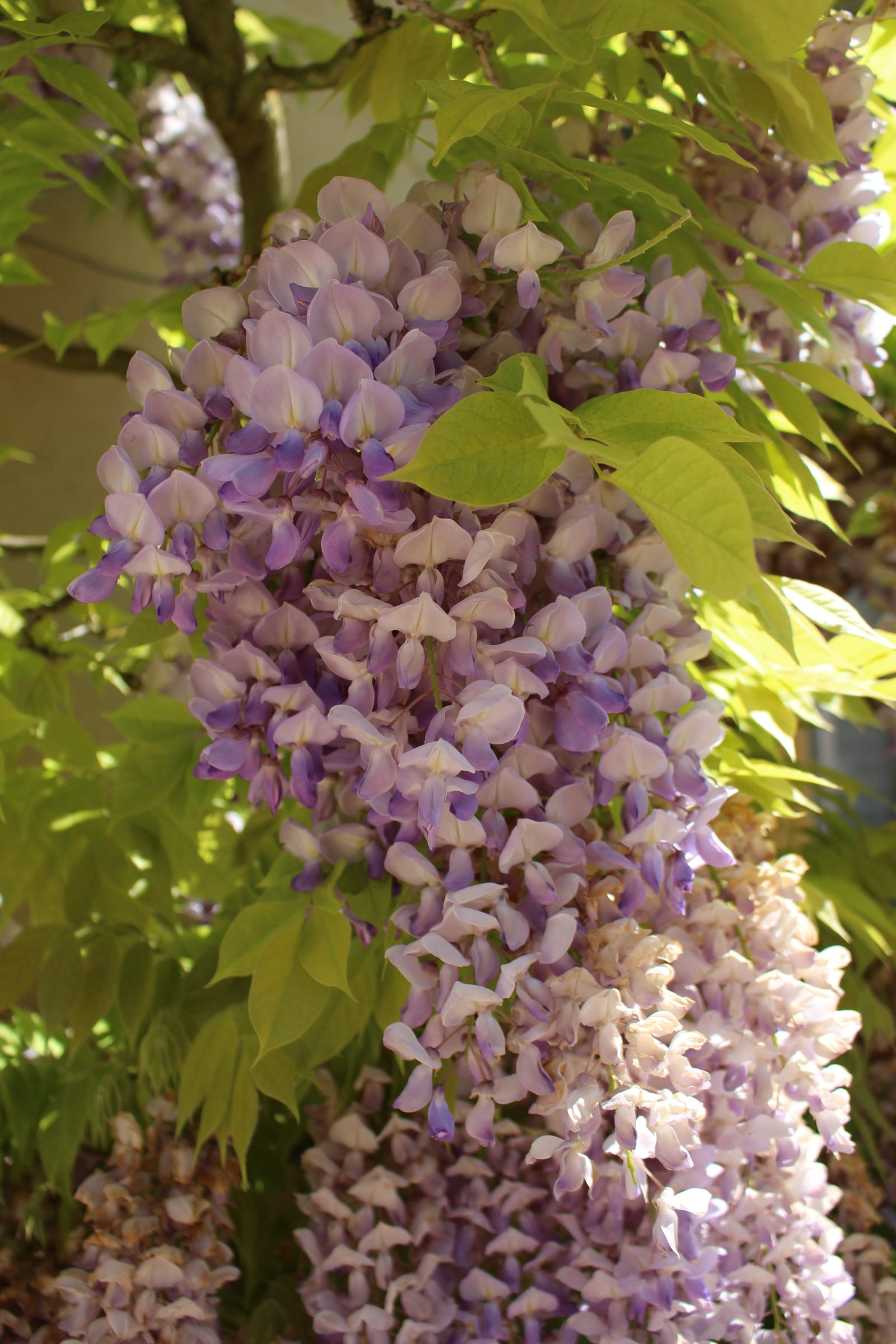
Wisteria
Wisteria sinensis
Breathtaking cascades of fragrant purple or white blooms. A long-lived landscape statement.
Quick Facts
Sun:☀️ Full Sun
Water:💧💧 Moderate
USDA Zones:Zones 4–9
Space:🏡 Large Garden
Soil:Loam, Silty, Clay
Best Season(s):Spring
Experience Level:🌳 Advanced
Native Range:China
Bloom Color:Purple-blue, fragrant, cascading racemes
Bloom Cycle:Mid-spring, one dramatic flush
Care Notes
Requires very strong support — it can topple fences. Prune twice a year. Takes years to bloom from seed.
Growing Details
Mature Size:25-40 ft climbing length, can spread widely without support
Growth Rate:🐇 Fast
Zone Performance
At the cold edge of its range in zone 4, flower buds can be damaged by late frosts, resulting in a foliage-only year with no bloom. In zones 8-9, Chinese wisteria grows so vigorously that it requires aggressive summer pruning to prevent it from girdling nearby trees and structures, and gardeners in the Southeast are increasingly encouraged to choose native Wisteria frutescens instead due to invasiveness concerns.
Companions & Wildlife
🦌 Deer Resistance
rarely damaged
All parts of wisteria contain toxic compounds that make it one of the more reliably deer-resistant flowering vines.
🐝 Pollinator Value
high
Heavy nectar producer that draws bumblebees, which are strong enough to trip the flower's pollination mechanism, along with honeybees.
Good Companions
Peony — Peonies bloom at ground level in the same season, giving a wisteria arbor color from top to bottom.
Boxwood — A clipped boxwood hedge beneath a wisteria arbor gives formal structure that contrasts with wisteria's cascading habit.
Clematis — A later-blooming clematis on the same structure extends the flowering season after wisteria's spring display fades.
Daffodil — Daffodils naturalized at the base bloom and fade before wisteria's canopy fully leafs out and shades the ground.
Troubleshooting
⚠️ Vine never flowers
Root-prune with a spade in fall to induce bloom stress, and switch from high-nitrogen fertilizer to a low-nitrogen, high-phosphorus feed.
⚠️ Vine damaging fence or gutters
Install heavy-gauge wire or steel cable support anchored to structural framing, not to the fence or gutter itself.
⚠️ Aggressive suckering and spread
Cut back new runners at the base as soon as they appear and consider root-barrier installation for older plantings.
⚠️ Pet Safety
Toxic to cats and dogs (wisterin, especially concentrated in seeds/pods) — can cause serious GI upset; also notably vigorous/invasive, prefer American wisteria (W. frutescens) where available.
Informational only — always check with a veterinarian if you suspect your pet has eaten something it shouldn't have.