Loading…
 🔍 Click to enlarge
fruitperennial
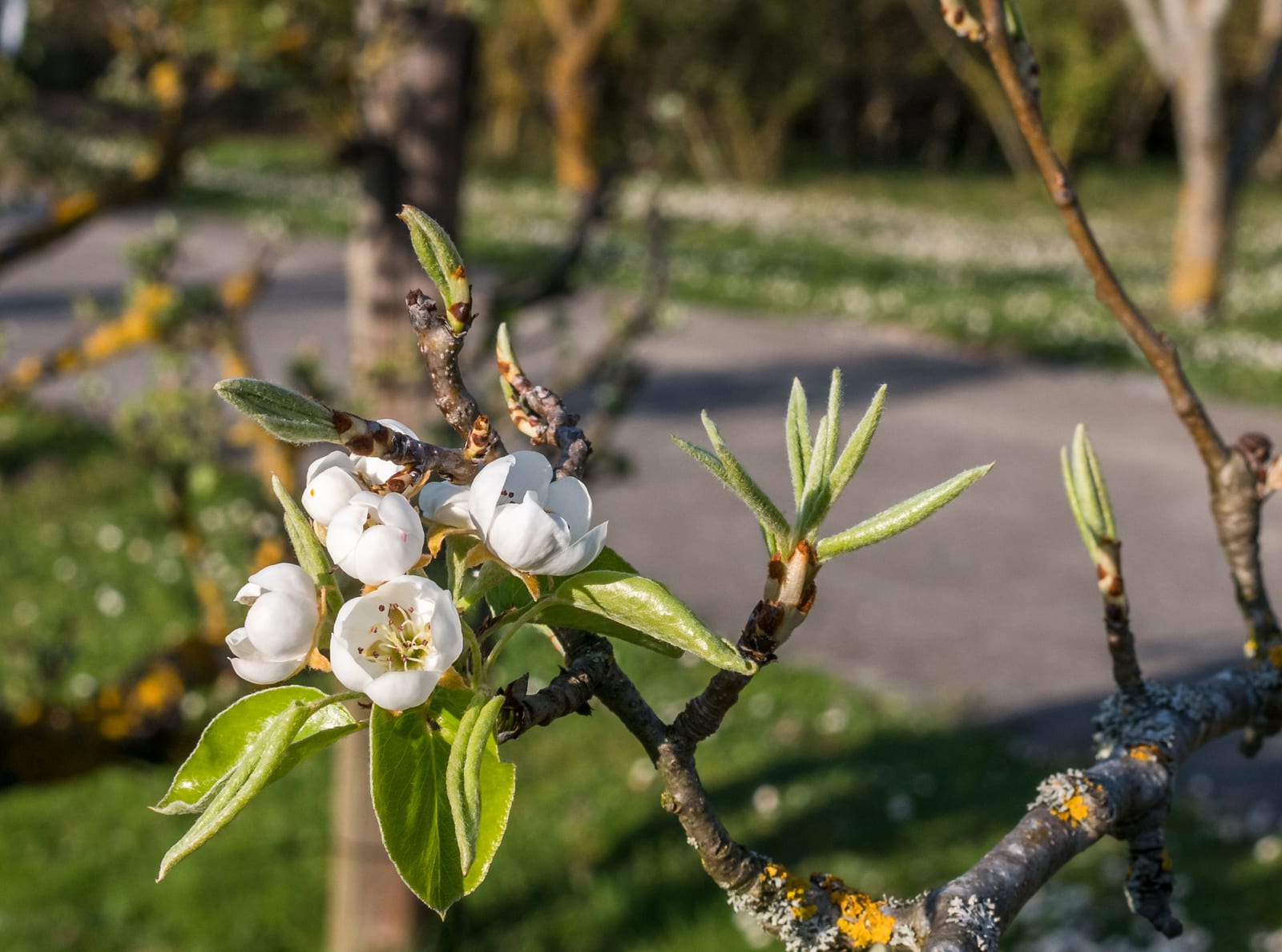
Pear Tree
Pyrus communis
Long-lived, productive orchard tree. Asian pears are crisp; European pears are buttery.
Quick Facts
Sun:☀️ Full Sun
Water:💧💧 Moderate
USDA Zones:Zones 4–9
Space:🏡 Large Garden
Soil:Loam, Clay, Silty
Best Season(s):Spring
Experience Level:🌿 Intermediate
Native Range:Europe & Western Asia
Bloom Color:White blossoms
Bloom Cycle:Mid-spring, one main flush
Days to Harvest:3–5 years from planting
Harvest Pattern:Perennial — produces year after year
Care Notes
Needs a pollinator variety. Harvest before fully ripe and ripen indoors. Watch for fire blight.
Growing Details
Mature Size:20-40 ft tall, 20-25 ft wide (standard; dwarf types 10-12 ft)
Growth Rate:🌿 Moderate
Zone Performance
At the cold edge (Zone 4), choose cold-hardy European pear cultivars like Bartlett-derived hybrids, since many Asian pear varieties lack sufficient winter hardiness. At the warm edge (Zone 9), European pears can suffer from insufficient winter chilling, while Asian pears and low-chill European cultivars perform far better in mild-winter climates.
Companions & Wildlife
🦌 Deer Resistance
frequently damaged
Deer browse pear foliage and young shoots readily, and can damage trunk bark on young trees, so protection is important in the first several years.
🐝 Pollinator Value
high
Early, abundant white blossoms provide an important nectar source for honeybees and mason bees, though the flowers have a fainter scent than apple.
Good Companions
Chives — Planted at the base, chives are traditionally used to help deter pear psylla and aphids.
Nasturtium — Acts as a trap crop for aphids, luring them away from young pear foliage.
Comfrey — Deep roots draw up nutrients and its chopped leaves make an excellent mulch for the tree's root zone.
Daffodils — Deters burrowing rodents from the root zone without competing with the tree for sunlight.
Troubleshooting
⚠️ Fire blight causing blackened, scorched shoot tips
Prune out infected branches well below visible damage during dry weather, sterilizing shears between cuts, and avoid excess nitrogen fertilizer that promotes susceptible new growth.
⚠️ Pear psylla causing sticky honeydew and sooty mold
Apply dormant oil in late winter before bud break to smother overwintering eggs.
⚠️ Fruit that never ripens well on the tree
Harvest pears while still firm and green-mature, then ripen them indoors at room temperature for the best texture and flavor.
⚠️ No fruit despite good blossoms
Plant a second, compatible pear variety nearby, since most pears require cross-pollination to set fruit.
⚠️ Pet Safety
Ripe flesh is fine in moderation, but seeds contain trace cyanogenic compounds — remove the core before sharing.
Informational only — always check with a veterinarian if you suspect your pet has eaten something it shouldn't have.