Loading…
←Back to Planting Guides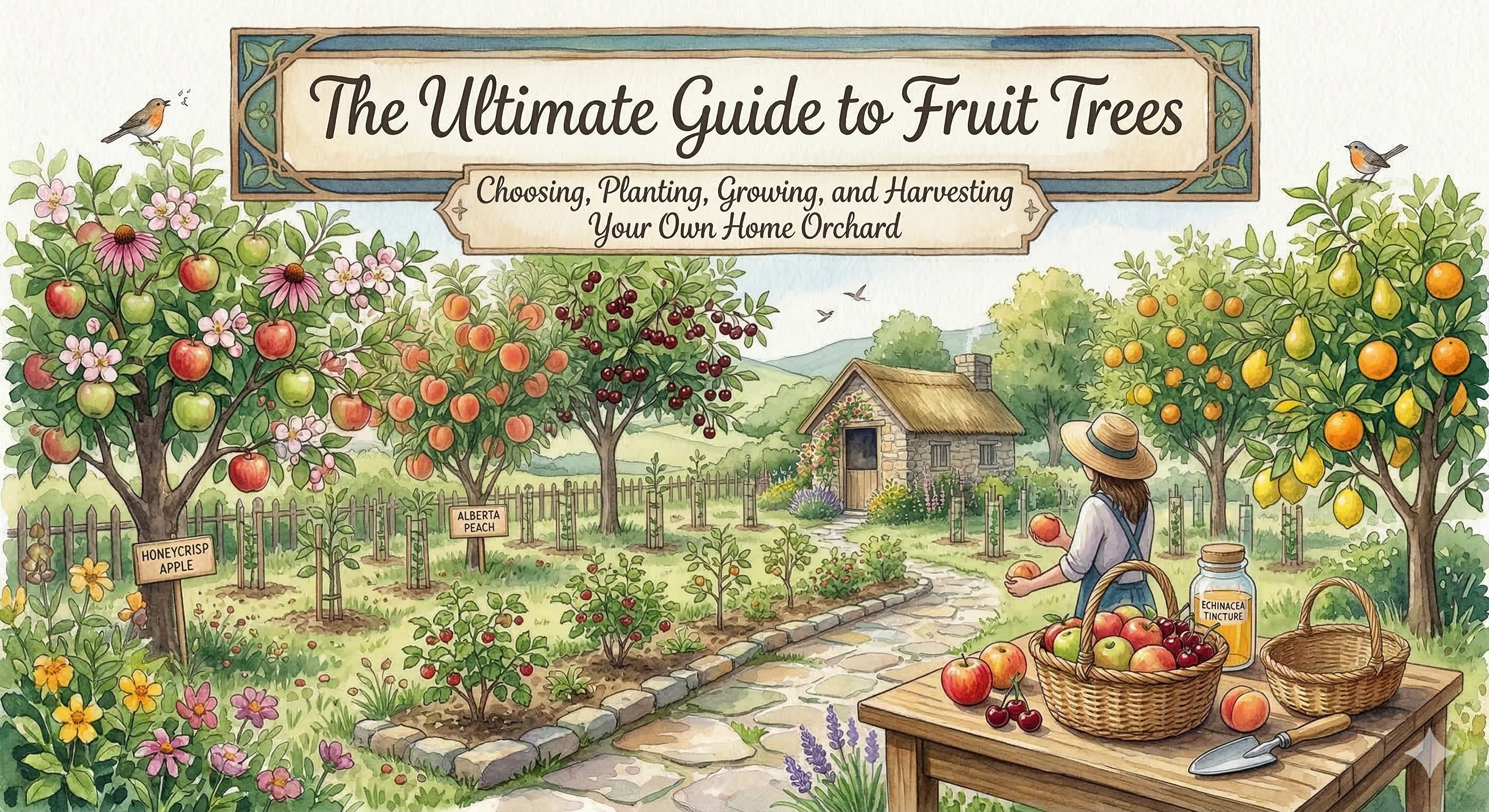
The Ultimate Guide to Fruit Trees
Written by David Rodgers — Updated March 2026
Choosing, Planting, Growing, and Harvesting Your Own Home Orchard
Imagine walking into your backyard in late summer and pulling a sun-warm, perfectly ripe peach off a branch you planted years ago. That's the magic of growing fruit trees — and the rewards go well beyond great fruit. A well-placed fruit tree provides shade, seasonal beauty (spring blossoms are spectacular), wildlife habitat, and a living connection to the rhythms of the growing year. Fair warning: fruit trees are not the "plant it and ignore it" proposition that shade trees often become. They ask more of you — regular pruning, seasonal care, pest monitoring, and genuine patience. But the payoff? Bushels of homegrown fruit you grew yourself. Deeply satisfying.
The Fundamentals — What You Must Know Before You Buy
Before you set foot in a nursery, there are five critical concepts that will save you from years of frustration. Most fruit tree failures come down to not understanding these fundamentals.
1. Chill Hours — The Most Overlooked Factor
Most deciduous fruit trees require a certain number of cumulative cold hours during winter to break dormancy properly and set fruit in spring. This is called the "chill hour requirement." A chill hour is generally one hour at or below 45°F (7.2°C). Trees that don't receive enough chill hours may flower erratically, fail to set fruit, or produce poor quality fruit.
🌡️
Example: A classic Elberta Peach needs 800 chill hours. If you live in Houston, Texas, where you might only accumulate 400–600 chill hours in a typical winter, that tree will struggle and eventually stop producing. But a low-chill peach like 'Tropic Beauty' (250 chill hours) thrives in Houston. Same tree, wildly different outcome based on one number.
| Fruit Type | Chill Hour Range | Notes |
|---|---|---|
| Apple | 400–1,200 hours | Most standard varieties: 800–1,000 hours |
| Pear | 600–900 hours | Low-chill varieties available (200–400 hours) |
| Peach | 150–1,000 hours | Huge range — match to your location carefully |
| Nectarine | 200–900 hours | Similar to peach |
| Plum (Japanese) | 400–900 hours | Some low-chill varieties available |
| Plum (European) | 700–1,200 hours | More cold-demanding |
| Sweet Cherry | 700–1,200 hours | Difficult in warm climates |
| Sour Cherry | 700–1,000 hours | Slightly more adaptable |
| Apricot | 400–900 hours | Late frost after early bloom is a serious risk |
| Fig | 0–100 hours | Ideal for warm climates |
| Citrus | 0 hours | Frost is the enemy — not the cold |
📍
Find your local chill hours at your local Cooperative Extension office or search for the "UC Davis fruit chill hour calculator" online.
2. Pollination — When One Tree Isn't Enough
Some fruit trees are self-fertile — they can set fruit with their own pollen. Others are self-sterile — they absolutely require pollen from a compatible second variety that blooms at the same time. Without that second tree, you'll get gorgeous blossoms every spring and zero fruit, year after year.
| Fruit Type | Pollination | Notes |
|---|---|---|
| Apple | Most need a pollinator | Need two compatible varieties with overlapping bloom times. Crabapples count as pollinators. |
| Pear | Most need a pollinator | European pears cross-pollinate with each other; Asian pears with Asian pears. |
| Sweet Cherry | Most need a pollinator | Stella and Lapins are self-fertile exceptions. |
| Sour Cherry | Self-fertile | Montmorency and most sour cherries are self-fertile. Great beginner choice. |
| Peach | Usually self-fertile | Most peach varieties produce fine alone. |
| Nectarine | Usually self-fertile | Same as peach — typically self-fertile. |
| Plum (Japanese) | Usually needs a pollinator | Most need a compatible second variety nearby. |
| Plum (European) | Often self-fertile | Many can self-pollinate, though a second tree improves yield. |
| Apricot | Often self-fertile | Many are self-fruitful, but a pollinator typically boosts production. |
| Fig | Self-fertile | Common garden figs don't need pollination at all. |
🐝
If you only have space for one tree of a type that needs a pollinator, check if neighbors have a compatible tree — bees will travel surprisingly far. Also look into multi-grafted trees ('4-in-1' trees), which have multiple varieties grafted on a single rootstock and pollinate themselves.
3. Tree Size — Dwarf, Semi-Dwarf, or Standard?
Tree size is determined by its rootstock — the root system the desired fruit variety is grafted onto. The same 'Honeycrisp' apple variety can be a compact 8-foot tree or a full-size 25-footer depending entirely on the rootstock.
| Size | Height | Years to Bear | Annual Yield | Best For |
|---|---|---|---|---|
| Dwarf | 8–10 feet | 2–4 years | 1–2 bushels | Small yards, containers, espalier — requires permanent staking; shorter lifespan (15–20 years) |
| Semi-Dwarf | 12–15 feet | 3–5 years | 2–5 bushels | Most home orchards — the sweet spot between space and productivity; 30–50 year lifespan |
| Standard | 20–30+ feet | 5–10 years | 4–8+ bushels | Large properties; longest lived (50–100+ years); ladder required for harvest |
4. Grafting — Why Fruit Trees Aren't Grown From Seed
Almost all fruit trees sold at nurseries are grafted: the root system of one tree (the rootstock) is joined to the fruiting top of another (the scion). This is done because fruit trees grown from seed don't reliably produce the same fruit as the parent — an apple seed from a Honeycrisp will almost certainly NOT grow a Honeycrisp tree. Look for the graft union — a slightly knobby spot on the lower trunk. This union should always be planted a few inches ABOVE ground level.
🚨
If the graft union is buried, the scion can root itself and you'll lose the dwarfing effect of the rootstock. If the rootstock sends up shoots (suckers) below the union, remove them immediately — they're a different variety entirely.
5. USDA Hardiness Zone — The Starting Line
Your USDA Hardiness Zone is just the starting line for fruit trees — chill hours, summer heat, humidity, and frost dates all matter equally. Zone 8 in humid South Carolina grows very different fruit trees than zone 8 in arid central California. Your local Cooperative Extension office is the single best resource for variety recommendations in your specific region.
Meet the Fruits — Growing Profiles
🍎 Apples (Malus domestica) — The King of the Home Orchard
Apples are the most popular home fruit tree in the US — adaptable, productive, and available in an almost endless variety of flavors and uses. They require more consistent care than most fruit trees (annual pruning, pest management, thinning), but reward that attention lavishly.
- •Climate: Zones 3–9, depending on variety.
- •Chill Hours: 400–1,200 hours depending on variety.
- •Pollination: Almost all varieties need a pollinator.
- •Training: Central leader (pyramid shape).
- •Key Pests: Apple scab, fire blight, codling moth ("wormy apples"), powdery mildew.
- •Top Varieties: Honeycrisp (zones 3–8, exceptional flavor), Enterprise (outstanding disease resistance), Fuji (low-chill 300–400 hours, zones 6–9), Liberty (excellent disease resistance, zones 4–7), Anna (low-chill 200–300 hours for warm climates).
🍐 Pears (Pyrus communis and Pyrus pyrifolia)
Pears are often the "easiest" pome fruit — more tolerant of wet soils and clay than apples, and somewhat less plagued by pest pressure. European pears (soft, buttery) must be picked before full ripeness and ripened indoors. Asian pears (crisp, apple-like texture) ripen on the tree.
- •Climate: Zones 4–8 for most European pears; Zones 5–9 for Asian pears.
- •Chill Hours: 600–900 for European; 400–800 for Asian.
- •Pollination: Most need a second variety. European × European; Asian × Asian.
- •Key Pests: Fire blight (pears are actually more susceptible than apples), pear psylla, codling moth.
- •Top Varieties: Bartlett (classic, zones 5–8), Bosc (nutty-rich, great keeper), Kieffer (very fire blight resistant, zones 4–9), Hosui (excellent Asian pear, zones 5–9).
🍑 Peaches (Prunus persica) — Summer's Sweetest Reward
Peaches are the rock stars of the home orchard — incredibly flavorful, productive, and often self-fertile. The downside: they're shorter-lived than apples and pears (15–20 years is a good run), and they need annual heavy pruning. In the right climate, nothing matches a ripe home-grown peach.
- •Climate: Zones 5–9. Cold-hardy varieties push into zone 4.
- •Chill Hours: 150–1,000+ depending on variety.
- •Pollination: Most peach varieties are self-fertile.
- •Pruning: Open center (vase) shape. Remove 40–50% of previous year's growth every year — peaches fruit on one-year-old wood.
- •Key Pests: Peach leaf curl (prevent with dormant copper spray), peach tree borer, brown rot.
- •Top Varieties: Contender (very cold-hardy, zones 4–8), Reliance (extremely cold-hardy, zones 4–8), Redhaven (classic mid-season, zones 5–8), Elberta (legendary, zones 5–9, 800 chill hours), Flordaprince (150 chill hours, zones 7–9).
🍒 Cherries (Prunus avium & Prunus cerasus)
There are two very different cherry worlds. Sweet cherries (fresh eating) are finicky about late frosts and need pollinators. Sour/tart cherries (for pies and jams) are dramatically easier — smaller trees, self-fertile, more disease resistant, and incredibly productive.
- •Sweet Cherries — Climate: Zones 5–7. Chill Hours: 700–1,200. Top Varieties: Bing (zones 5–7, needs pollinator), Stella (self-fertile, zones 5–8), Lapins (self-fertile, crack-resistant).
- •Sour Cherries — Climate: Zones 4–8. Pollination: Self-fertile — one tree works beautifully. Top Varieties: Montmorency (the standard-bearer for tart cherries, zones 4–7), North Star (very cold-hardy dwarf, zones 3–8).
- •Key challenge for sweet cherries: Birds will take your cherries aggressively — netting is often essential.
🟡 Plums (Prunus salicina & Prunus domestica)
Plums fall into two camps: Japanese plums (juicy, fleshy, early-ripening) and European plums (which include prune plums that can be dried whole and classic cooking plums).
- •Japanese Plums — Climate: Zones 5–9. 400–900 chill hours. Most need a second variety. Top Varieties: Santa Rosa (partially self-fruitful), Methley (early-ripening, self-fertile, good for South).
- •European Plums — Climate: Zones 4–8. 700–1,200 chill hours. Many are self-fertile. Top Varieties: Stanley (excellent, self-fertile, zones 5–8), Italian Prune (self-fertile, superb for drying), Green Gage (legendary flavor, zones 5–7).
- •Key Pests: Brown rot (very common), black knot fungus, plum curculio.
🍈 Figs (Ficus carica) — The Beginner's Best Friend
If you're intimidated by the complexity of apples or cherries, start with a fig. Figs are self-fertile, produce no "worms," tolerate drought once established, and produce abundantly. In cooler climates, they die back in winter but often regrow from the roots with protection.
- •Climate: Zones 7–11 in the ground; zones 6–7 with winter mulching or container growing.
- •Chill Hours: Very low (0–100). Great for warm climates.
- •Pollination: Self-fertile — no second tree needed.
- •Top Varieties: Brown Turkey (very popular, adaptable, zones 7–10), Chicago Hardy (most cold-hardy, zones 5b–10 with protection), Celeste (small, sweet, excellent flavor, zones 7–11).
🍊 Citrus — Warm Climate Wonders
For growers in zones 8–11, citrus is the ultimate backyard fruit. The key rule: citrus and frost don't mix. A hard freeze can kill most citrus, though some varieties handle brief light frosts.
- •Climate: Zones 8–11 (frost-free climates). Satsuma mandarin survives zone 8 with protection.
- •Chill Hours: None needed.
- •Pollination: Most citrus varieties are self-fertile.
- •Top Varieties: Meyer Lemon (most popular home variety, ever-bearing), Satsuma Mandarin (hardiest citrus), Navel Orange (classic), Eureka Lemon (heavy producer, zones 9–11).
🟠 Apricots (Prunus armeniaca) — High Risk, High Reward
Apricots bloom very early in spring, and that early bloom is routinely killed by late frosts in most of the US, resulting in years with zero fruit. They perform best in climates with cold, stable winters and warm, dry springs — Pacific Coast, intermountain West, and parts of the Southwest.
- •Climate: Zones 5–9, but late spring frosts are the enemy. Best in zones 7–9 with dry springs.
- •Chill Hours: 400–900 hours.
- •Top Varieties: Moorpark (classic rich flavor), Goldcot (cold-hardy, late-blooming, great for Midwest and East, zones 4–8), Autumn Royal (late-blooming, avoids many spring frosts).
Site Selection and Planting
Sunlight — Non-Negotiable
Fruit trees need at least 6–8 full hours of direct sunlight every day — and honestly, more is better. 8–10 hours is ideal. Fruit quality and quantity are directly tied to sun exposure. A fruit tree in partial shade will produce disappointing harvests regardless of everything else you do right.
☀️
The Sun Rule: If the spot you have in mind gets less than 6 hours of direct sun, plant something else there. No amount of other good conditions makes up for inadequate sunlight in a fruit tree.
Drainage — The Other Non-Negotiable
Fruit tree roots sitting in waterlogged soil develop root rot, decline, and die. Test your drainage: dig a hole 12 inches deep, fill it with water, and watch. If the water drains within an hour, you're fine. If it's still sitting there several hours later, you have a problem.
🌬️
Frost Pocket Warning: Cold air is heavier than warm air and sinks into low-lying areas. A frost pocket in your yard can be 5–10°F colder than surrounding areas on a still spring night. Plant early-blooming stone fruits on higher ground or a south-facing slope when possible.
Spacing Requirements
| Tree Size | Within a Row | Between Rows |
|---|---|---|
| Dwarf | 8–10 feet apart | 10–12 feet apart |
| Semi-Dwarf | 12–18 feet apart | 18–20 feet apart |
| Standard | 20–25 feet apart | 25–30 feet apart |
The Planting Process
Find the graft union on your tree (the slight knob a few inches above the base of the trunk). This must remain 2–3 inches ABOVE the soil surface after planting. Never bury the graft union.
- •Dig the hole 2–3 times wider than the root system but only as deep as the root system.
- •Bare root trees: Soak roots in water for 2–4 hours before planting. Fan roots outward — don't let them circle or fold.
- •Container trees: Score 4 vertical cuts down the sides to break circling roots.
- •B&B trees: Remove ALL burlap, wire, and rope once positioned in the hole.
- •Backfill with original native soil — don't heavily amend the backfill itself.
- •Apply 2–4 inches of organic mulch in a 3–4 foot diameter ring, keeping mulch 6+ inches from the trunk.
✂️
First-Year Pruning at Planting: For an unbranched whip (young tree with no side branches), cut it back to 30–36 inches above the ground at planting time. This triggers branching that will form your scaffold structure. It feels brutal but is essential for developing a strong, productive tree form.
Ongoing Care — The Year-Round Rhythm
Pruning — The Single Most Important Annual Task
Unlike shade trees, fruit trees need annual pruning to stay healthy and productive. Unpruned fruit trees become overly dense, shaded in the interior, prone to disease, and alternate-bearing (bumper crop one year, almost nothing the next).
The Two Primary Training Systems
- •Central Leader: One main vertical trunk with scaffold branches arranged in tiers. Creates a pyramid shape with good light distribution. Best for: apples, pears, European plums, sweet cherries.
- •Open Center (Vase Shape): The central trunk is eliminated, leaving 3–5 main scaffold branches that spread outward. Keeps interior open to sunlight and airflow. Best for: peaches, nectarines, Japanese plums, apricots, tart cherries, figs.
When to Prune — By Fruit Type
| Fruit Type | Best Pruning Time |
|---|---|
| Apple & Pear | Late winter to early spring, before bud break |
| Peach & Nectarine | Early spring, after the worst cold has passed |
| Cherry (Sweet) | Late spring after bloom (avoids bacterial canker spread) |
| Cherry (Sour) | Late winter to early spring, dormant season |
| Plum | Late winter to early spring |
| Apricot | Late spring in humid climates; late winter in dry western climates |
| Fig | Late winter while dormant |
| Citrus | After fruiting, avoid cold periods |
✂️
Golden Pruning Rules: (1) Never remove more than 25–30% of living wood in a single year (peaches 40–50% is normal). (2) Start by removing the 4 Ds: Dead, Diseased, Damaged, and Duplicate branches. (3) Sanitize tools with rubbing alcohol when working on trees with known disease issues. (4) Cut to the branch collar, not into it.
Fruit Thinning — The Counterintuitive Secret to Better Fruit
When your fruit tree sets a bumper crop of tiny developing fruits in late spring, deliberately remove a significant portion of them. This allows remaining fruit to grow larger and develop better flavor, and prevents alternate-bearing.
- •Apple & Pear: Thin to one fruit per cluster, spaced 6–8 inches apart. Do within 4–6 weeks of bloom.
- •Peach & Nectarine: Thin to 6–8 inches between fruit — aggressively. It looks like too much. It isn't.
- •Plum: Thin to 3–4 inches apart.
- •Apricot: Thin to 2–3 inches apart.
Watering
- •Young Trees (Years 1–2): Water deeply 1–2 times per week during the growing season. Dry soils in the first two years are the number-one cause of young fruit tree death.
- •Established Trees: Benefit from irrigation during dry spells, especially when fruit is sizing up. A good rule of thumb: 1 inch of water per week combined from rainfall and irrigation.
💧
Drip irrigation is ideal for home orchards — it delivers water directly to the root zone, keeps foliage dry (reducing fungal disease), and conserves water. A drip ring or soaker hose around each tree is one of the best investments an orchard gardener can make.
Fertilizing
- •Read your tree: 12–18+ inches of new shoot growth per year = hold off on heavy fertilizing. Less than 6 inches/year = fertilizer likely needed.
- •Young trees (years 1–3): Apply a balanced fertilizer (10-10-10) in early spring.
- •Bearing trees: Apply nitrogen-based fertilizer in early spring before bud break. Avoid fertilizing after mid-summer — late-season growth is soft and susceptible to winter damage.
- •Don't fertilize in fall, immediately after transplanting, or during drought stress.
Common Pests & Diseases
| Problem | Affects | Signs | Management |
|---|---|---|---|
| Apple Scab | Apple, Pear | Olive-green to black spots on leaves and fruit. Overwinters in fallen leaves. | Plant resistant varieties; rake fallen leaves; dormant copper/sulfur sprays; protective fungicide sprays during wet periods. |
| Fire Blight | Apple, Pear | Branches wilt and turn brown; tips curl into a "shepherd's crook." Bacterial disease. | Prune 12 inches below infected tissue with sterilized tools. Copper sprays during bloom. Plant resistant varieties. |
| Peach Leaf Curl | Peach, Nectarine | Leaves thicken, curl, turn reddish-purple in spring. Reduces vigor. | Apply copper or lime-sulfur fungicide in late fall after leaf drop AND again in late winter before buds swell. The prevention window is critical. |
| Brown Rot | All stone fruits | Fruit rots rapidly on the tree, often with gray fuzzy mold. Spreads fast in warm, wet weather. | Remove all mummified fruit; prune for airflow; fungicide sprays from petal fall through harvest; pick promptly at ripeness. |
| Peach Tree Borer | Peach, Cherry, Plum | Larvae tunnel at the crown and lower trunk; sawdust-like frass visible. Can kill young trees. | Pheromone traps; beneficial nematodes applied to soil; trunk wrap barriers. |
| Codling Moth | Apple, Pear | "Worms in apples." Larvae tunnel into fruit. Multiple generations per season. | Pheromone traps for monitoring; kaolin clay barriers; spinosad sprays timed to egg hatch. |
🔑
IPM Philosophy: Monitor your trees regularly, identify problems accurately before treating, use the least harmful effective treatment, and build long-term resistance through good cultural practices — pruning for airflow, choosing resistant varieties, removing fallen fruit and leaves, keeping the orchard floor clean.
Seasonal Orchard Calendar
| Season | Key Tasks |
|---|---|
| Late Winter (dormant) | Prune most fruit trees. Apply dormant oil sprays for overwintering insects. Apply copper/sulfur for peach leaf curl prevention (critical timing). Order bare root trees. Inspect for rodent trunk damage. |
| Early Spring (bud swell to bloom) | Watch weather for frost risk during bloom — have frost cloth ready. Apply protective fungicide if wet weather predicted. DO NOT spray insecticides during bloom — protect pollinators. Set codling moth pheromone traps at petal fall. |
| Late Spring (after petal fall) | Thin fruit aggressively within 4–6 weeks of bloom. Begin pest scouting. Scout for fire blight — prune infected wood immediately with sterilized tools. |
| Summer | Monitor and irrigate during dry spells — especially critical during fruit sizing. Pick up fallen fruit promptly. Harvest at proper ripeness. |
| Fall | Plant new trees. Rake and remove fallen leaves. Pick up all remaining dropped fruit. Apply dormant copper spray for peach leaf curl after leaf drop. |
| Winter | Protect young trunks from rodents with hardware cloth guards. Apply dormant oil spray on mild days. Plan and order trees/supplies for spring. |
Harvesting — The Whole Point
Harvesting at the right time is as important as everything that came before it — pick too early and you'll have flavorless, starchy fruit; pick too late and it falls apart before you can enjoy it.
| Fruit | Ripeness Indicators |
|---|---|
| Apple | Flesh color beneath skin shifts (green to cream/yellow). Seeds turn brown inside. Fruit separates easily with a gentle upward twist. Taste test! |
| Pear (European) | DO NOT wait for ripeness on the tree — you'll get mush. Pick when firm, just beginning to color, and ripen at room temperature. |
| Pear (Asian) | Unlike European pears, Asian pears ripen on the tree. Taste and color are your guides. |
| Peach | Background skin color shifts from green to yellow or cream. Slight give when gently squeezed. Fragrance intensifies. |
| Cherry | Color is richest. Stem separates easily. Sweetness fully developed — taste one. |
| Plum | Background color fully developed. Slight give when pressed. Rich fragrance. Tastes sweet rather than starchy. |
| Fig | Fruit bends or droops under its own weight. Skin begins to crack slightly. Soft to touch. Tiny drop of nectar at the eye is a great sign. |
Harvest Tips
- •Harvest in the morning — after dew dries but before afternoon heat. Cooler fruit stores longer.
- •Handle gently — bruising accelerates spoilage dramatically.
- •Don't wash until ready to eat — moisture accelerates rot.
- •Stagger harvest windows — plant varieties that ripen at different times to extend your harvest season.
- •Pick regularly — leaving overripe fruit on the tree attracts pests and diseases and weighs down branches.
Storage Guidelines
| Fruit | Storage |
|---|---|
| Apple | 4–8 weeks refrigerated (32–40°F). Late-season varieties store longer than early ones. |
| Pear (European) | Ripen at room temperature first, then refrigerate up to 3–5 days once ripe. |
| Pear (Asian) | 1–3 months refrigerated — they are naturally crisp and store well. |
| Peach | 1–2 days at room temperature once fully ripe; up to 1 week refrigerated. Freeze or can for long-term storage. |
| Cherry | 1–2 weeks refrigerated. Freeze or make preserves for longer storage. |
| Plum | 2–4 weeks refrigerated. Excellent for jam, jelly, dried prunes. |
| Fig | 2–3 days at room temperature; 5–7 days refrigerated. Dry or make preserves for long-term storage. |
🧊
Freezing is the easiest way to preserve surplus fruit. Most fruit freezes beautifully: slice or halve, freeze on a single layer on a baking sheet, then transfer to bags. Stone fruits (peaches, plums, cherries) are outstanding frozen for smoothies, pies, and cobblers all winter long.
Special Topics for the Ambitious Grower
Espalier — When Space Is Limited
Espalier (pronounced "ess-PAL-ee-ay") is the ancient art of training fruit trees flat against a wall, fence, or trellis. It's not just a space-saver — espalier trees against a south or west-facing masonry wall benefit from the reflected and stored heat, allowing you to grow fruit that might otherwise be marginal for your zone.
Apples and pears are the classic choices for espalier because they fruit on long-lived spurs (permanent fruiting structures) that work beautifully with the flat-plane training. Common forms include the horizontal T (Palmette), Belgian fence, candelabra, and fan. Espalier requires consistent, careful annual pruning.
- •Best trees for espalier: Apple, pear. Also peach and fig fans against south-facing walls.
- •Support needed: Wire horizontal supports (12–14 gauge galvanized wire) strung 18–24 inches apart along a fence, wall, or freestanding post system.
Multi-Grafted Trees — Maximum Variety, Minimum Space
Can't decide between Honeycrisp, Fuji, and Gala? Can't plant three trees but need cross-pollination? Multi-grafted trees — sometimes called "4-in-1" or "5-in-1" trees — have multiple varieties grafted onto a single rootstock. They look like one tree but produce 3–5 different fruits.
The benefits are real: you get built-in cross-pollination, multiple harvest windows, and variety without the footprint. The trade-off is that management is trickier — each grafted variety grows at a different rate, so you must be careful not to let one variety dominate and shade out the others through pruning.
Container Growing
Dwarf fruit trees grow reasonably well in large containers (25–30 gallon minimum), making orchard growing possible on patios, balconies, and small urban spaces. Container growing offers one huge advantage: you can move trees into frost protection during cold snaps, allowing marginally tender varieties to survive in colder zones.
- •Very large container (bigger is better); excellent drainage (drainage hole is mandatory).
- •Consistent watering (containers dry out fast); regular fertilizing (nutrients leach from containers with frequent watering).
- •Repot every 3–5 years; choose dwarf rootstock varieties specifically.
Companion Planting in the Orchard
Strategic companion planting can improve your orchard's health and productivity:
- •Clover and other nitrogen-fixing plants: Planted between trees as living ground cover, they fix atmospheric nitrogen and feed the soil naturally. Bees love it too.
- •Comfrey: Deep-rooted perennial that mines minerals from subsoil and makes them available as mulch when leaves are cut. Excellent "orchard fertilizer" plant.
- •Nasturtiums: Attract aphids away from trees (use as a trap crop). Also attract beneficial predatory insects.
- •Dill, fennel, yarrow: Attract parasitic wasps and other beneficial insects that prey on orchard pests.
- •What to avoid: Grass growing right up to the trunk (competes aggressively for water and nutrients). Keep a bare mulched zone at least 3–4 feet in diameter around each tree.
Buying the Right Trees — Nursery Shopping Checklist
Not all nursery trees are created equal. Before buying, look for:
- •A visible, healthy graft union (slightly knobby, not buried or cracked)
- •Root flare visible at or near soil level — not buried deep in the pot
- •No circling or girdling roots (check by looking at the soil surface and root edges)
- •Healthy, plump buds (or good foliage in-season)
- •No cracks, wounds, or signs of canker on the trunk
- •A tag confirming variety, rootstock, and zone suitability
- •Caliper (trunk diameter) proportional to overall tree size — not a skinny stick in a big pot
Quick Reference: Fruit Tree Essentials
| Fruit | Zones | Chill Hrs | Pollination | Training | Years to Bear |
|---|---|---|---|---|---|
| Apple | 3–9 | 400–1,200 | Needs pollinator | Central leader | 4–10 years |
| Pear | 4–9 | 400–900 | Needs pollinator | Central leader | 4–6 years |
| Peach | 5–9 | 150–1,000 | Self-fertile (most) | Open center | 2–4 years |
| Sweet Cherry | 5–7 | 700–1,200 | Needs pollinator | Central leader | 4–7 years |
| Sour Cherry | 4–8 | 700–1,000 | Self-fertile | Open center | 3–5 years |
| Plum (Japanese) | 5–9 | 400–900 | Needs pollinator | Open center | 3–5 years |
| Plum (European) | 4–8 | 700–1,200 | Often self-fertile | Central leader | 4–6 years |
| Fig | 7–11 | 0–100 | Self-fertile | Open center | 1–3 years |
| Citrus | 8–11 | 0 | Self-fertile | Light pruning | 2–5 years |
| Apricot | 5–9 | 400–900 | Often self-fertile | Open center | 3–5 years |
🌿 Get Seasonal Gardening Tips
New guides, planting reminders, and growing tips — straight to your inbox.
No spam. Unsubscribe anytime.
About the Author
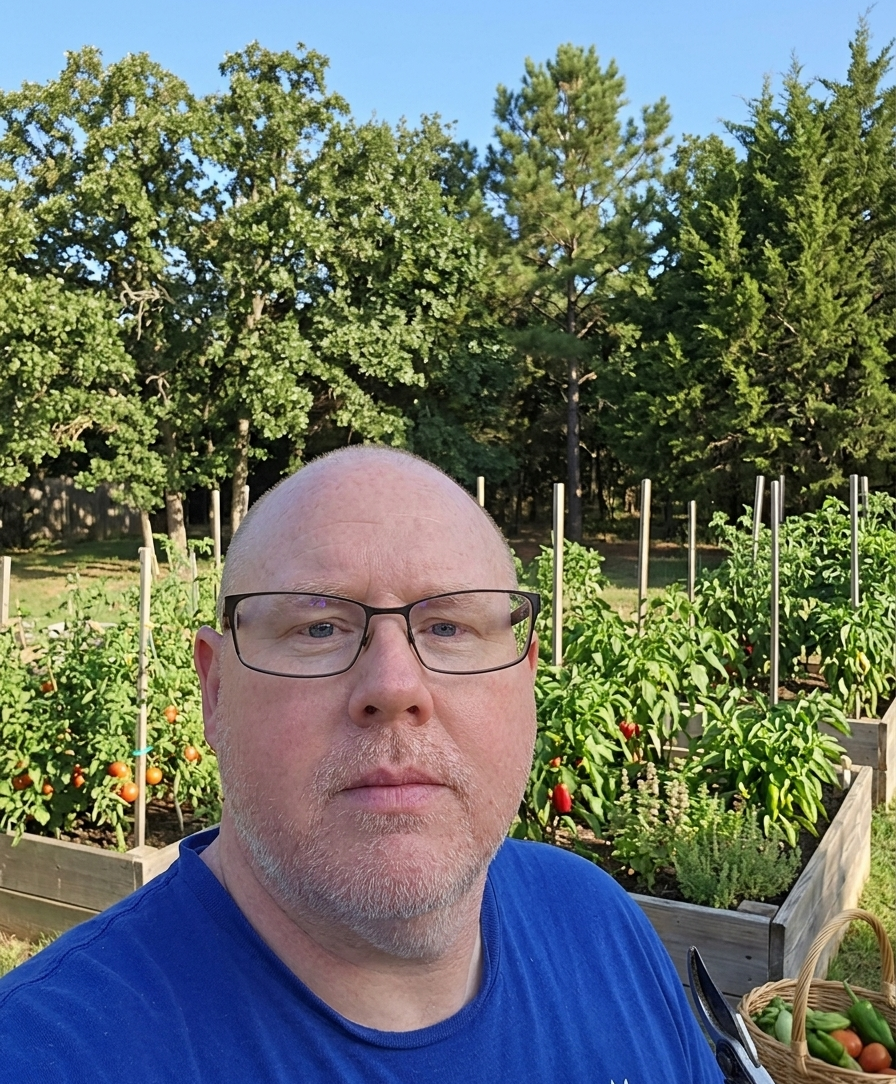
David Rodgers is the Founder & Head Gardener of Planting Atlas. With over 40 years of hands-on gardening experience in Oklahoma's Zone 7 climate, he researches, writes, and personally tests every guide on the site.
David draws from real backyard trials, soil testing, and trusted sources like Oklahoma State University Extension and USDA data to deliver practical, zone-specific advice that actually works.
Read more about David and Planting Atlas →