Loading…
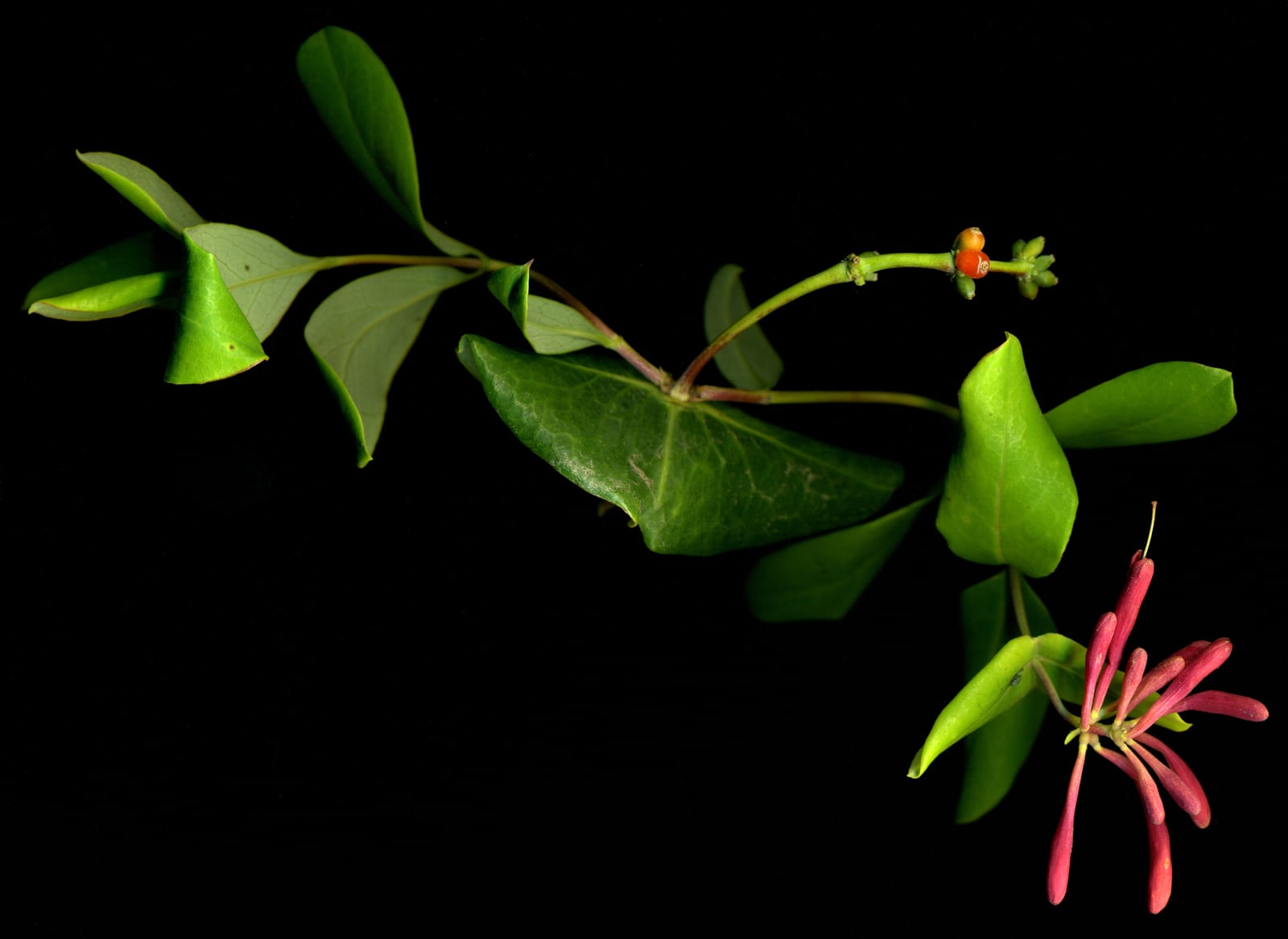 🔍 Click to enlarge
vineperennial
Honeysuckle
Lonicera sempervirens
Sweetly fragrant native vine with tubular flowers beloved by hummingbirds. Fast and vigorous.
Quick Facts
Sun:☀️ Full Sun, ⛅ Partial Shade
Water:💧💧 Moderate
USDA Zones:Zones 4–9
Space:🌱 Small Bed, 🏡 Large Garden
Soil:Loam, Clay, Sandy, Silty
Best Season(s):Spring, Summer
Experience Level:🌱 Beginner
Native Range:Eastern & Southeastern United States
Bloom Color:Red-orange to coral, hummingbird favorite
Bloom Cycle:Late spring through summer, with repeat bloom
Care Notes
Choose native species over invasive Japanese honeysuckle. Prune after flowering to control spread.
Growing Details
Mature Size:10-20 ft climbing length
Growth Rate:🐇 Fast
Zone Performance
In zone 4 at the cold edge, native coral honeysuckle dies back to woody stems but reliably resprouts and blooms the following season. In zone 9, be vigilant about distinguishing this native species from invasive Japanese honeysuckle (Lonicera japonica), which spreads aggressively into wooded areas in warm, humid Southeastern climates.
Companions & Wildlife
🦌 Deer Resistance
occasionally damaged
Deer will browse honeysuckle foliage and stems, particularly new growth, more readily than they browse many other flowering vines.
🐝 Pollinator Value
high
Native coral honeysuckle is a favorite of ruby-throated hummingbirds and also attracts hummingbird moths and butterflies.
Good Companions
Trumpet Vine — Both are premier native hummingbird vines, extending nectar availability when grown together on the same or adjacent structures.
Purple Coneflower — Coneflower's summer bloom picks up as honeysuckle's peak spring flowering slows, keeping pollinator interest going.
Butterfly Bush — Complements honeysuckle's fragrance and nectar value, creating a layered pollinator hedge along a fence line.
Troubleshooting
⚠️ Aphids clustering on new growth and flower buds
Spray off with a strong stream of water or apply insecticidal soap; ladybugs typically arrive naturally to control populations.
⚠️ Powdery mildew coating leaves in late summer
Improve air circulation through selective pruning and avoid wetting foliage during watering.
⚠️ Sparse bloom on an overgrown vine
Prune right after the main spring flush to shape the plant and encourage a second, lighter bloom later in summer.
⚠️ Pet Safety
Berries are mildly toxic to cats and dogs — the native trumpet honeysuckle is a far better choice than invasive Japanese honeysuckle (L. japonica).
Informational only — always check with a veterinarian if you suspect your pet has eaten something it shouldn't have.