Loading…
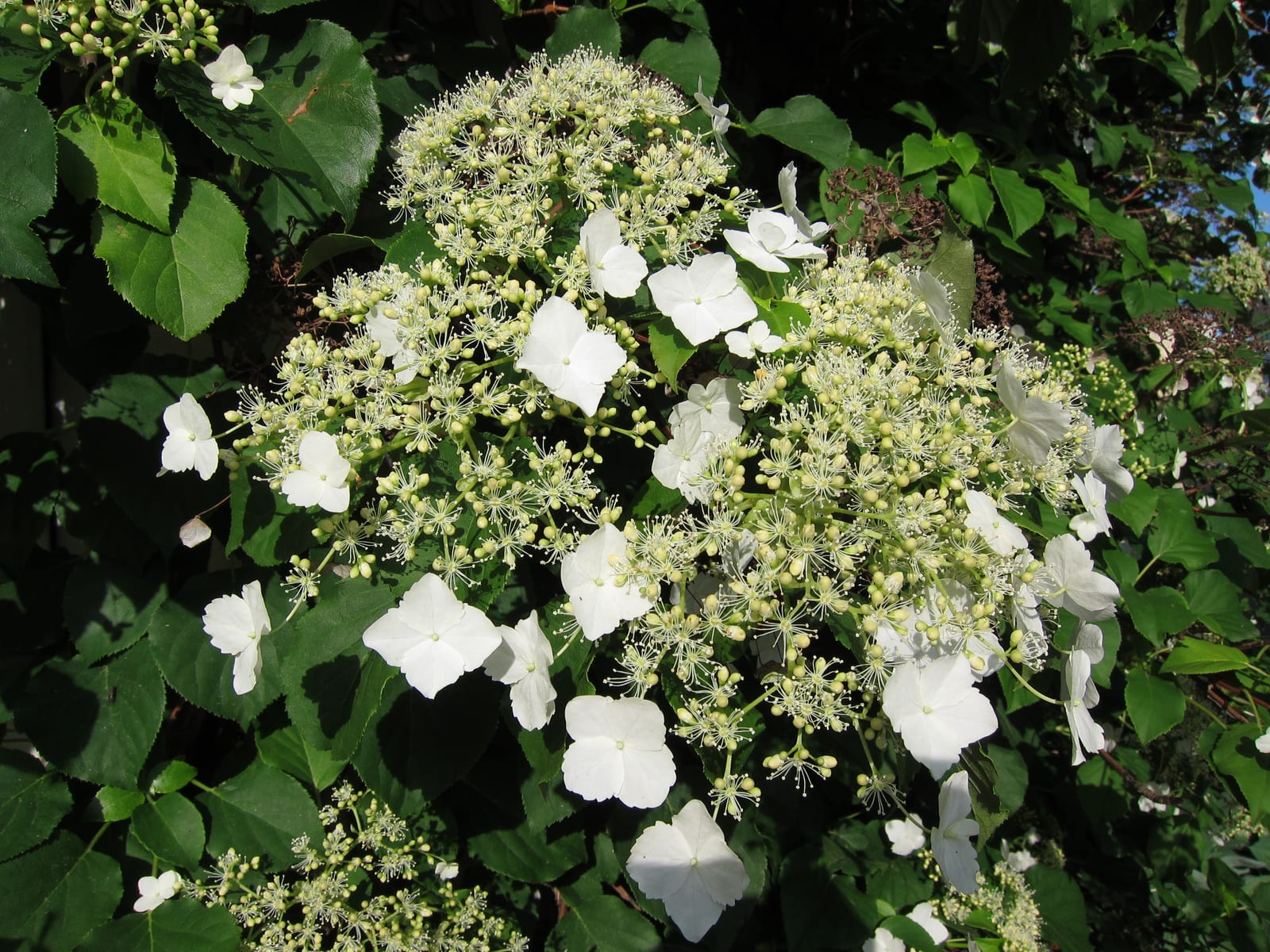 🔍 Click to enlarge
vineperennial
Climbing Hydrangea
Hydrangea anomala subsp. petiolaris
Slow-starting but spectacular shade vine with white lacecap flowers and exfoliating bark.
Quick Facts
Sun:⛅ Partial Shade, 🌑 Full Shade
Water:💧💧 Moderate
USDA Zones:Zones 4–8
Space:🏡 Large Garden
Soil:Loam, Clay, Silty
Best Season(s):Spring, Fall
Experience Level:🌿 Intermediate
Native Range:Japan & Korea
Bloom Color:White, lacecap-style clusters
Bloom Cycle:Early summer
Care Notes
Patient gardeners are rewarded — takes 3–5 years to bloom but then spectacular. Self-clinging.
Growing Details
Mature Size:30-50 ft climbing length, slow to establish
Growth Rate:🐢 Slow
Zone Performance
At the cold edge in zone 4, plants need a sheltered north or east wall to avoid winter sun-scald and frost-crack on the exfoliating bark. In zone 8, the vine tolerates more sun than in cooler zones but still performs best out of hot afternoon exposure, and the long 3-5 year establishment period holds true across the entire range.
Companions & Wildlife
🦌 Deer Resistance
occasionally damaged
Deer will browse climbing hydrangea foliage when other food is scarce, particularly on young, low-growing shoots.
🐝 Pollinator Value
moderate
The lacecap flower clusters attract bees and small pollinating flies drawn to the showy sterile outer florets.
Good Companions
Hosta — Shares the same partial-to-full-shade preference and moist soil, filling the ground plane beneath the climbing canopy.
Astilbe — Astilbe's feathery plumes thrive in the same cool, humus-rich shade conditions and bloom around the same early summer window.
Japanese Painted Fern — Provides textural contrast at the base of a north-facing wall where climbing hydrangea is often sited.
Troubleshooting
⚠️ No blooms for several years after planting
Be patient — this species is genuinely slow to reach flowering maturity; ensure it has a climbing surface to grip, since vines sprawling on the ground rarely bloom.
⚠️ Weak attachment to smooth surfaces like vinyl siding
Provide a rough masonry, brick, or wood surface, or install a support trellis for the self-clinging aerial rootlets to grip.
⚠️ Leaf scorch in hot afternoon sun
Relocate or provide afternoon shade, especially in zones 7 and warmer.
⚠️ Pet Safety
Toxic to cats and dogs (cyanogenic glycosides), same as shrub hydrangeas.
Informational only — always check with a veterinarian if you suspect your pet has eaten something it shouldn't have.