Loading…
 🔍 Click to enlarge
fruitperennial
Cherry Tree
Prunus avium
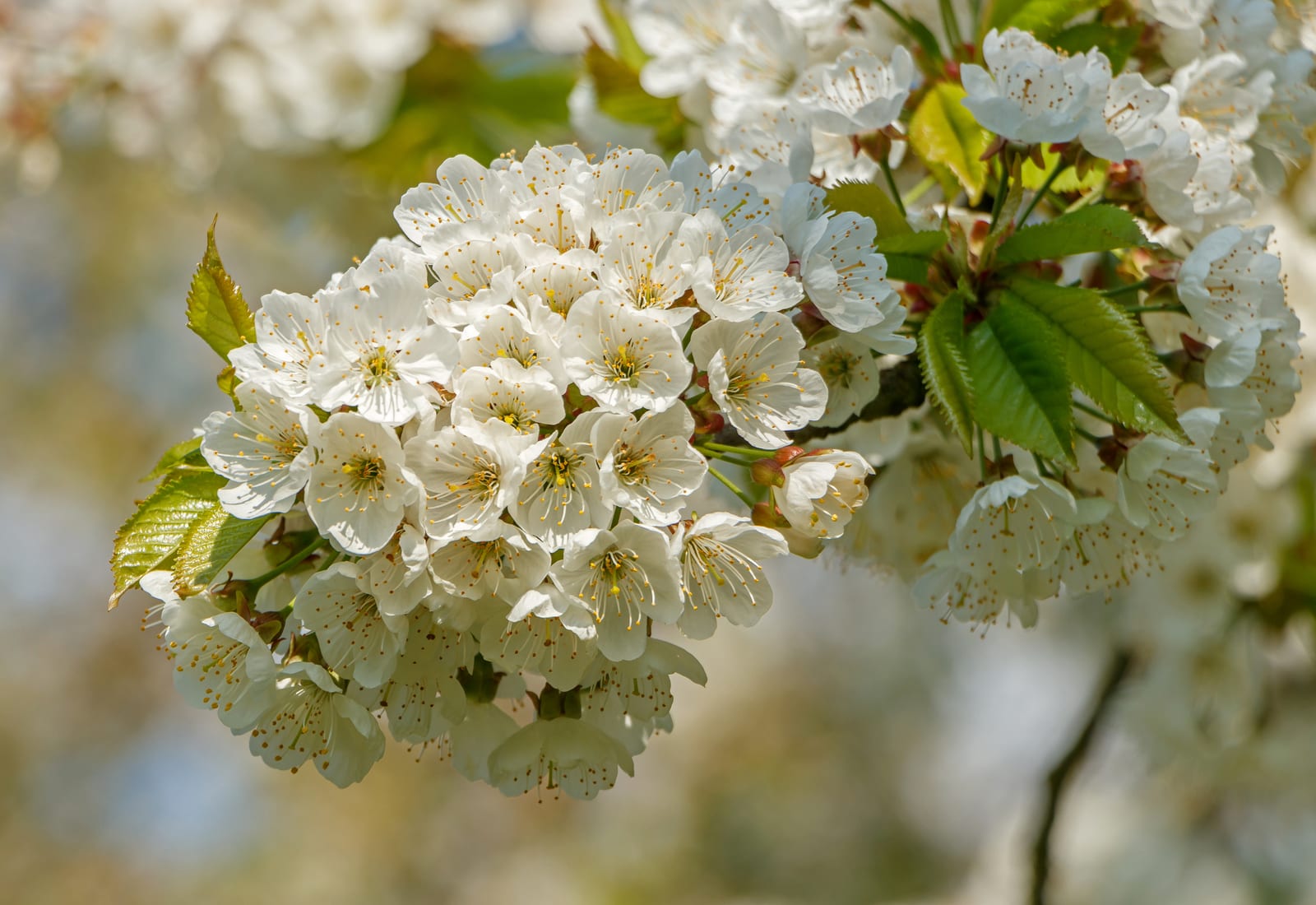
Beautiful ornamental tree that produces sweet or tart fruit. Stunning spring blossoms.
Quick Facts
Sun:☀️ Full Sun
Water:💧💧 Moderate
USDA Zones:Zones 4–9
Space:🏡 Large Garden
Soil:Loam, Sandy, Silty
Best Season(s):Spring
Experience Level:🌳 Advanced
Native Range:Europe & Western Asia
Bloom Color:White to pink blossoms
Bloom Cycle:Early-to-mid spring, one dramatic flush
Days to Harvest:3–5 years from planting
Harvest Pattern:Perennial — produces year after year
Care Notes
Sweet cherries need a pollinator. Net trees to protect from birds. Prune to open center form.
Growing Details
Mature Size:35-40 ft tall, 25-30 ft wide (standard sweet cherry; dwarf types 10-15 ft)
Growth Rate:🌿 Moderate
Zone Performance
At the cold edge (Zone 4), sweet cherries can suffer bud and blossom damage from late spring frosts since they bloom very early; tart (sour) cherries are more cold-hardy and reliable in this range. At the warm edge (Zone 9), most sweet cherries fail to receive enough winter chill hours to break dormancy properly, so they are rarely successful there without low-chill cultivars.
Companions & Wildlife
🦌 Deer Resistance
frequently damaged
Deer heavily browse cherry bark, buds, and low branches, especially on young trees in winter, making trunk protection and fencing important.
🐝 Pollinator Value
high
One of the earliest spring bloomers, providing critical early-season forage for honeybees, mason bees, and bumblebees.
Good Companions
Garlic — Planted around the base, garlic's sulfur compounds help repel aphids and borers common on cherry trees.
Lavender — Draws in pollinators for the early spring blossoms while its scent helps mask the tree from some pest insects.
Comfrey — Deep-rooted comfrey mines nutrients from the subsoil and its cut leaves make a nutrient-rich mulch for the root zone.
Tansy — A traditional orchard companion known to help repel ants and aphids from fruit trees.
Troubleshooting
⚠️ Birds and squirrels stripping the entire crop
Cover smaller trees with netting as fruit begins to color, since cherries are one of the most bird-vulnerable tree fruits.
⚠️ Brown rot causing fruit to shrivel and rot on the tree
Improve air circulation through pruning, remove mummified fruit, and apply fungicide during bloom in humid conditions.
⚠️ Cracked fruit after rain near harvest
Choose crack-resistant cultivars and avoid heavy irrigation right before harvest, especially ahead of rain.
⚠️ No fruit despite healthy blossoms
Plant a compatible pollinator variety nearby for sweet cherries, since most sweet cherry cultivars are self-incompatible.
⚠️ Pet Safety
Ripe flesh is fine in small amounts, but pits, leaves, and stems contain cyanogenic compounds toxic to cats and dogs — remove pits before sharing fruit.
Informational only — always check with a veterinarian if you suspect your pet has eaten something it shouldn't have.