Loading…
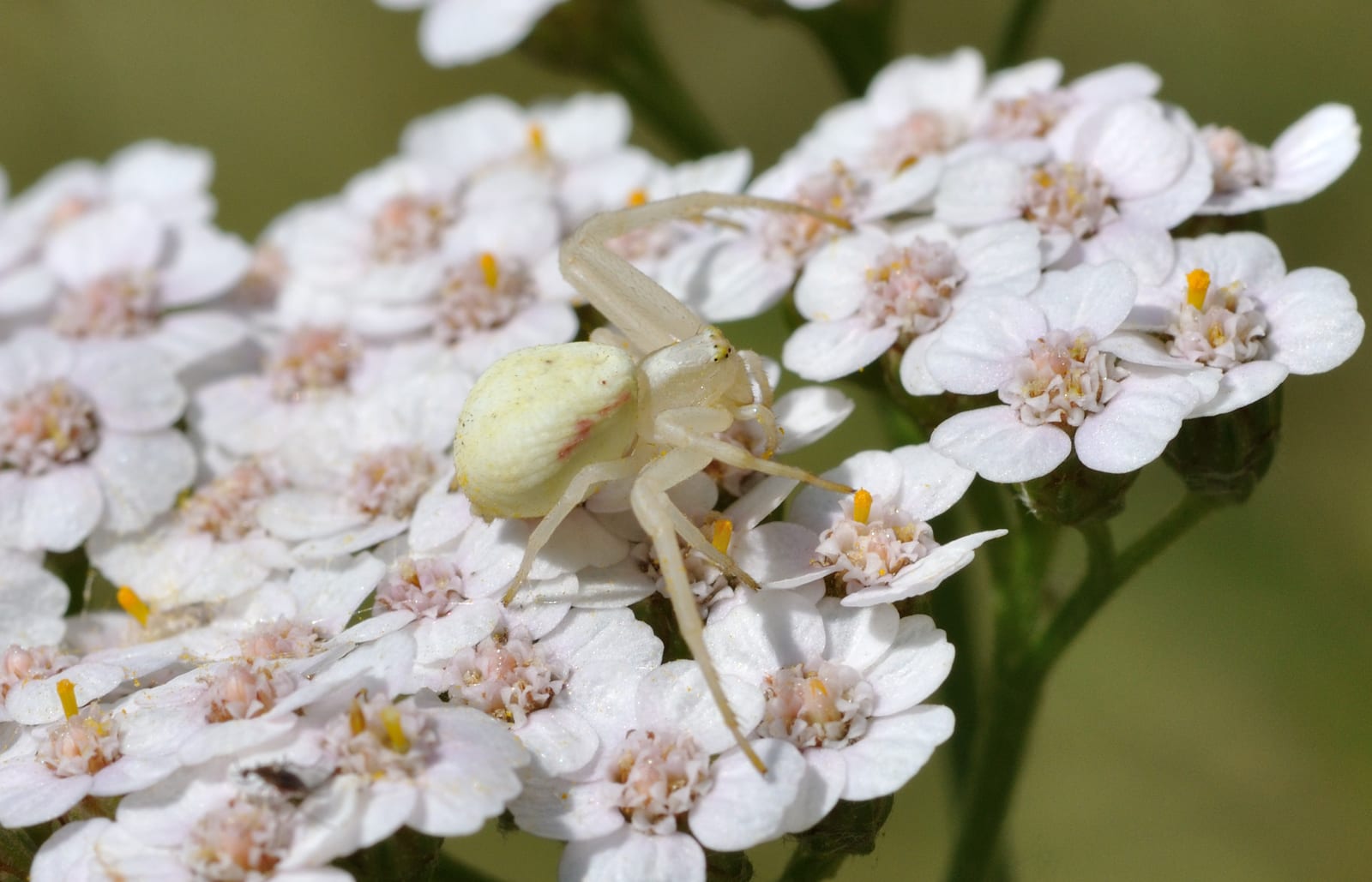 🔍 Click to enlarge
flowerperennial
Yarrow
Achillea millefolium
Flat-topped flower clusters in yellow, white, or pink. Thrives on neglect and poor soil.
Quick Facts
Sun:☀️ Full Sun
Water:💧 Low
USDA Zones:Zones 3–9
Space:🌱 Small Bed, 🏡 Large Garden
Soil:Loam, Sandy, Chalky, Silty
Best Season(s):Spring, Summer
Experience Level:🌱 Beginner
Native Range:North America, Europe, Asia (circumboreal)
Bloom Color:White, yellow, pink, red (cultivar-dependent)
Bloom Cycle:Late spring through summer
Care Notes
Avoid fertilizing — rich soil causes flopping. Deadhead for repeat blooms. Excellent cut flower.
Growing Details
Mature Size:2-3 ft tall, 2-3 ft wide (spreads by rhizomes)
Growth Rate:🐇 Fast
Zone Performance
In the coldest zones (3-4), yarrow's foliage dies back completely in winter and the plant returns reliably from its hardy rhizomatous roots each spring. In the warmest end of its range (zone 9), yarrow may stay semi-evergreen through winter but is more prone to root rot if summer humidity and rainfall are high, so drainage becomes especially critical there.
Companions & Wildlife
🦌 Deer Resistance
rarely damaged
The strongly aromatic, feathery foliage is one of the most reliably deer-resistant perennials in the sunny border.
🐝 Pollinator Value
high
The flat-topped umbels are an easy landing platform for a wide range of beneficial insects, including ladybugs, lacewings, hoverflies, and butterflies.
Good Companions
Lavender — Both thrive in poor, dry, well-drained soil and full sun, making them ideal low-water border partners.
Russian Sage — Shares yarrow's drought tolerance and airy texture, creating a cohesive xeric planting that needs no supplemental fertilizer.
Coneflower (Echinacea) — Blooms alongside yarrow in midsummer with similar sun and soil needs, and both attract beneficial pollinators and predatory insects.
Ornamental Grasses — Grasses provide vertical, fine-textured contrast to yarrow's flat flower clusters while tolerating the same lean soil.
Troubleshooting
⚠️ Floppy stems that splay open in the middle of the clump
Never fertilize yarrow — rich soil is the primary cause of weak, floppy growth; grow in lean, unamended soil instead.
⚠️ Aggressive spreading into neighboring plants
Divide the clump every 2-3 years in spring or fall and remove outer rhizome runners to control spread.
⚠️ Powdery mildew in humid, crowded conditions
Space plants for good air circulation and avoid overhead watering late in the day.
⚠️ Pet Safety
Mildly toxic to cats and dogs — can cause vomiting, diarrhea, and dermatitis.
Informational only — always check with a veterinarian if you suspect your pet has eaten something it shouldn't have.
🌿 Traditional & Medicinal Use
Traditional topical/first-aid use for minor cuts (hemostatic properties) — see the Medicinal Garden guide for preparation and cautions.
Informational only, not medical advice — consult a healthcare provider before using any plant medicinally.