Loading…
 🔍 Click to enlarge
shrubperennial
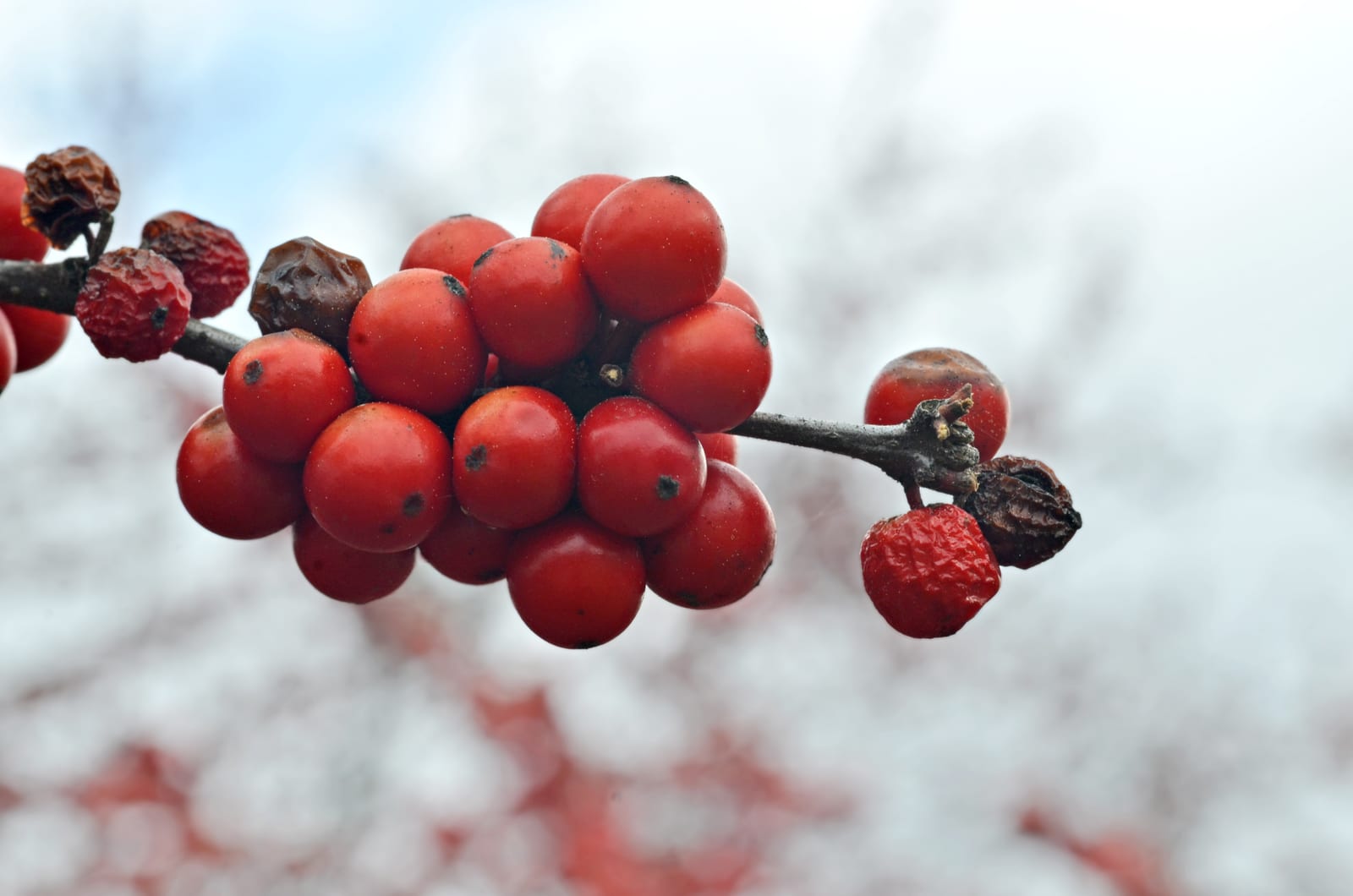
Winterberry Holly
Ilex verticillata
Deciduous native holly that drops its leaves to reveal branches loaded with brilliant red berries all winter.
Quick Facts
Sun:☀️ Full Sun, ⛅ Partial Shade
Water:💧💧💧 High
USDA Zones:Zones 3–9
Space:🌱 Small Bed, 🏡 Large Garden
Soil:Loam, Clay, Peaty
Best Season(s):Spring, Fall
Experience Level:🌱 Beginner
Native Range:Eastern North America
Bloom Color:Small white, inconspicuous (grown for its brilliant red winter berries)
Bloom Cycle:Late spring flowers; berries persist through winter
Care Notes
Plant a male pollinator nearby for berry production. Tolerates wet, boggy soil better than most shrubs.
Growing Details
Mature Size:6-10 ft tall, 6-10 ft wide
Growth Rate:🌿 Moderate
Zone Performance
As a native shrub rated to Zone 3, winterberry is fully cold-hardy at the northern end of its range and often shows the showiest berry displays there once leaves drop early; at the southern edge in Zone 9, it needs consistently moist to wet soil to perform well and can struggle in typical well-drained garden beds without irrigation or a naturally boggy site.
Companions & Wildlife
🦌 Deer Resistance
occasionally damaged
Less prickly than evergreen hollies since its leaves lack spines, so deer will browse winterberry foliage and stems more readily, especially in winter.
🐝 Pollinator Value
moderate
Small spring flowers draw native bees and honeybees, which are essential for pollinating female plants into their signature berry set.
Good Companions
Red Twig Dogwood (Cornus sericea) — Shares winterberry's tolerance for wet soil and adds red winter stem color that complements the shrub's berry display.
Summersweet (Clethra alnifolia) — Thrives in the same moist-to-wet, part-shade conditions and extends fragrant bloom interest into summer.
Ornamental Grasses (e.g. Switchgrass) — Handles similarly moist soil and provides a textural, upright contrast to winterberry's dense branching.
Holly (Ilex opaca) — Its evergreen foliage provides a backdrop that makes winterberry's bare, berry-loaded winter branches stand out even more.
Troubleshooting
⚠️ No berries produced
Plant a compatible male winterberry cultivar (such as 'Jim Dandy' or 'Southern Gentleman') within 50 feet, since female plants require a male pollinator of matching bloom time.
⚠️ Poor growth in dry, well-drained soil
Site winterberry in consistently moist soil or a low spot in the landscape; it is one of the few shrubs that tolerates seasonal flooding and heavy clay.
⚠️ Leaf spot or minor fungal issues in wet years
Rake up and dispose of fallen leaves in autumn to reduce overwintering fungal spores, though the shrub tolerates minor leaf spot without lasting harm.
⚠️ Pet Safety
Berries are toxic to cats and dogs in quantity — can cause vomiting and GI upset; keep pets from grazing fallen berries in winter.
Informational only — always check with a veterinarian if you suspect your pet has eaten something it shouldn't have.