Loading…
 🔍 Click to enlarge
groundcoverperennial
Vinca (Periwinkle)
Vinca minor
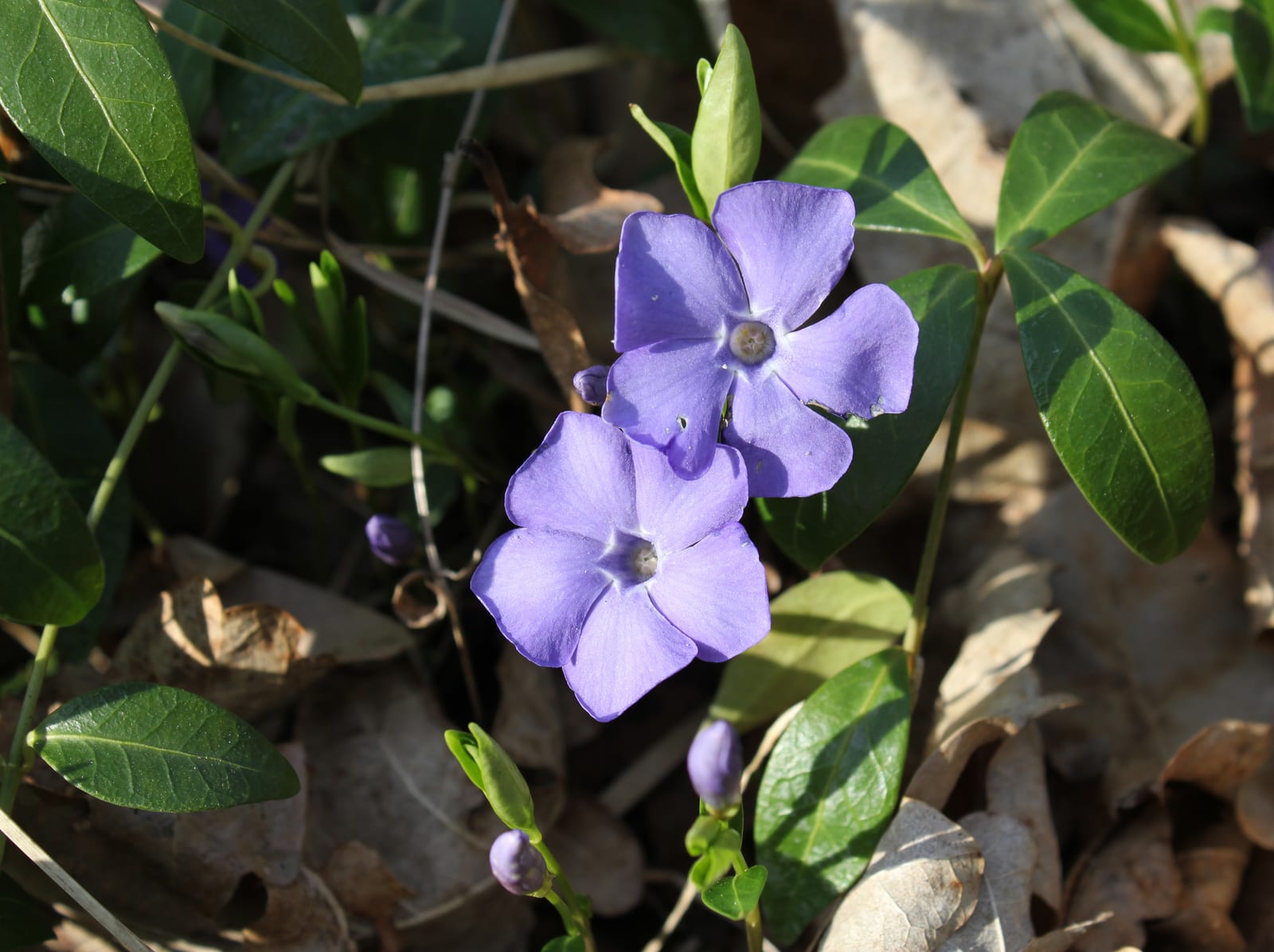
Evergreen trailing plant with periwinkle-blue spring flowers. Extremely tough in shade.
Quick Facts
Sun:⛅ Partial Shade, 🌑 Full Shade
Water:💧 Low
USDA Zones:Zones 4–9
Space:🌱 Small Bed, 🏡 Large Garden
Soil:Loam, Clay, Sandy, Silty
Best Season(s):Spring, Fall
Experience Level:🌱 Beginner
Native Range:Central & Southern Europe
Bloom Color:Lavender-blue, five-petaled
Bloom Cycle:Early-to-mid spring, with sporadic rebloom
Care Notes
Can become invasive in mild climates — check before planting in naturalized areas. Shear in spring.
Growing Details
Mature Size:4-6 in tall, spreads indefinitely as a trailing groundcover
Growth Rate:🐇 Fast
Zone Performance
At the cold edge (Zone 4) Vinca remains evergreen in milder winters but can suffer some leaf burn or dieback in exposed, windy sites during severe cold snaps. At the warm edge (Zone 9) it spreads aggressively and can escape cultivation into wild areas, so it should be sited with containment in mind and monitored, as it is classified as invasive in parts of the mild-winter South and Pacific states.
Companions & Wildlife
🦌 Deer Resistance
rarely damaged
Vinca's leathery, slightly toxic foliage is reliably avoided by deer, making it one of the most dependable groundcovers for heavily browsed shade gardens.
🐝 Pollinator Value
low
The periwinkle-blue spring flowers offer some nectar for early bees, but overall pollinator value is modest compared to native shade groundcovers, and it is primarily valued for evergreen foliage cover.
Good Companions
Daffodil — Vinca's evergreen trailing foliage provides a year-round backdrop and covers the bare ground left as daffodil foliage yellows and dies back.
Hosta — Both tolerate deep shade and dry soil under trees, with Vinca forming a low weed-suppressing carpet around Hosta's larger clumps.
Hellebore (Lenten Rose) — Shares evergreen winter interest and shade tolerance, with Hellebore's late-winter blooms rising above Vinca's blue spring flowers for extended seasonal color.
Bigroot Geranium (Geranium macrorrhizum) — Another tough, drought-tolerant shade groundcover that pairs well texturally and shares Vinca's ability to thrive in dry shade under trees.
Troubleshooting
⚠️ Escaping into woodlands or natural areas
Avoid planting near wooded edges in mild climates and remove any spreading runners promptly, since Vinca minor is invasive in many regions and outcompetes native woodland plants.
⚠️ Stem blight (dieback of patches)
Remove and destroy affected stems and improve air circulation by thinning dense mats, since fungal stem blight spreads readily in humid, crowded plantings.
⚠️ Thin or patchy coverage
Plant on 12-inch centers initially and top-dress with compost; Vinca fills in fully within one to two seasons once established.
⚠️ Scale insects on stems
Apply horticultural oil in late winter before new growth emerges to control scale buildup on older, denser plantings.
⚠️ Pet Safety
Toxic to cats and dogs (vincamine, related to the periwinkle alkaloids used in chemotherapy drugs) — can cause vomiting and, in quantity, more serious effects.
Informational only — always check with a veterinarian if you suspect your pet has eaten something it shouldn't have.