Loading…
 🔍 Click to enlarge
herbperennial
Sage
Salvia officinalis
Silvery, aromatic perennial herb. Classic pairing with poultry, stuffing, and fall dishes.
Quick Facts
Sun:☀️ Full Sun
Water:💧 Low
USDA Zones:Zones 4–8
Space:🪴 Container, 🌱 Small Bed, 🏡 Large Garden
Soil:Sandy, Loam, Chalky
Best Season(s):Spring
Experience Level:🌱 Beginner
Native Range:Mediterranean Basin
Bloom Color:Purple-blue
Bloom Cycle:Late spring to early summer
Harvest Pattern:Perennial — produces year after year
Care Notes
Prune in spring to prevent legginess. Replace plants every 3–4 years as they turn woody.
Growing Details
Mature Size:1.5-2.5 ft tall, 2-3 ft wide
Growth Rate:🐢 Slow
Zone Performance
Sage is reliably perennial through its Zone 4-8 range, but winter survival depends heavily on drainage rather than cold alone: at the Zone 4 cold edge, wet winter soil combined with freezing temperatures is more likely to kill plants than cold air alone, while in Zone 7-8 the main risk shifts to summer humidity, which can cause the woody crown to rot if soil stays too moist.
Companions & Wildlife
🦌 Deer Resistance
rarely damaged
Sage's fuzzy, highly aromatic gray-green leaves are one of the most reliably deer-proof herbs for foundation and border plantings.
🐝 Pollinator Value
high
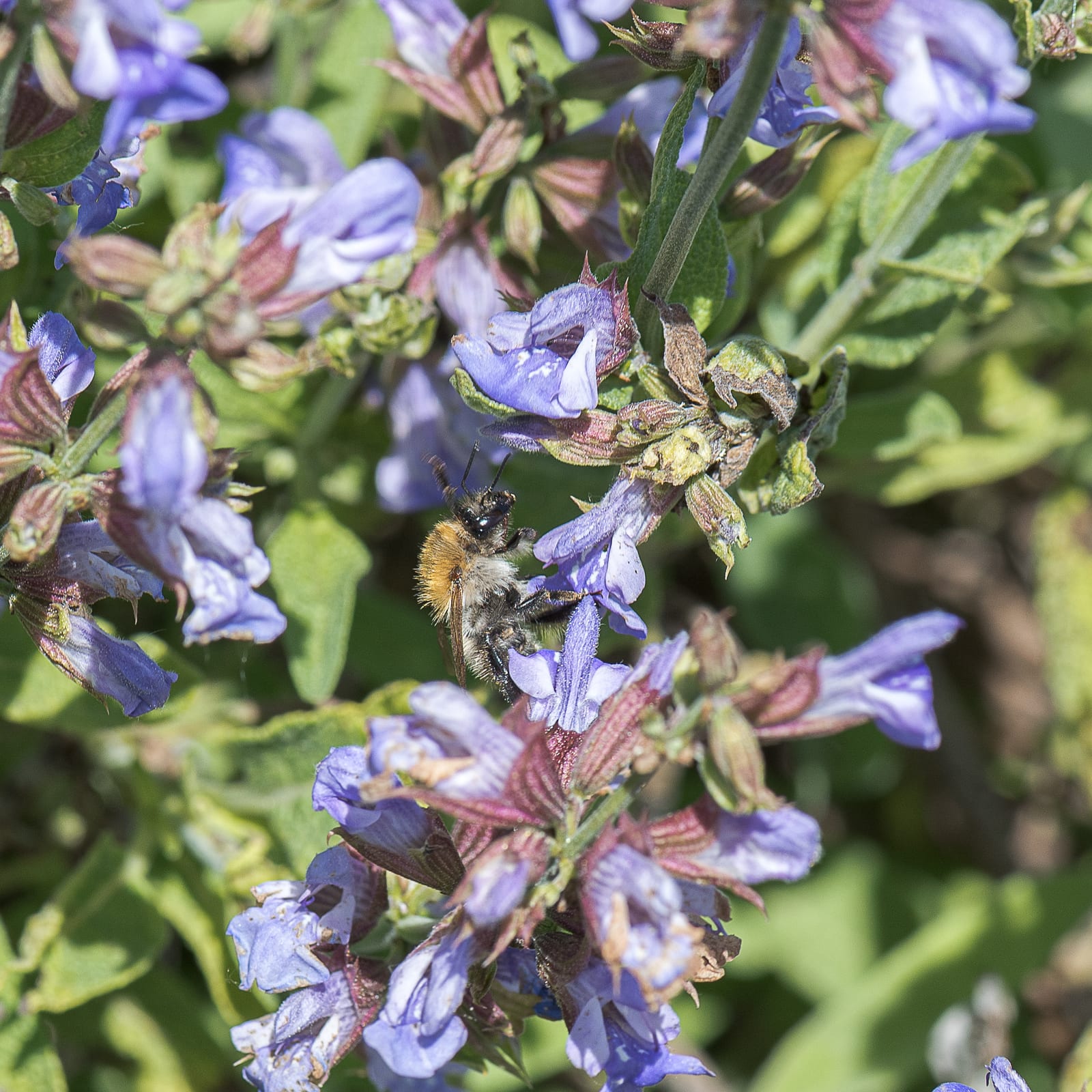
Sage's tubular purple-blue flower spikes are especially attractive to bumblebees and hummingbirds, and also draw honeybees and native bees.
Good Companions
Cabbage — Sage's strong scent is a traditional deterrent for cabbage moths and cabbage root maggot flies on nearby brassicas.
Carrot — Sage is reputed to help repel carrot rust flies through scent masking.
Rosemary — Both are woody Mediterranean perennials with identical needs for full sun, lean soil, and sharp drainage.
Bean — Sage's aroma is traditionally said to deter bean beetles when interplanted nearby.
Troubleshooting
⚠️ Plants becoming woody, sparse, and less productive after 3-4 years
Prune hard in spring to encourage fresh basal growth, and plan to propagate cuttings or replace the plant every 3-4 years.
⚠️ Root and crown rot in poorly drained or overly wet soil
Plant in raised beds or slopes with excellent drainage, and space plants for good air circulation.
⚠️ Powdery mildew in humid climates
Avoid overhead watering, prune for airflow, and choose a well-ventilated planting site.
⚠️ Spider mites during hot, dry spells
Rinse foliage with water periodically and avoid prolonged drought stress on container-grown plants.
✅ Pet Safety
Non-toxic to cats and dogs in normal culinary amounts; concentrated essential oil is a different story.
Informational only — always check with a veterinarian if you suspect your pet has eaten something it shouldn't have.
🌿 Traditional & Medicinal Use
Traditional use as a sore-throat gargle and digestive aid — see the Medicinal Herb Garden guide for detail.
Informational only, not medical advice — consult a healthcare provider before using any plant medicinally.