Loading…
 🔍 Click to enlarge
succulentperennial
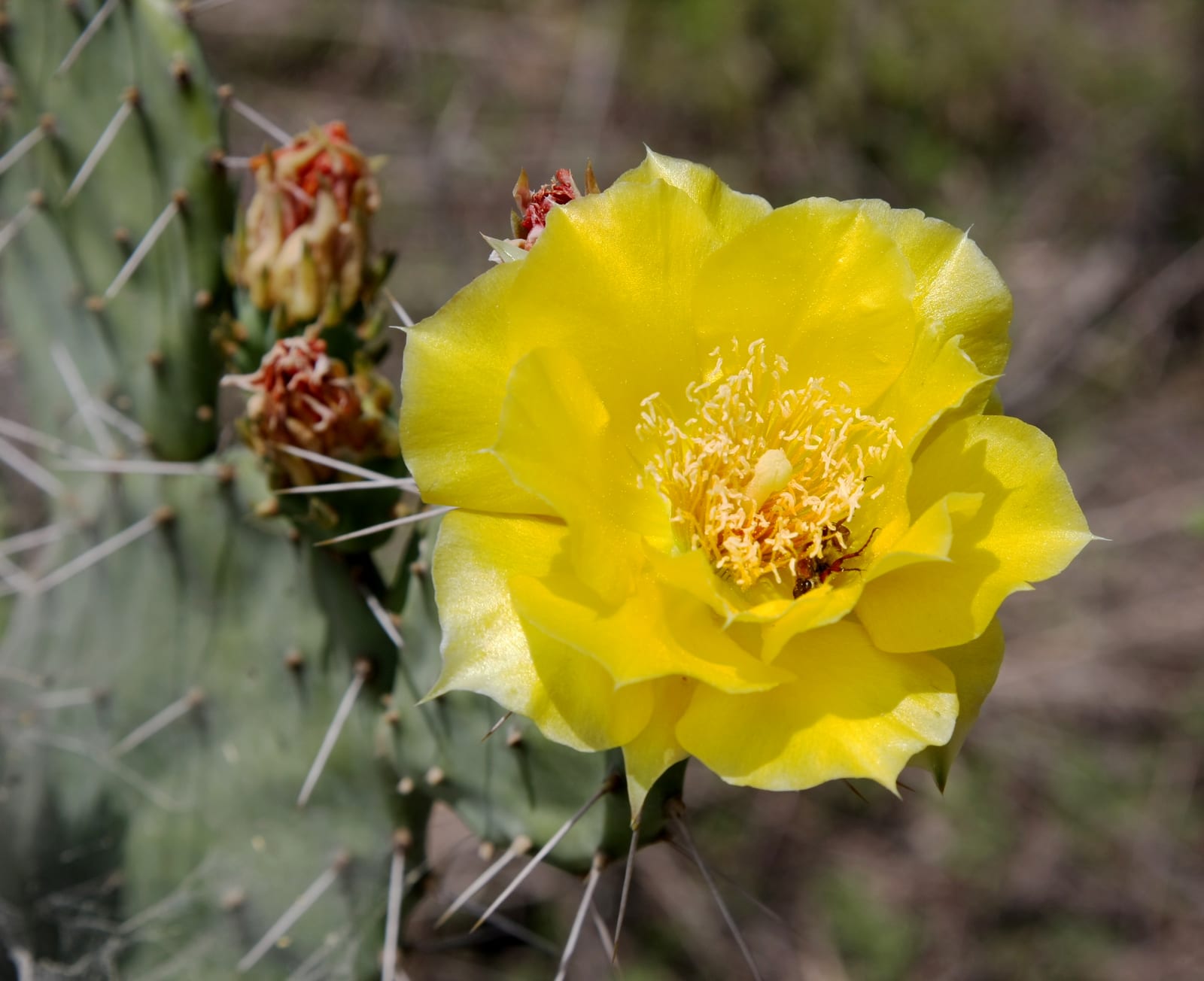
Prickly Pear Cactus
Opuntia humifusa
Native North American cactus with edible pads and fruit. Extremely cold and heat hardy.
Quick Facts
Sun:☀️ Full Sun
Water:💧 Low
USDA Zones:Zones 4–11
Space:🌱 Small Bed, 🏡 Large Garden
Soil:Sandy, Loam, Chalky
Best Season(s):Spring, Summer
Experience Level:🌱 Beginner
Native Range:Eastern & Central North America
Bloom Color:Bright yellow
Bloom Cycle:Early summer
Harvest Pattern:Perennial — produces year after year
Care Notes
Handle with tongs — glochids (tiny spines) are worse than large spines. Fruit and pads are edible when prepped.
Growing Details
Mature Size:1-2 ft tall, 3-6 ft wide (spreading clump)
Growth Rate:🌿 Moderate
Zone Performance
In zone 4, Opuntia humifusa is one of the very few cold-hardy cactus species and survives reliably given sharp winter drainage, though the pads shrivel and lie flat in winter as a normal cold-weather adaptation before plumping back up in spring. In zones 10-11, it grows more vigorously and can spread rapidly into a large colony, so occasional pad removal may be needed to keep it contained.
Companions & Wildlife
🦌 Deer Resistance
rarely damaged
The dense spines and glochids make it one of the most effective deer-deterrent plants available, rarely if ever browsed.
🐝 Pollinator Value
high
Large, bright yellow spring flowers are highly attractive to native bees, particularly specialist cactus bees, as well as honeybees and beetles.
Good Companions
Agave — Shares identical desert soil and full-sun requirements, forming a classic bold-textured Southwest succulent planting.
Muhly Grass — Soft pink plumes provide a fine-textured, colorful contrast against prickly pear's flat, paddle-shaped pads.
Yucca — A compatible drought-tolerant companion with contrasting spiky vertical form against prickly pear's horizontal pad growth.
Blanket Flower (Gaillardia) — Drought-tolerant, sun-loving flower that blooms alongside prickly pear's own bright yellow flowers for extended color.
Troubleshooting
⚠️ Pad rot after wet winters
Ensure sharp drainage by planting in sandy or gravelly soil, ideally on a slope or raised bed, especially critical in the colder, wetter parts of its range.
⚠️ Cochineal scale (white cottony patches on pads)
Spray forcefully with water to dislodge the insects, or treat with insecticidal soap for persistent infestations.
⚠️ Difficulty handling due to glochids
Always use tongs and thick gloves when handling pads or fruit, since the tiny hair-like glochids embed in skin more readily than the large spines.
⚠️ Pet Safety
Not toxic in the classical sense, but the glochids (tiny hair-like spines) are a serious physical hazard to cats and dogs — can embed in skin/mouth and are difficult to remove.
Informational only — always check with a veterinarian if you suspect your pet has eaten something it shouldn't have.
🌿 Traditional & Medicinal Use
The pads (nopales) and fruit are a traditional food in Mexican cuisine — food value more than medicinal, though it has some folk use for blood sugar support.
Informational only, not medical advice — consult a healthcare provider before using any plant medicinally.