Loading…
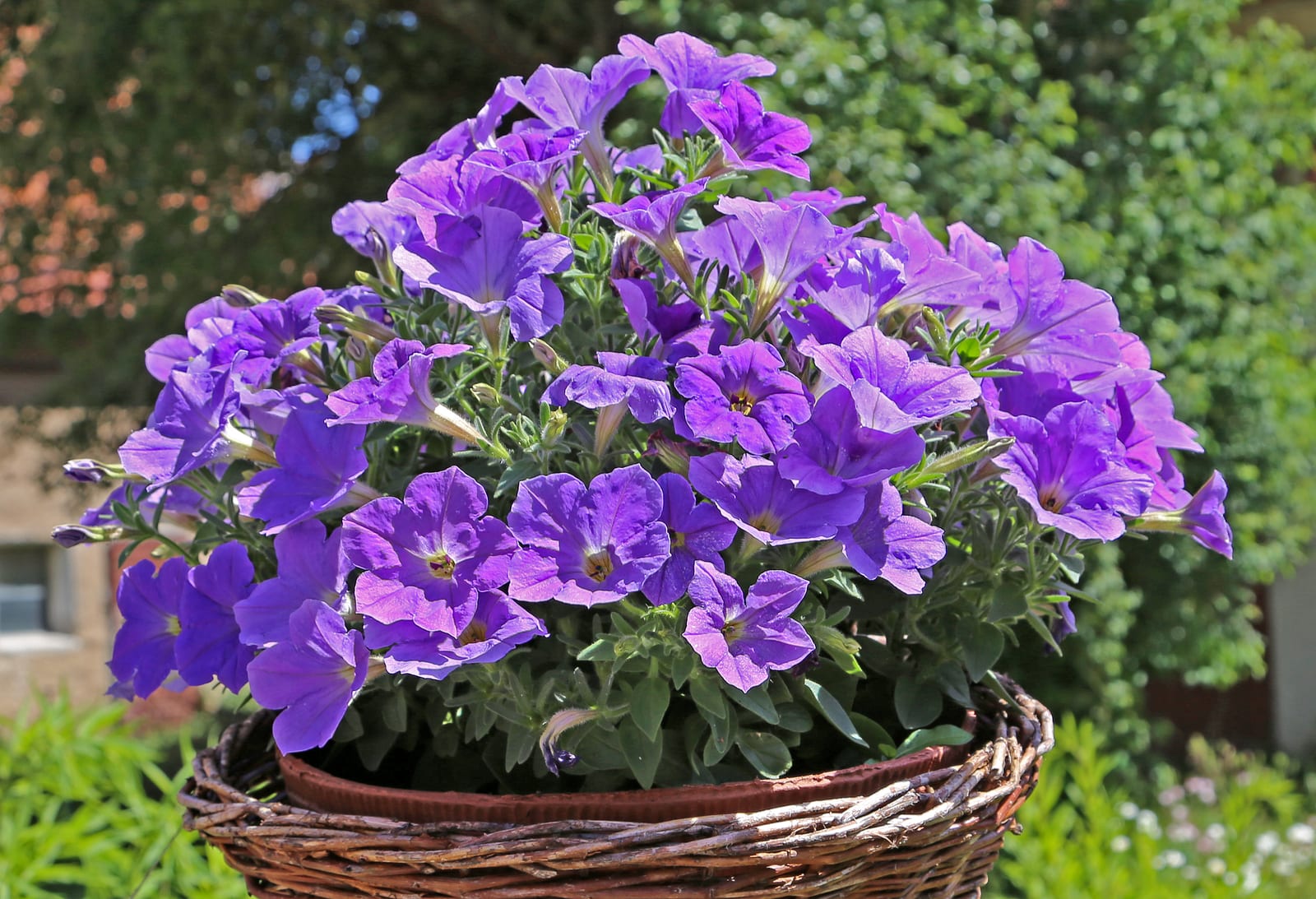 🔍 Click to enlarge
flowerannual
Petunia
Petunia × atkinsiana
Classic container annual with trumpet-shaped blooms in every color. Long-blooming and versatile.
Quick Facts
Sun:☀️ Full Sun
Water:💧💧 Moderate
USDA Zones:Zones 3–11
Space:🪴 Container, 🌱 Small Bed
Soil:Loam, Sandy, Silty
Best Season(s):Spring, Summer
Experience Level:🌱 Beginner
Native Range:South America
Bloom Color:Wide range — purple, pink, red, white, yellow, bicolor
Bloom Cycle:Late spring through frost, continuous
Care Notes
Deadhead or shear back by half in midsummer to refresh. Feed weekly with liquid fertilizer.
Growing Details
Mature Size:6-12 in tall, 12-18 in spread (trailing types spread to 3 ft)
Growth Rate:🐇 Fast
Zone Performance
Petunias are grown as annuals throughout nearly all of their listed range, but in the warmest zones (10-11) they can persist and rebloom through a mild winter if cut back, essentially behaving as short-lived tender perennials. In cooler zones 3-6, they should not go in the ground until after all frost danger has passed since even light frost will kill them.
Companions & Wildlife
🦌 Deer Resistance
occasionally damaged
Petunias are not a preferred deer browse but the tender, water-rich foliage and flowers may be sampled when other food is scarce.
🐝 Pollinator Value
moderate
Attracts hummingbirds and hawk moths to the tubular flowers, though modern ruffled hybrids offer less accessible nectar than older single-flowered types.
Good Companions
Lantana — Matches petunia's heat tolerance and continuous bloom habit for season-long container and bed color.
Marigold — Marigold's pungent foliage helps deter aphids that are also attracted to petunia's soft new growth.
Sweet Potato Vine — Its trailing chartreuse or purple foliage complements petunia blooms and shares identical sun and water needs in mixed containers.
Verbena — A classic thriller-filler-spiller container partner with the same full-sun, well-drained preferences and similar bloom continuity.
Troubleshooting
⚠️ Leggy, sparse growth by midsummer
Shear plants back by one-third to one-half and follow with a balanced liquid fertilizer to force fresh branching and bloom.
⚠️ Budworm caterpillars chewing holes in buds and flowers
Handpick visible worms in the evening or apply a Bt (Bacillus thuringiensis) spray at first sign of damage.
⚠️ Yellowing lower leaves and poor bloom in containers
Petunias are heavy feeders — apply a water-soluble fertilizer weekly, since container watering leaches nutrients quickly.
✅ Pet Safety
Generally considered non-toxic to cats and dogs.
Informational only — always check with a veterinarian if you suspect your pet has eaten something it shouldn't have.