Loading…
 🔍 Click to enlarge
groundcoverperennial
Pachysandra
Pachysandra terminalis
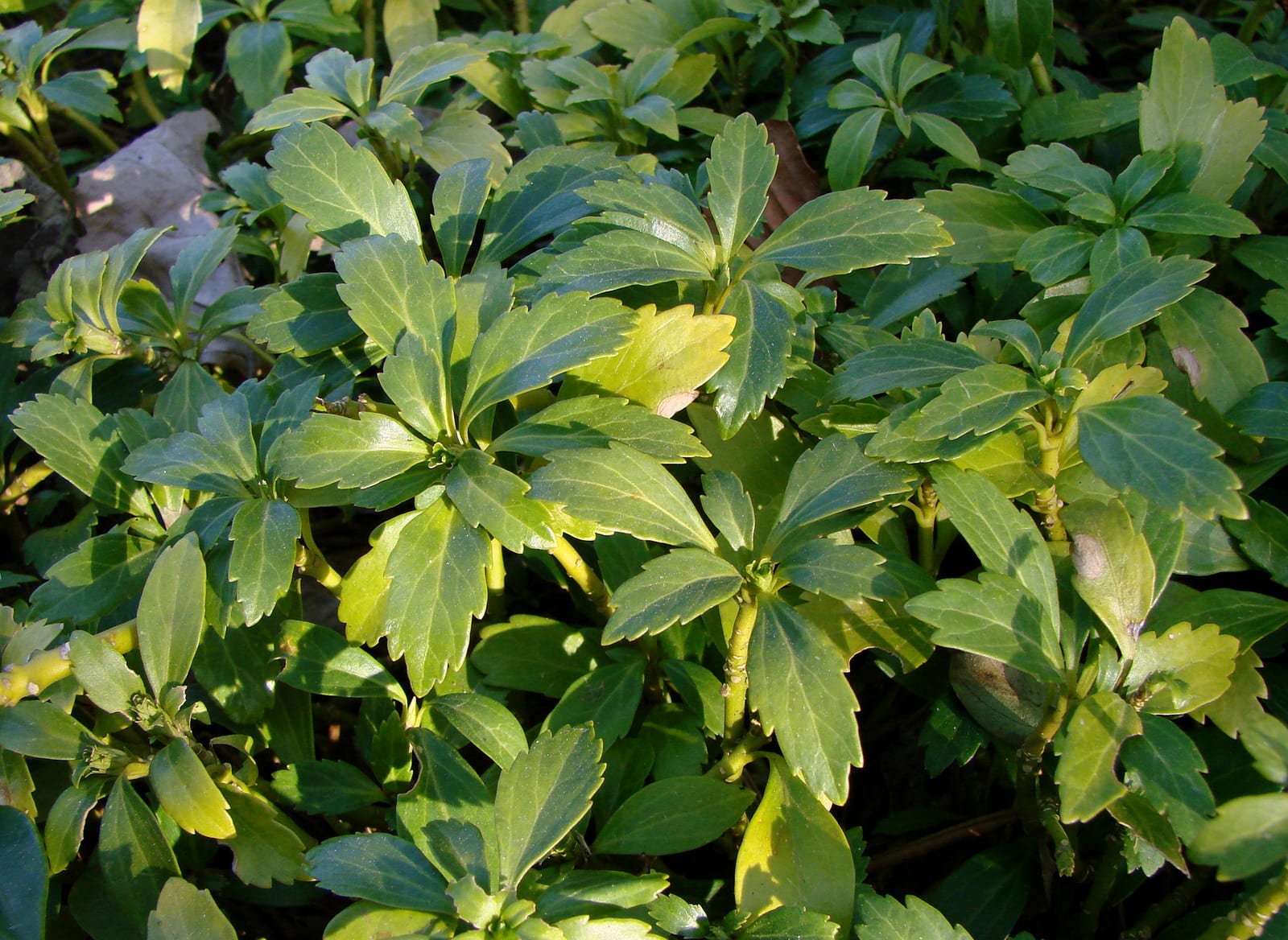
Classic evergreen ground cover for deep shade under trees. Suppresses weeds reliably.
Quick Facts
Sun:⛅ Partial Shade, 🌑 Full Shade
Water:💧💧 Moderate
USDA Zones:Zones 4–8
Space:🌱 Small Bed, 🏡 Large Garden
Soil:Loam, Peaty, Silty
Best Season(s):Spring, Fall
Experience Level:🌱 Beginner
Native Range:Japan
Bloom Color:Small white spikes, secondary to its evergreen groundcover foliage
Bloom Cycle:Early spring
Care Notes
Spreads slowly — be patient. Shear in early spring to rejuvenate. Needs acidic soil.
Growing Details
Mature Size:8-12 in tall, spreading indefinitely as a groundcover mat
Growth Rate:🐢 Slow
Zone Performance
At the cold edge (Zone 4) Pachysandra remains evergreen but growth is noticeably slower and winter burn can occur in exposed, windy sites without snow cover. At the warm edge (Zone 8) it needs consistent moisture and deeper shade, since hot, dry summer conditions combined with too much sun can cause leaf scorch and thinning.
Companions & Wildlife
🦌 Deer Resistance
rarely damaged
Pachysandra's tough, leathery leaves are unpalatable to deer, making it one of the most dependable groundcovers for heavily browsed woodland properties.
🐝 Pollinator Value
low
Its small, inconspicuous white flower spikes in early spring offer minor nectar and pollen for early-emerging native bees, but it is grown almost entirely for foliage cover, not pollinator support.
Good Companions
Hosta — Both thrive in deep shade under trees, with Hosta's bold clumps providing focal points that rise above Pachysandra's uniform low carpet.
Astilbe — Shares the same acidic, moist, shaded conditions and adds seasonal flower spikes above Pachysandra's evergreen groundcover.
Rhododendron — Both require acidic soil and dappled to full shade, making Pachysandra a natural underplanting for rhododendron and azalea beds.
Christmas Fern (Polystichum acrostichoides) — A native evergreen fern that tolerates the same deep, dry shade and acidic soil, adding textural variety to a Pachysandra groundcover bed.
Troubleshooting
⚠️ Volutella blight (stem and leaf dieback)
Thin the planting to improve air circulation, remove and destroy infected stems, and avoid overhead watering, since this fungal disease thrives in dense, humid plantings.
⚠️ Yellowing foliage in alkaline soil
Test soil pH and amend with sulfur or an acidifying fertilizer, since Pachysandra requires acidic soil and yellows in alkaline conditions.
⚠️ Very slow establishment
Space plants closer together (6-8 inches apart) at planting and be patient; Pachysandra can take 2-3 years to form a full, weed-suppressing carpet.
⚠️ Scale insects on stems
Treat with horticultural oil in late winter/early spring before new growth emerges, targeting the waxy scale insects that commonly infest stressed plantings.
⚠️ Pet Safety
Mildly toxic to cats and dogs (steroidal alkaloids) — can cause GI upset in large amounts.
Informational only — always check with a veterinarian if you suspect your pet has eaten something it shouldn't have.