Loading…
 🔍 Click to enlarge
vegetableannual
Okra
Abelmoschus esculentus
Heat-loving Southern staple with edible pods and striking hibiscus-like flowers.
Quick Facts
Sun:☀️ Full Sun
Water:💧💧 Moderate
USDA Zones:Zones 6–11
Space:🌱 Small Bed, 🏡 Large Garden
Soil:Loam, Sandy
Best Season(s):Summer
Experience Level:🌱 Beginner
Native Range:Northeast Africa
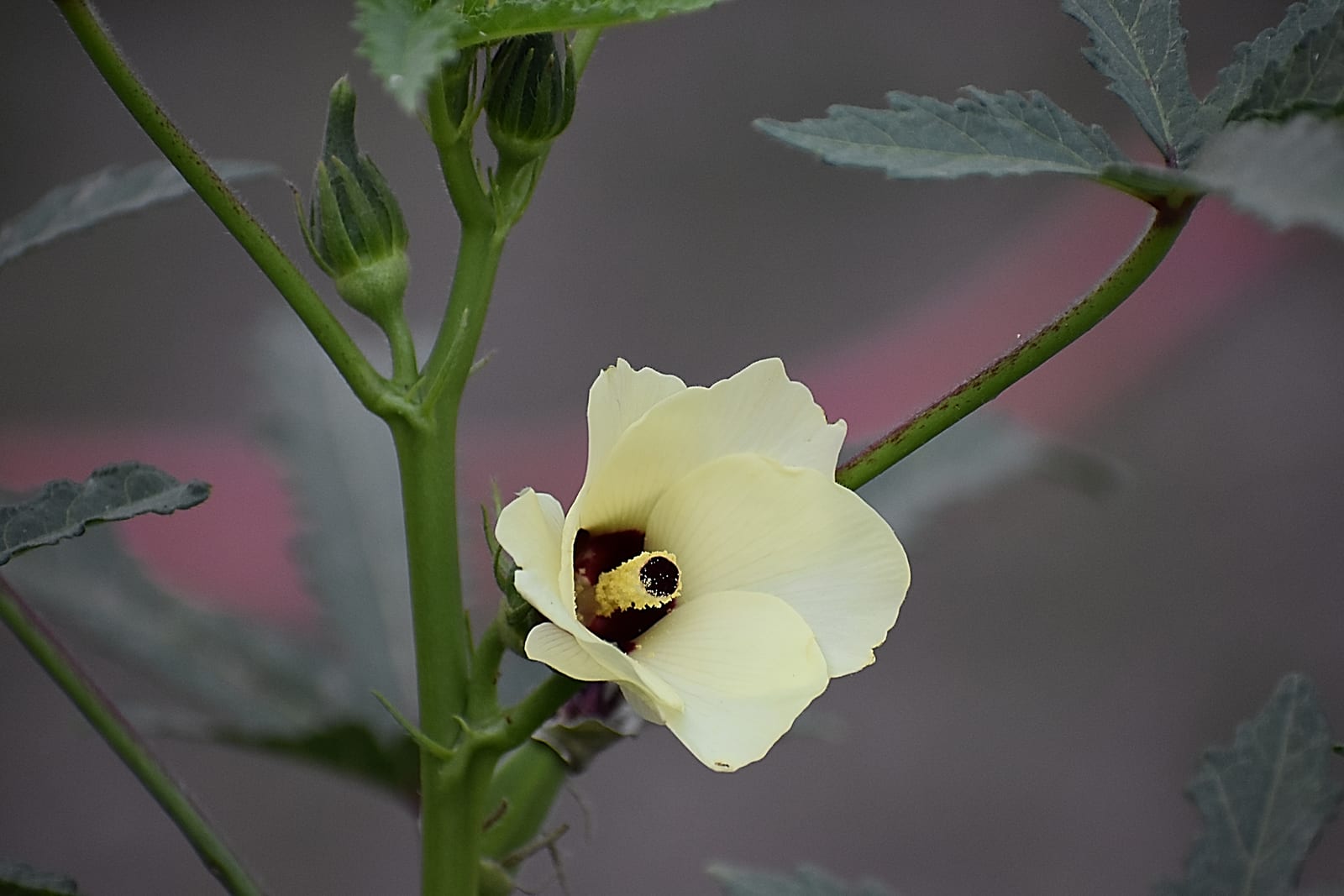
Bloom Color:Pale yellow with a burgundy center, hibiscus-like
Bloom Cycle:Continuous through summer
Days to Harvest:50–65 days
Harvest Pattern:Continuous / cut-and-come-again
Care Notes
Direct sow after soil warms above 65°F. Harvest pods young (2–3 in) every day or two — they toughen fast once oversized.
Growing Details
Mature Size:4-6 ft tall, 1.5-2 ft wide
Growth Rate:🐇 Fast
Zone Performance
Okra is only realistic outdoors in Zones 6-11 because it demands soil above 65°F and a long stretch of true summer heat to size up pods; in Zone 6 gardeners must start seed indoors and use black plastic mulch to bank enough heat units before frost. In Zones 9-11, plants often become semi-perennial, continuing to produce into a mild fall and sometimes overwintering in the warmest microclimates.
Companions & Wildlife
🦌 Deer Resistance
seldom damaged
The coarse, bristly foliage and thick stems are unpalatable to deer, making okra one of the more reliably deer-resistant vegetable crops.
🐝 Pollinator Value
high
The large, pale-yellow hibiscus-like flowers (okra is in the mallow family) are especially attractive to bumblebees and other large native bees.
Good Companions
Pepper — Both crave the same hot, full-sun conditions and okra's tall growth can offer light afternoon shade relief to peppers in the hottest climates.
Basil — Basil's strong scent helps confuse aphids and other soft-bodied pests that target tender okra shoots.
Cucumber — Both are vigorous, heat-loving vines/shrubs with similar watering needs, making efficient use of the same bed.
Radish — Fast-maturing radish is a traditional companion said to repel flea beetles that otherwise pit young okra leaves.
Troubleshooting
⚠️ Pods becoming tough and fibrous
Harvest pods daily once production starts, picking them at 2-3 inches long — oversized pods are essentially unsalvageable.
⚠️ Poor germination in cool soil
Soak seed overnight before sowing and wait until soil is reliably above 65°F, since okra seed simply rots in cold, wet ground.
⚠️ Aphids clustering on new growth and pods
Spray a strong jet of water or insecticidal soap on the undersides of leaves, and encourage ladybugs by avoiding broad-spectrum insecticides.
⚠️ Skin irritation while harvesting
Wear long sleeves and gloves when picking, as the fine spines on stems and pods of many varieties can irritate skin.
✅ Pet Safety
Pods are non-toxic to cats and dogs.
Informational only — always check with a veterinarian if you suspect your pet has eaten something it shouldn't have.