Loading…
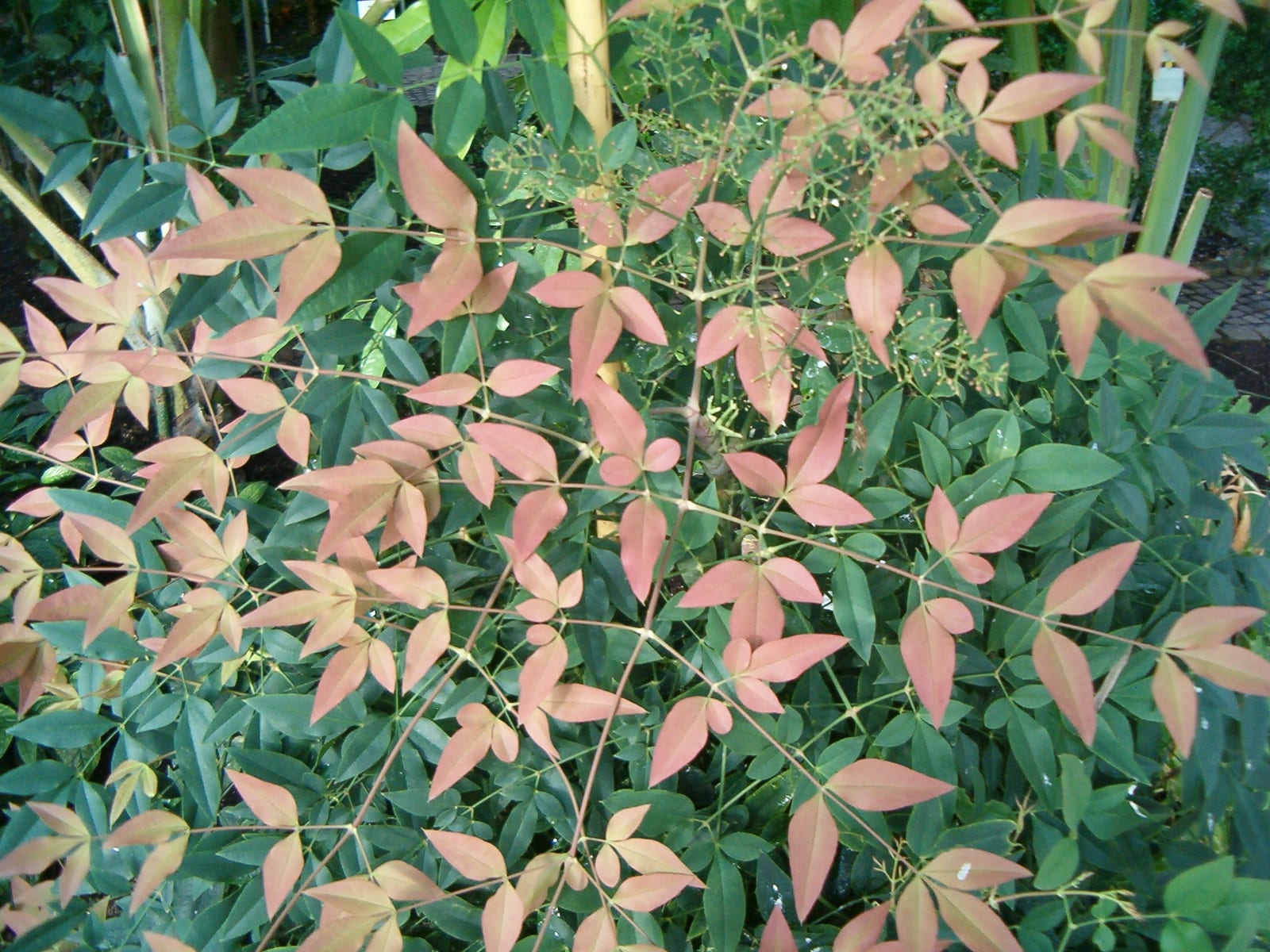 🔍 Click to enlarge
shrubperennial
Nandina (Heavenly Bamboo)
Nandina domestica
Compact evergreen with bamboo-like foliage that turns brilliant red in fall. Nearly indestructible.
Quick Facts
Sun:☀️ Full Sun, ⛅ Partial Shade
Water:💧 Low
USDA Zones:Zones 6–10
Space:🪴 Container, 🌱 Small Bed
Soil:Loam, Clay, Silty, Sandy
Best Season(s):Spring, Fall
Experience Level:🌱 Beginner
Native Range:East Asia
Bloom Color:Small white flower clusters, secondary to its red berries and fall foliage color
Bloom Cycle:Early summer
Care Notes
Cut oldest canes to ground in spring to maintain compact form. Drought tolerant once established.
Growing Details
Mature Size:4-6 ft tall, 2-4 ft wide
Growth Rate:🌿 Moderate
Zone Performance
In Zone 6, nandina is at the cold edge of reliable performance and may suffer cane dieback in unusually harsh winters, rebounding from the base the following spring; in Zones 9-10 it is evergreen year-round and can self-seed aggressively via bird-dispersed berries, so many southeastern states now recommend sterile, berry-free cultivars like 'Firepower' to prevent it from naturalizing into wild areas.
Companions & Wildlife
🦌 Deer Resistance
rarely damaged
The leathery, slightly toxic foliage makes nandina one of the most reliably deer-proof shrubs for southern landscapes.
🐝 Pollinator Value
low
Small white spring flower clusters offer modest nectar value to small bees, but nandina is grown primarily for foliage and berry display.
Good Companions
Boxwood — Provides a dense green evergreen backdrop that contrasts nicely with nandina's airy, cane-like structure and fall color.
Liriope — Shares nandina's tolerance for heat, drought, and part shade, filling the ground plane beneath its upright canes.
Camellia — Matches nandina's evergreen year-round presence and extends bloom interest through the winter months.
Holly — Combines with nandina's red winter berries for a doubled cold-season color display.
Troubleshooting
⚠️ Legginess with bare lower canes
Cut one-third of the oldest, tallest canes to the ground each spring to keep the plant full and compact from the base.
⚠️ Invasive spread via berries in warm climates
Choose a sterile, non-fruiting cultivar or deadhead berry clusters before birds can disperse the seeds into natural areas.
⚠️ Winter leaf bronzing
This is a normal cold-weather color change for many cultivars and not a sign of damage; no action is needed.
⚠️ Pet Safety
Berries are toxic to cats and dogs and notably lethal to cedar waxwings and other birds (cyanogenic glycosides) — consider a native alternative where wildlife is a priority.
Informational only — always check with a veterinarian if you suspect your pet has eaten something it shouldn't have.