Loading…
 🔍 Click to enlarge
grassperennial
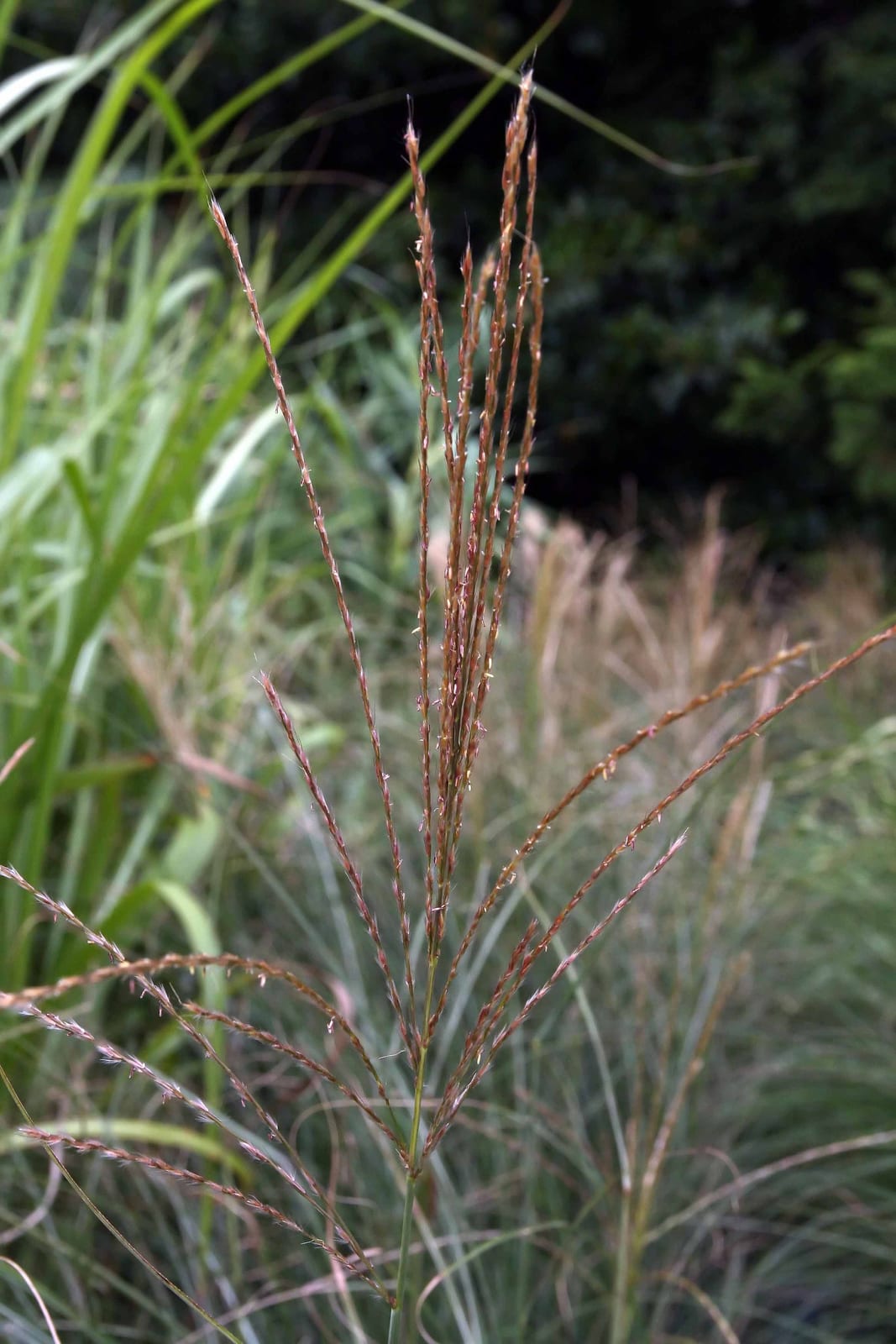
Maiden Grass (Miscanthus)
Miscanthus sinensis
Large, showy grass with silvery plumes that persist through winter. A dramatic garden backdrop.
Quick Facts
Sun:☀️ Full Sun
Water:💧💧 Moderate
USDA Zones:Zones 4–9
Space:🏡 Large Garden
Soil:Loam, Clay, Sandy, Silty
Best Season(s):Spring, Fall
Experience Level:🌱 Beginner
Native Range:East Asia
Bloom Color:Silvery-pink plumes
Bloom Cycle:Late summer through fall, persisting into winter
Care Notes
Cut back to 6 inches in late winter. Divide every 3–4 years in spring when center opens up.
Growing Details
Mature Size:5-8 ft tall (with plumes), 3-4 ft wide
Growth Rate:🐇 Fast
Zone Performance
In zone 4, only the hardiest cultivars (such as 'Purpurascens' or 'Adagio') reliably survive and bloom before frost, since many later-blooming maiden grass cultivars need a longer season to flower. In zones 8-9, Miscanthus sinensis can self-seed prolifically and has become invasive in parts of the warm Southeast, so sterile or low-fertility cultivars are recommended there and regular deadheading is advised.
Companions & Wildlife
🦌 Deer Resistance
seldom damaged
The tough, sharp-edged blades discourage browsing, though very young spring shoots are occasionally sampled.
🐝 Pollinator Value
low
Wind-pollinated with no significant nectar or pollen value, though standing winter clumps offer shelter for overwintering insects.
Good Companions
Purple Coneflower — Its bold pink-purple blooms stand out at eye level in front of the tall, airy backdrop maiden grass provides.
Joe Pye Weed — Similarly large-scale perennial that matches Miscanthus in height and thrives in the same sunny, average-to-moist soil.
Aster — Fall-blooming asters flower alongside the grass's silvery plumes for extended late-season interest.
Russian Sage — Provides a lower, silvery-blue textural contrast at the base of the grass's tall, upright clump.
Troubleshooting
⚠️ Clump splitting open in the center
Divide every 3-4 years in early spring using a sharp spade or saw to section the tough root mass.
⚠️ Invasive self-seeding in warm climates
Choose sterile cultivars like 'Gracillimus' or cut plumes back before seed matures in fall.
⚠️ Foliage that never turns its full fall color or fails to bloom before frost
Choose an early-blooming cultivar suited to your zone's shorter growing season, such as 'Purpurascens' for northern gardens.
✅ Pet Safety
Generally considered non-toxic to cats and dogs.
Informational only — always check with a veterinarian if you suspect your pet has eaten something it shouldn't have.