Loading…
 🔍 Click to enlarge
grassperennial
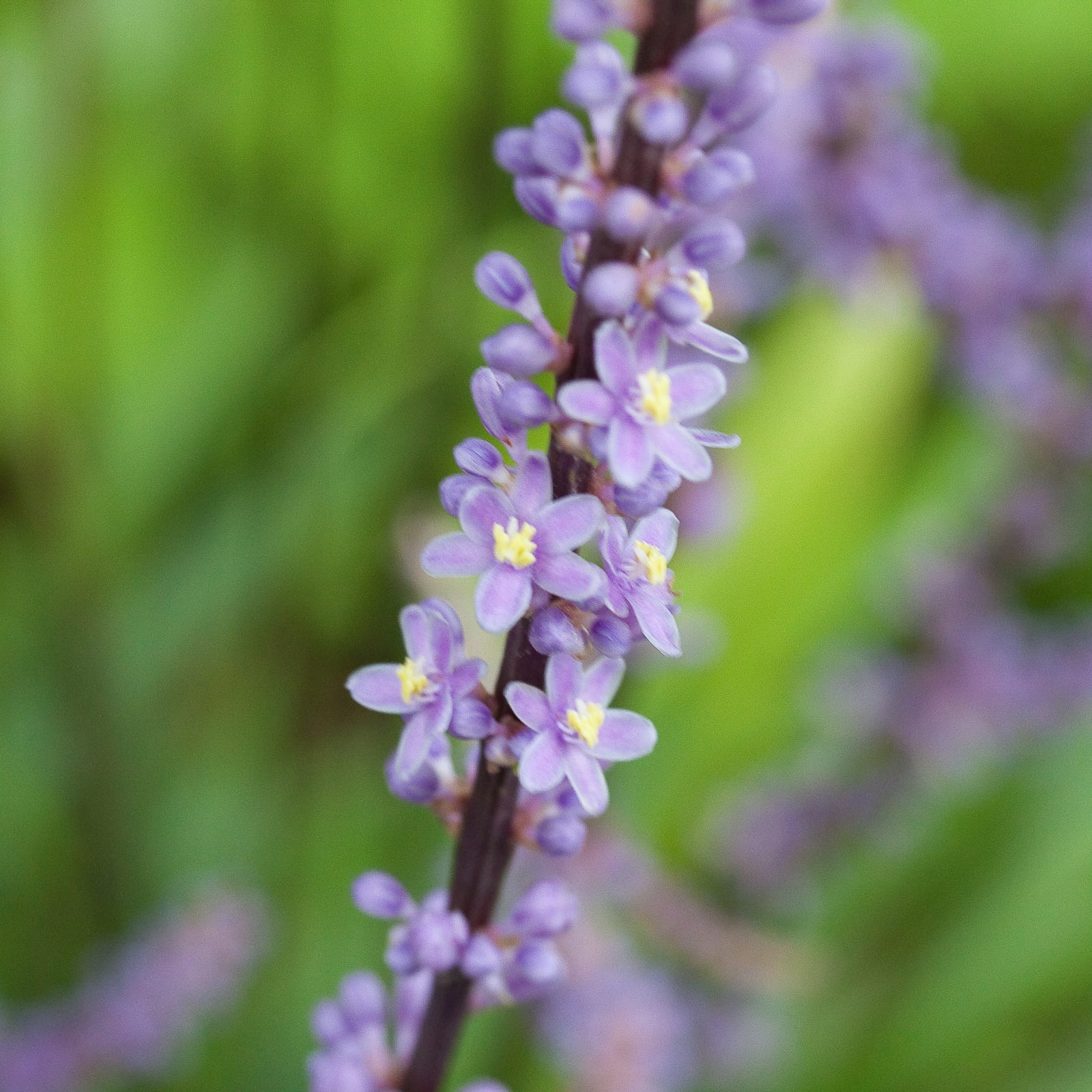
Liriope (Lily Turf)
Liriope muscari
Tough, adaptable grass-like plant with purple flower spikes. Works as a groundcover or border.
Quick Facts
Sun:☀️ Full Sun, ⛅ Partial Shade, 🌑 Full Shade
Water:💧 Low
USDA Zones:Zones 4–10
Space:🪴 Container, 🌱 Small Bed, 🏡 Large Garden
Soil:Loam, Clay, Sandy, Silty
Best Season(s):Spring, Fall
Experience Level:🌱 Beginner
Native Range:East Asia
Bloom Color:Purple, grape-hyacinth-like spikes
Bloom Cycle:Late summer
Care Notes
Cut back to 3 inches in late winter. Extremely adaptable — thrives in sun or deep shade.
Growing Details
Mature Size:12-18 in tall, 12-24 in wide (spreads by rhizomes)
Growth Rate:🌿 Moderate
Zone Performance
In zone 4, liriope is at the very edge of hardiness and needs a protected microclimate and winter mulch to survive, with foliage often dying back completely rather than staying evergreen. In zones 9-10, it stays evergreen year-round and grows more vigorously, spreading via rhizomes fast enough that clumping (rather than running) cultivars are recommended to keep it in bounds.
Companions & Wildlife
🦌 Deer Resistance
rarely damaged
The tough, leathery, grass-like foliage is highly resistant to deer browsing, making it a staple border plant in high deer-pressure landscapes.
🐝 Pollinator Value
moderate
Its late-summer purple flower spikes attract bees and other small pollinators, and the resulting blue-black berries provide food for birds in fall.
Good Companions
Hosta — Both tolerate shade and share similar moisture needs, with liriope's fine grassy texture and purple spikes contrasting hosta's broad leaves.
Azalea — A traditional Southern landscape pairing where liriope's evergreen border edges the base of azalea plantings.
Japanese Painted Fern — Shares the same shade tolerance and adds silvery fine-textured foliage contrast beside liriope's strappy leaves.
Autumn Fern — Both are tough, evergreen shade plants commonly used together as foundation and border plantings in the Southeast.
Troubleshooting
⚠️ Winter foliage browning or dieback in cold zones
Mow or cut the foliage back to 3 inches in late winter before new growth emerges to remove tattered leaves.
⚠️ Crown rot in poorly drained, wet soil
Plant in soil amended for drainage and avoid low spots where water collects.
⚠️ Spreading beyond intended borders
Choose clumping Liriope muscari rather than running Liriope spicata, and install a root barrier edging if containment is needed.
⚠️ Pet Safety
Berries are mildly toxic to cats and dogs — low risk, but worth noting since it's a very commonly planted groundcover-style grass.
Informational only — always check with a veterinarian if you suspect your pet has eaten something it shouldn't have.