Loading…
 🔍 Click to enlarge
fernperennial
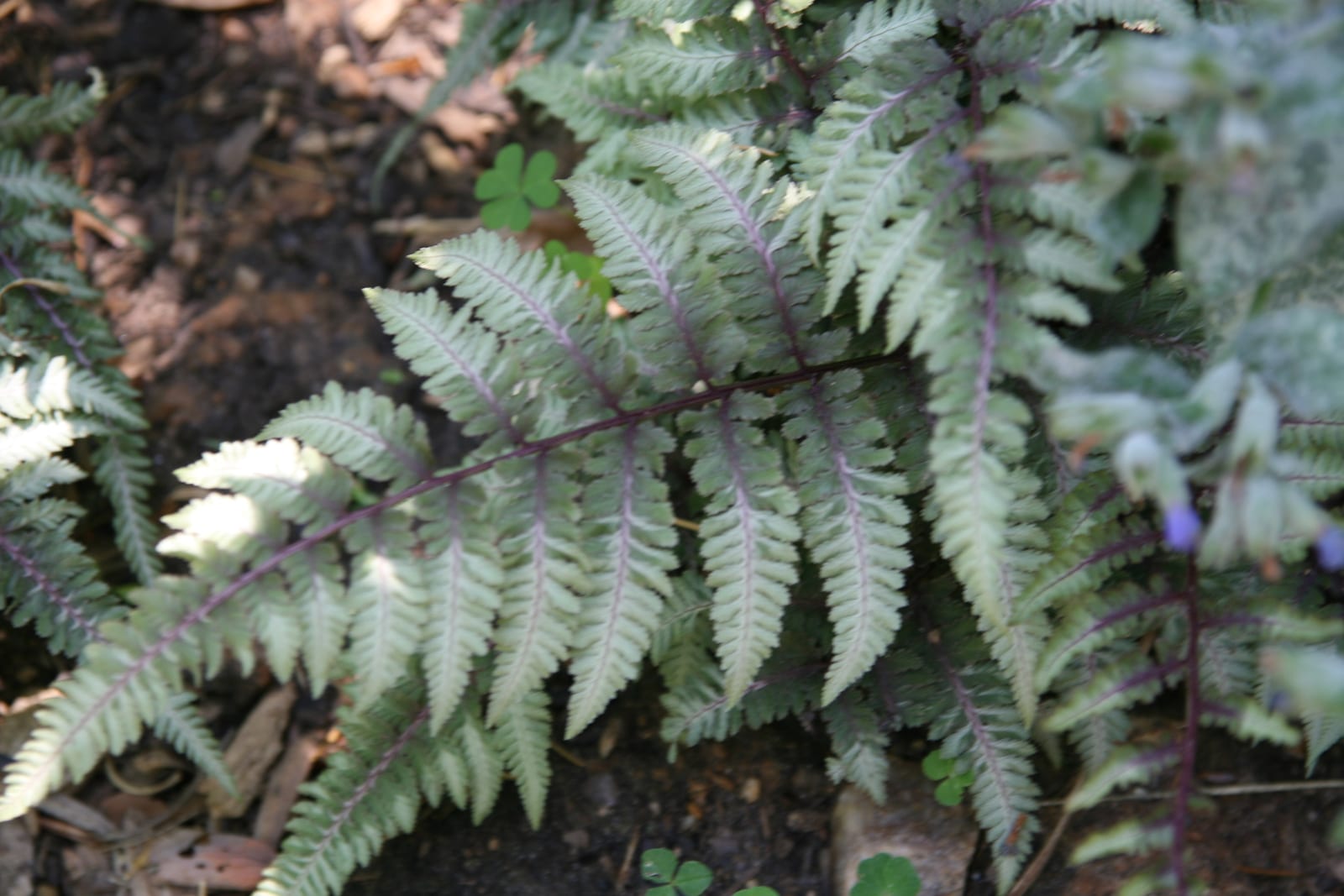
Japanese Painted Fern
Athyrium niponicum
Silvery, burgundy, and green fronds make this the most colorful fern. Stunning shade garden accent.
Quick Facts
Sun:⛅ Partial Shade, 🌑 Full Shade
Water:💧💧 Moderate
USDA Zones:Zones 3–8
Space:🌱 Small Bed
Soil:Loam, Peaty, Silty
Best Season(s):Spring
Experience Level:🌱 Beginner
Native Range:East Asia
Bloom Cycle:Ferns don't flower — grown for its silver-and-burgundy foliage
Care Notes
Keep consistently moist. Cut back dead fronds in early spring. Divides easily when crowded.
Growing Details
Mature Size:12-18 in tall, 18-24 in wide
Growth Rate:🐢 Slow
Zone Performance
In its coldest zones (3-4) the fronds die back completely to the crown each winter and benefit from a protective mulch layer, re-emerging reliably each spring. At the warm edge (Zone 8) it needs consistently moist soil and deeper shade to avoid scorching in summer heat, since its silvery coloring is more prone to sunburn than plain-green ferns.
Companions & Wildlife
🦌 Deer Resistance
rarely damaged
The fibrous, silvery fronds are unappealing to deer, making this fern dependable in gardens with heavy browsing pressure.
🐝 Pollinator Value
none
As a spore-producing fern it has no flowers, nectar, or pollen and is valued strictly for its ornamental foliage color.
Good Companions
Hosta — Shares shade and moisture preferences while offering bold, solid-color leaves that set off the fern's silvery, dissected fronds.
Heuchera (Coral Bells) — Its burgundy or lime foliage echoes the fern's metallic-red midribs, creating a coordinated shade-garden color palette.
Astilbe — Blooms with feathery plumes in the same moist, part-shade conditions, adding vertical flower interest above the fern's low mound.
Hakone Grass (Hakonechloa) — Its cascading golden foliage contrasts texturally with the fern's upright fronds while thriving in identical woodland-edge conditions.
Troubleshooting
⚠️ Fronds scorching or bleaching in patches
Move to deeper shade or increase watering frequency during hot spells, since too much direct afternoon sun fades the silver coloring and burns leaf edges.
⚠️ Slow to establish or fill in
Be patient through the first two seasons and top-dress with compost each spring; this fern is naturally slow-growing until its rhizome network matures.
⚠️ Slug and snail damage on fronds
Use iron phosphate bait or diatomaceous earth around the crown in spring when new fiddleheads are most vulnerable.
⚠️ Crown rot in poorly drained soil
Amend heavy clay with compost before planting and avoid siting in low spots where water collects over winter.
✅ Pet Safety
Non-toxic to cats and dogs.
Informational only — always check with a veterinarian if you suspect your pet has eaten something it shouldn't have.