Loading…
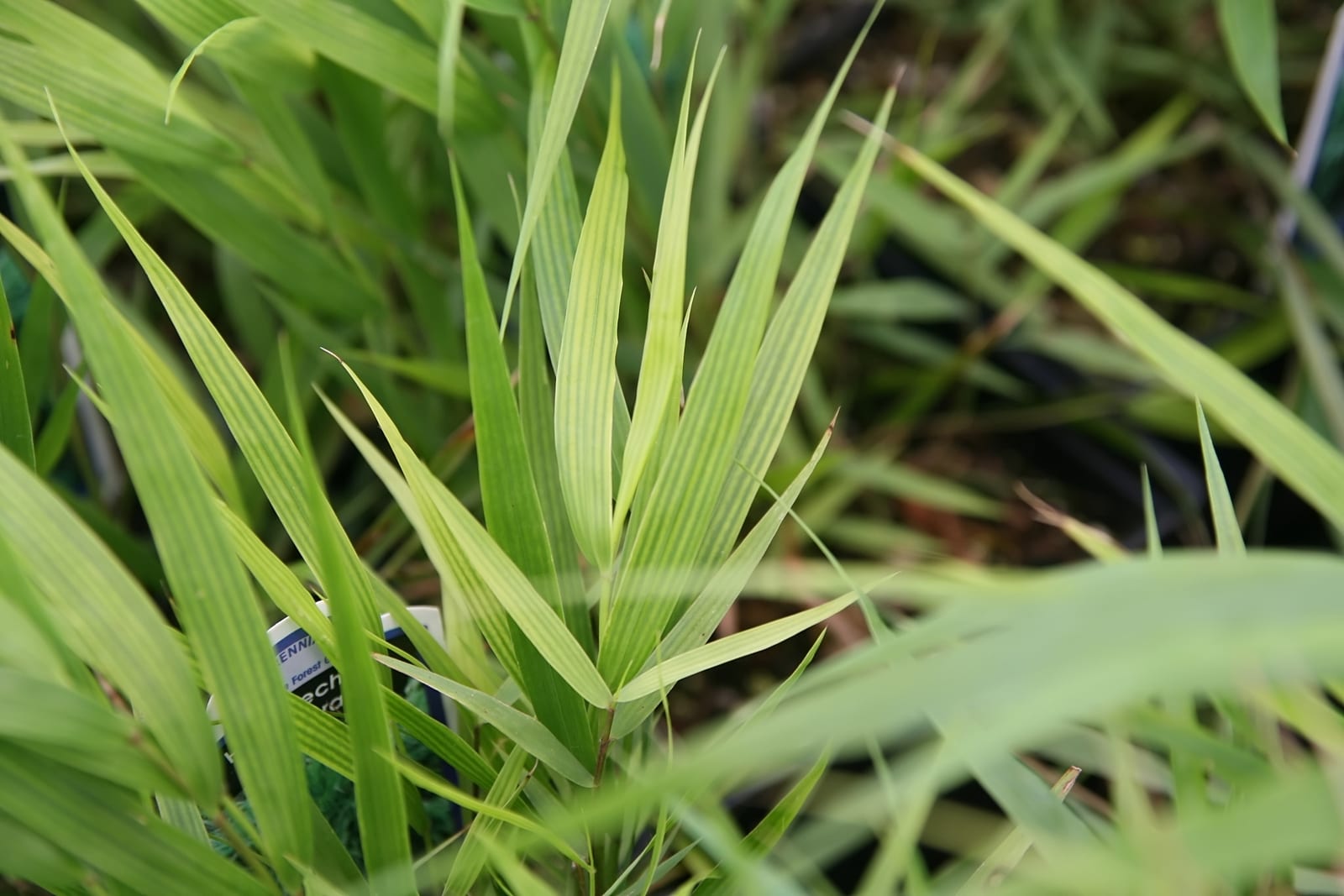 🔍 Click to enlarge
grassperennial
Japanese Forest Grass
Hakonechloa macra
Golden-yellow cascading grass that illuminates shady spots. Beautiful in containers or borders.
Quick Facts
Sun:⛅ Partial Shade, 🌑 Full Shade
Water:💧💧 Moderate
USDA Zones:Zones 5–9
Space:🪴 Container, 🌱 Small Bed
Soil:Loam, Peaty, Silty
Best Season(s):Spring, Fall
Experience Level:🌱 Beginner
Native Range:Japan
Bloom Cycle:Grown for its cascading, variegated foliage rather than bloom
Care Notes
Cut back in early spring before new growth. Keep consistently moist. Protect from hot afternoon sun.
Growing Details
Mature Size:12-18 in tall, 18-24 in wide
Growth Rate:🐢 Slow
Zone Performance
In zone 5, plants need a sheltered site and consistent winter moisture to avoid desiccation, and may emerge later in spring than in warmer zones. In zone 9, the golden-leaved cultivars require deeper shade and more consistent watering to prevent leaf scorch, since intense sun and heat there quickly bleach or burn the delicate foliage.
Companions & Wildlife
🦌 Deer Resistance
seldom damaged
Deer occasionally browse the tender blades, but it is damaged far less than most shade perennials, particularly once established.
🐝 Pollinator Value
low
Grown purely for its cascading golden foliage; its small wind-pollinated flowers offer negligible value to pollinators.
Good Companions
Hosta — Shares the same moist, part-shade conditions and its bold rounded leaves contrast with the grass's fine cascading texture.
Astilbe — Thrives in the same humus-rich, consistently moist shade garden and adds vertical plume color against the low mounding grass.
Japanese Painted Fern — A classic shade-garden pairing where the fern's silvery fronds echo Hakonechloa's cascading, arching form.
Coral Bells (Heuchera) — Offers colorful mounded foliage at a similar scale, creating layered texture in shaded borders and containers.
Troubleshooting
⚠️ Scorched, brown leaf edges
Move to deeper shade and increase watering frequency, especially during hot afternoons, since this grass cannot tolerate the sun exposure many other ornamental grasses accept.
⚠️ Slow to establish or spread
Be patient — Hakonechloa is inherently slow-growing; enrich soil with compost and keep evenly moist to speed establishment.
⚠️ Slug and snail damage on new spring shoots
Apply iron phosphate slug bait around the crown as new growth emerges in early spring.
✅ Pet Safety
Generally considered non-toxic to cats and dogs.
Informational only — always check with a veterinarian if you suspect your pet has eaten something it shouldn't have.