Loading…
 🔍 Click to enlarge
shrubperennial
Japanese Barberry
Berberis thunbergii
Compact, thorny shrub grown for its colorful burgundy or gold foliage — a durable, deer-resistant landscape staple.
Quick Facts
Sun:☀️ Full Sun, ⛅ Partial Shade
Water:💧 Low
USDA Zones:Zones 4–8
Space:🪴 Container, 🌱 Small Bed
Soil:Loam, Clay, Sandy
Best Season(s):Spring, Fall
Experience Level:🌱 Beginner
Native Range:Japan (widely naturalized and invasive in parts of the Northeastern US)
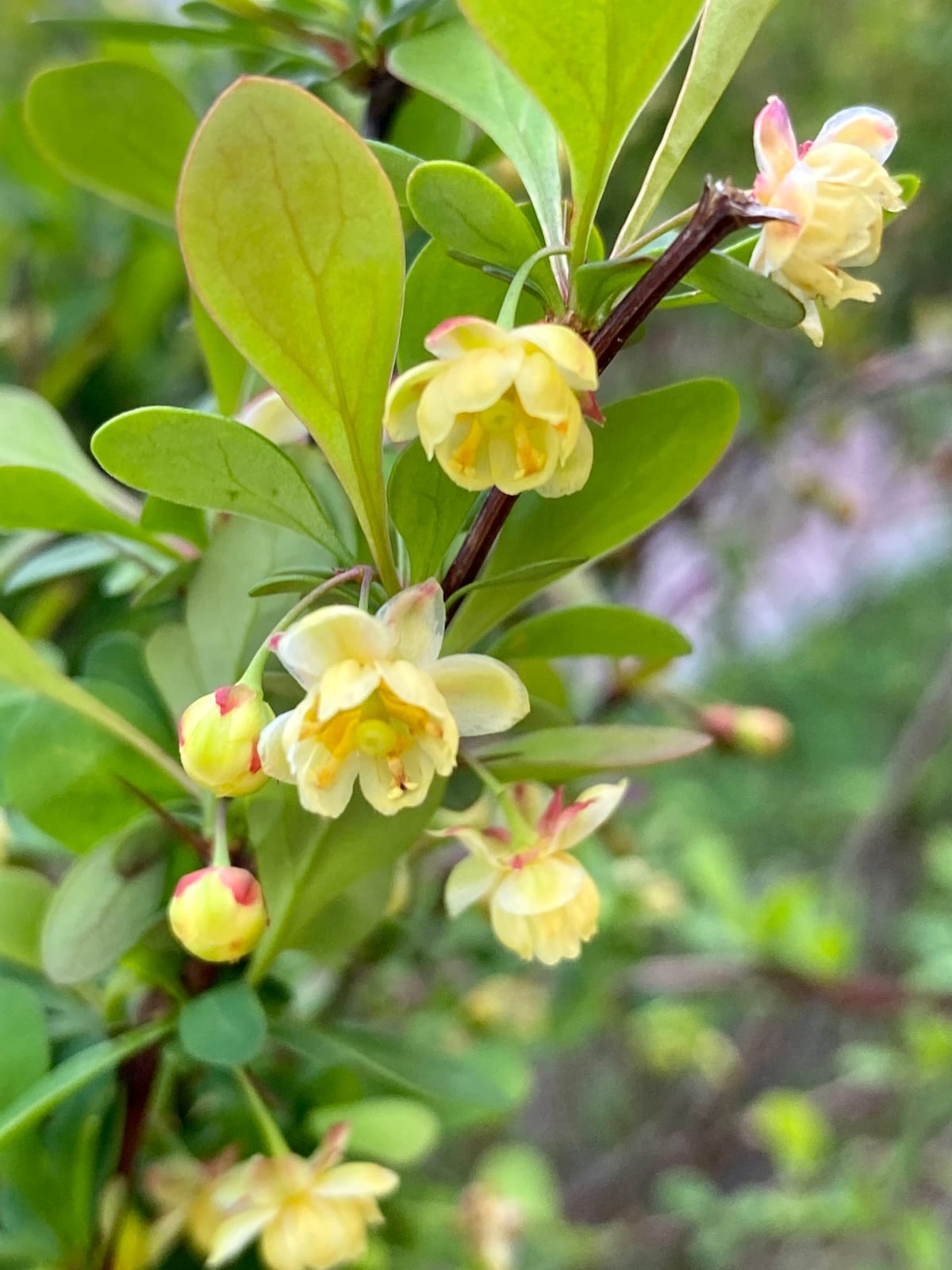
Bloom Color:Small pale yellow clusters, inconspicuous (grown for colorful foliage)
Bloom Cycle:Mid-spring
Care Notes
Considered invasive in parts of the Northeast — check local regulations before planting. Wear gloves when pruning; stems are thorny.
Growing Details
Mature Size:3-6 ft tall, 4-7 ft wide (dwarf cultivars like 'Crimson Pygmy' stay 2 ft tall)
Growth Rate:🌿 Moderate
Zone Performance
In zone 4, Japanese Barberry is fully hardy but grows more slowly, taking longer to reach mature size and fill in as a hedge. In zone 8, growth is notably more vigorous and the plant seeds more readily into adjacent woodlands via bird dispersal, which is why several Northeastern states have moved to restrict or ban its sale regardless of the zone it's planted in.
Companions & Wildlife
🦌 Deer Resistance
rarely damaged
The dense thorny stems make Japanese Barberry one of the most reliably deer-proof shrubs, which is part of why it became so overplanted.
🐝 Pollinator Value
low
Small pale yellow spring flowers offer minor nectar value to small native bees but are not a significant pollinator resource.
Good Companions
Black-Eyed Susan (Rudbeckia) — Golden late-summer bloom contrasts strikingly with burgundy or gold Barberry foliage while sharing the same full-sun, low-water needs.
Ornamental Grasses (Karl Foerster Feather Reed Grass) — Tolerates the same lean, well-drained soil and adds vertical texture and movement against Barberry's dense mounded form.
Sedum (Autumn Joy) — Matches Barberry's drought tolerance and provides late-season bloom color that complements its foliage tones through fall.
Troubleshooting
⚠️ Volunteer seedlings appearing in nearby wooded or naturalized areas
Deadhead spent flowers before fruit forms where practical, and check state and local invasive species regulations before planting, since Barberry is banned or restricted in several states.
⚠️ Thorny stems making pruning and maintenance difficult
Wear heavy leather gloves and long sleeves when pruning, and use long-handled loppers to work from a safe distance on interior stems.
⚠️ Fungal leaf spot in humid conditions
Improve air circulation by thinning dense interior growth and avoid overhead watering that keeps foliage wet.
⚠️ Pet Safety
Mildly toxic to cats and dogs (berberine) in quantity — can cause GI upset; thorns also pose a physical hazard.
Informational only — always check with a veterinarian if you suspect your pet has eaten something it shouldn't have.