Loading…
 🔍 Click to enlarge
succulentperennial
Jade Plant
Crassula ovata
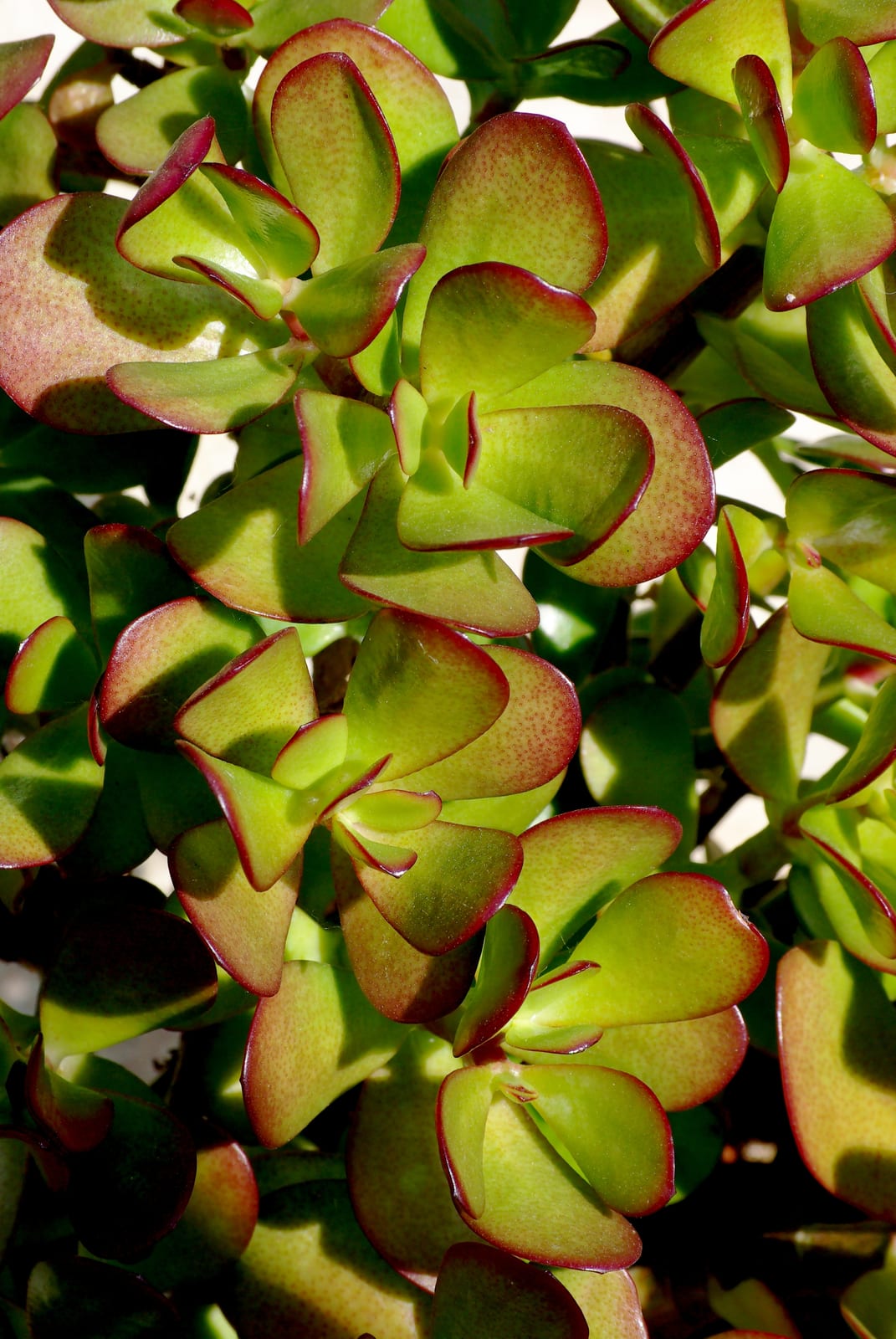
Long-lived succulent with thick, glossy oval leaves. Can live for decades and grow tree-like.
Quick Facts
Sun:☀️ Full Sun, ⛅ Partial Shade
Water:💧 Low
USDA Zones:Zones 10–11
Space:🪴 Container, 🌱 Small Bed
Soil:Sandy, Loam
Best Season(s):Spring, Summer
Experience Level:🌱 Beginner
Native Range:South Africa
Bloom Color:Small white-pink star-shaped flowers (rare indoors)
Bloom Cycle:Winter, if it blooms at all as a houseplant
Care Notes
Water when soil is completely dry. Full sun produces reddish leaf tips. Propagates easily from cuttings.
Growing Details
Mature Size:3-5 ft tall and wide outdoors in ideal climates (2-3 ft as a houseplant)
Growth Rate:🐢 Slow
Zone Performance
Jade plant is reliably hardy outdoors only in zones 10-11; in zone 10 it may still need protection during rare cold snaps, since temperatures below the high 20s°F can cause significant leaf and stem damage. Everywhere colder, it must be grown as a container plant that is brought indoors before the first fall frost.
Companions & Wildlife
🦌 Deer Resistance
rarely damaged
Thick, fleshy leaves with a high water content and mild toxicity make it unappealing to deer, though this is more relevant in mild zones 10-11 where it grows outdoors.
🐝 Pollinator Value
low
Produces small star-shaped white or pink flowers in winter when mature, offering minor nectar value to bees, but it is grown primarily for its sculptural form.
Good Companions
Echeveria — Shares the same low-water, gritty soil needs and pairs well in mixed succulent container arrangements.
Haworthia — Both tolerate similar indoor light conditions and fast-draining soil, making them natural companions in windowsill succulent bowls.
Sedum (Stonecrop) — Complements jade plant's thick oval leaves with a lower, spreading groundcover habit in outdoor succulent beds.
Aloe Vera — Requires the same infrequent, deep watering and bright light, making care routines compatible when grown together.
Troubleshooting
⚠️ Leaves dropping or shriveling
Check soil moisture — both severe underwatering and overwatering cause leaf drop; water deeply only when soil is completely dry.
⚠️ Soft, mushy, blackened stems
This indicates root or stem rot from overwatering; remove affected tissue and repot in fresh, fast-draining cactus mix.
⚠️ Leggy, sparse growth reaching for light
Move to a brighter location — jade plants need several hours of direct sun daily to stay compact and tree-like.
⚠️ Pet Safety
Toxic to cats and dogs — can cause vomiting, incoordination, and lethargy despite being a very common, easygoing houseplant.
Informational only — always check with a veterinarian if you suspect your pet has eaten something it shouldn't have.