Loading…
 🔍 Click to enlarge
treeperennial
Honeylocust
Gleditsia triacanthos
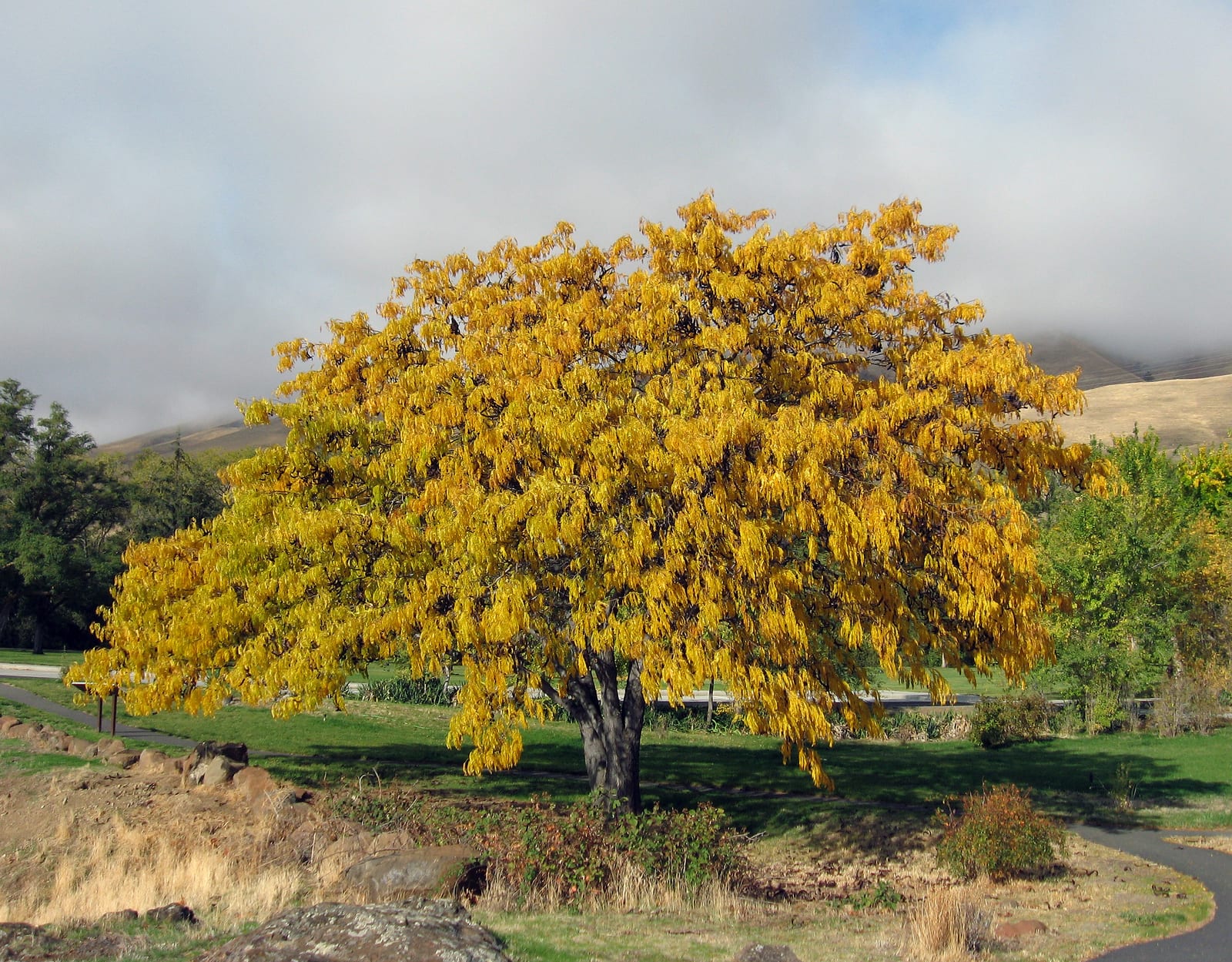
Fast-growing tree with fine, feathery foliage that casts light, dappled shade — grass grows well underneath it.
Quick Facts
Sun:☀️ Full Sun
Water:💧 Low
USDA Zones:Zones 3–9
Space:🏡 Large Garden
Soil:Loam, Clay, Sandy, Silty
Best Season(s):Spring, Fall
Experience Level:🌱 Beginner
Native Range:Central United States
Bloom Color:Small fragrant greenish-white clusters, inconspicuous
Bloom Cycle:Late spring
Care Notes
Choose a thornless, podless cultivar (e.g. 'Shademaster', 'Skyline'). Highly tolerant of urban conditions, heat, and drought.
Growing Details
Mature Size:30-70 ft tall, 30-70 ft wide
Growth Rate:🐇 Fast
Zone Performance
At the cold edge (zone 3), honeylocust is exceptionally hardy and thrives on the Great Plains where few other large shade trees tolerate the wind and cold. In zone 9 at the warm edge, it handles extreme heat and drought well, but webworm and mimosa webworm pest pressure tends to be more severe in the longer, hotter growing season.
Companions & Wildlife
🦌 Deer Resistance
rarely damaged
Thorny wild forms and even thornless cultivars are seldom browsed once past the seedling stage.
🐝 Pollinator Value
moderate
Small, fragrant spring flowers attract honeybees and native bees, and the seed pods feed squirrels and deer in fall.
Good Companions
Kentucky Bluegrass — Honeylocust's light, filtered shade is famously turf-friendly, allowing lawn grass to thrive underneath unlike most large shade trees.
Daylily — Sun-tolerant perennial that handles the dappled light beneath honeylocust's fine, feathery canopy.
Black-Eyed Susan — Thrives in the same open, sunny conditions honeylocust's thin canopy allows to reach the ground.
Russian Sage — Drought-tolerant perennial well suited to honeylocust's tolerance for hot, dry urban planting sites.
Troubleshooting
⚠️ Mimosa webworm creating unsightly webbed, browned foliage
Prune out and destroy webbed sections early, or treat with Bt (Bacillus thuringiensis) at first sign of webbing.
⚠️ Pod litter from seed-bearing cultivars
Choose a podless cultivar like 'Shademaster' or 'Skyline' to avoid cleanup entirely.
⚠️ Canker diseases on stressed trees
Avoid drought stress and mechanical injury, which are the primary triggers, and prune out cankered limbs promptly.
✅ Pet Safety
Foliage is generally non-toxic to cats and dogs; thorned wild-type trees pose a physical hazard — choose thornless cultivars.
Informational only — always check with a veterinarian if you suspect your pet has eaten something it shouldn't have.