Loading…
 🔍 Click to enlarge
shrubperennial
Holly
Ilex opaca
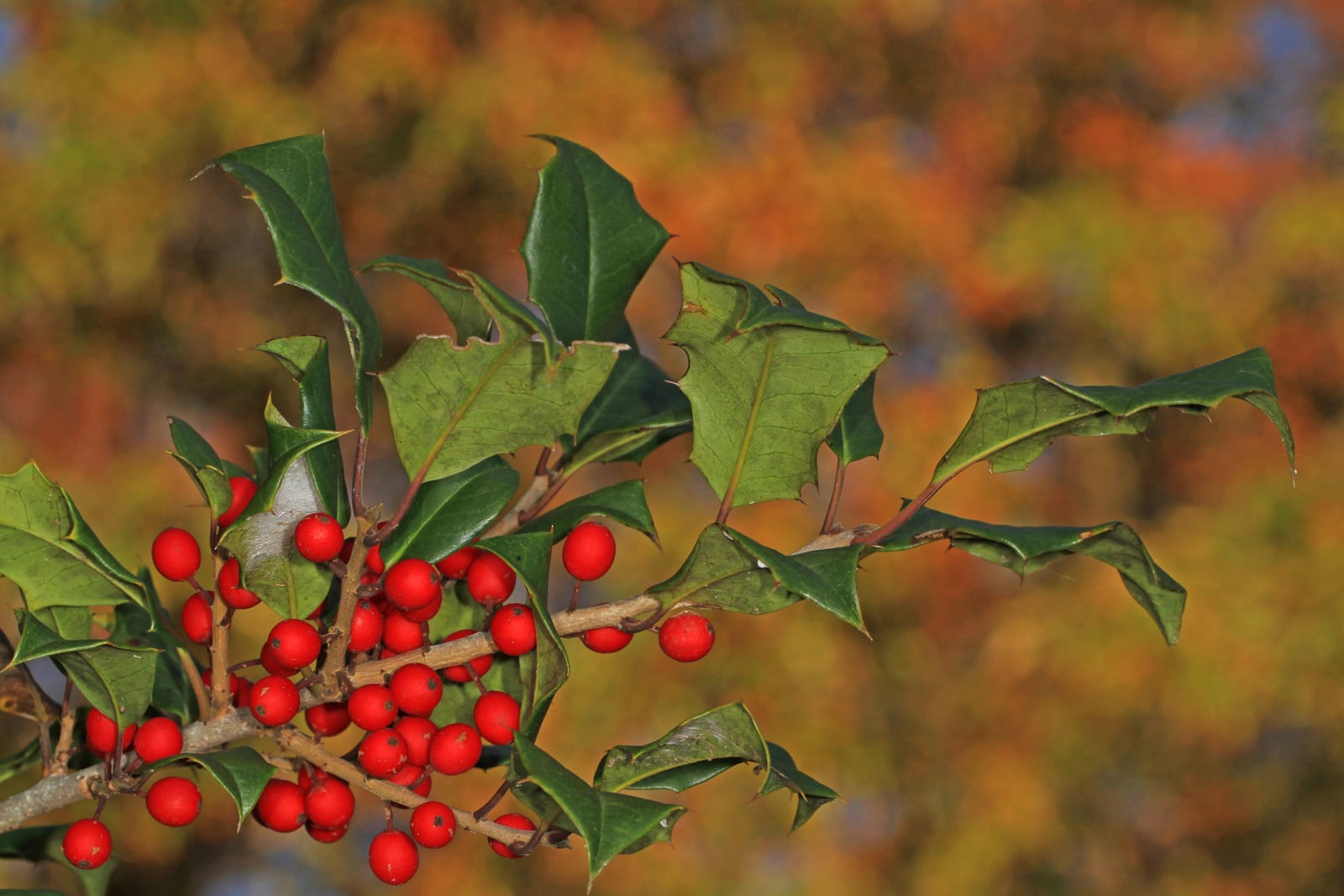
Classic evergreen with glossy leaves and vivid red berries. Essential for winter interest.
Quick Facts
Sun:☀️ Full Sun, ⛅ Partial Shade
Water:💧💧 Moderate
USDA Zones:Zones 5–9
Space:🌱 Small Bed, 🏡 Large Garden
Soil:Loam, Clay, Sandy, Silty
Best Season(s):Spring, Fall
Experience Level:🌱 Beginner
Native Range:Eastern & Central United States
Bloom Color:Small white flowers, secondary to its red winter berries
Bloom Cycle:Late spring, inconspicuous
Care Notes
Plant a male pollinator nearby for berry production. Prune in late winter. Berries are toxic to pets.
Growing Details
Mature Size:15-30 ft tall, 10-20 ft wide (species form; smaller cultivars available)
Growth Rate:🐢 Slow
Zone Performance
In Zone 5, American holly is at the cold edge of its tolerance and benefits from a sheltered site away from harsh winter wind, which can desiccate evergreen foliage; in Zone 9, it tolerates heat well but appreciates supplemental water during prolonged summer dry spells to keep berry production strong.
Companions & Wildlife
🦌 Deer Resistance
rarely damaged
The spiny, leathery leaves of American holly are one of the most effective natural deer deterrents among common landscape shrubs.
🐝 Pollinator Value
moderate
Small, inconspicuous spring flowers are an important early nectar source for native bees, which are needed to pollinate female plants into producing berries.
Good Companions
Nandina — Shares holly's evergreen structure and winter berry display, doubling the cold-season color in a shared bed.
Boxwood — Provides a lower, formal evergreen contrast to holly's coarser, glossier foliage in foundation plantings.
Winterberry Holly — A deciduous relative that extends the red-berry winter display into open, sunnier parts of the landscape holly itself may not tolerate.
Camellia — Matches holly's evergreen structure and acid-soil preference while adding fall-through-winter flower color.
Troubleshooting
⚠️ No berries produced
Confirm a male holly cultivar is planted within 30-40 feet, since holly is dioecious and only pollinated female plants set berries.
⚠️ Leaf miner tunnels in foliage
Prune out and destroy affected leaves and apply a systemic insecticide in spring when adult flies are active.
⚠️ Scale insects causing sooty mold
Treat with horticultural oil in late winter before bud break to smother overwintering scale before it spreads.
⚠️ Pet Safety
Berries and leaves are toxic to cats and dogs (saponins, methylxanthines) — can cause vomiting and diarrhea; the classic winter-holiday hazard for pets.
Informational only — always check with a veterinarian if you suspect your pet has eaten something it shouldn't have.