Loading…
 🔍 Click to enlarge
succulentperennial
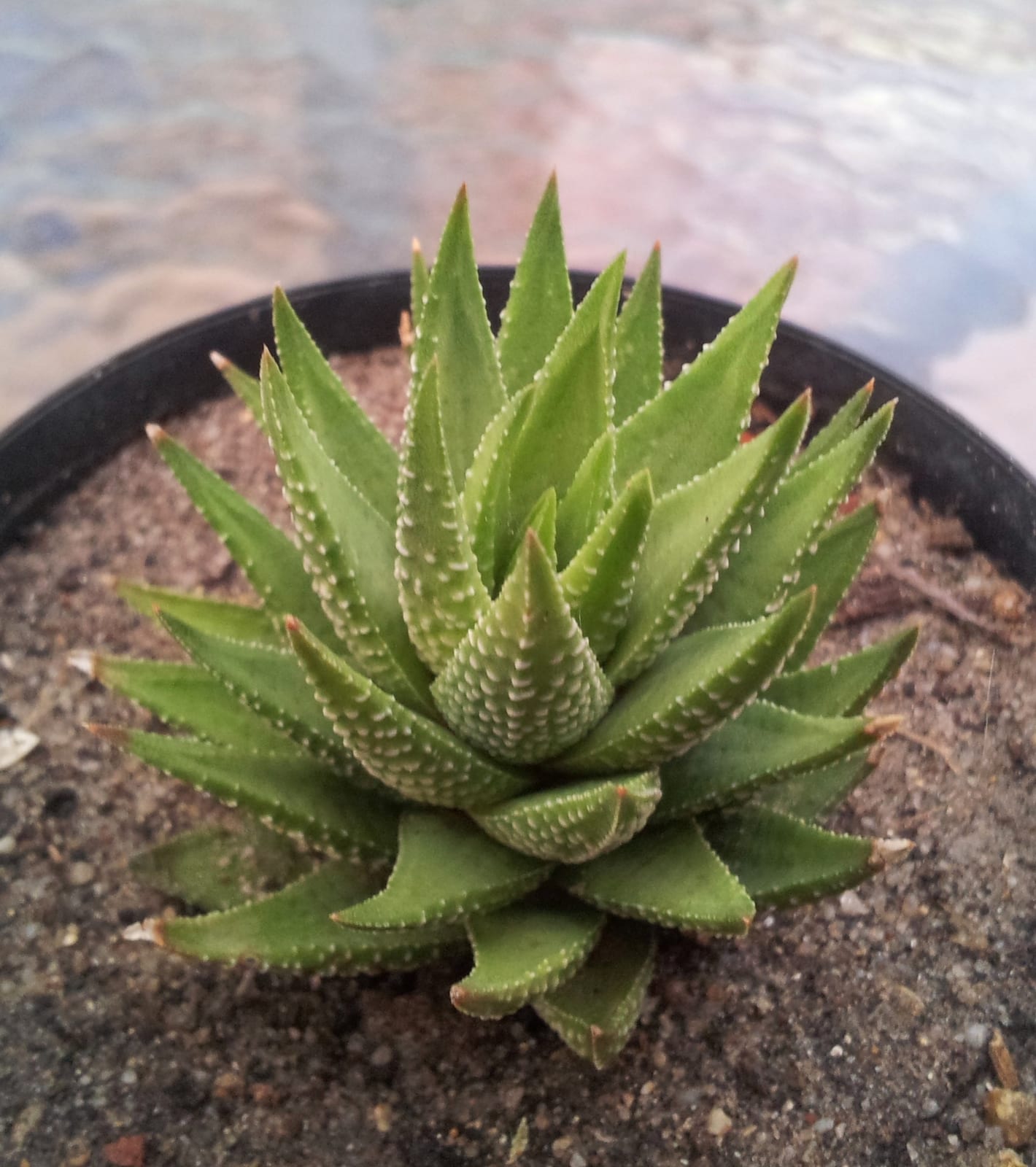
Haworthia
Haworthia fasciata
Small, striped succulent that tolerates lower light than most. Perfect windowsill plant.
Quick Facts
Sun:⛅ Partial Shade, ☀️ Full Sun
Water:💧 Low
USDA Zones:Zones 10–11
Space:🪴 Container
Soil:Sandy, Loam
Best Season(s):Spring, Summer
Experience Level:🌱 Beginner
Native Range:South Africa
Bloom Color:Small white flowers on a thin stalk
Bloom Cycle:Occasional, not the main appeal of the plant
Care Notes
One of the best succulents for indoor growing. Avoid direct afternoon sun — leaves scorch easily.
Growing Details
Mature Size:3-5 in tall, 4-6 in wide
Growth Rate:🐢 Slow
Zone Performance
Haworthia is only reliably hardy outdoors in zones 10-11 in a sheltered, shaded location, and even there it is more commonly grown in containers. In all other zones (including the cooler end of its listed range) it must be grown as a houseplant, since it has essentially no frost tolerance and will suffer irreversible damage below about 40°F.
Companions & Wildlife
🦌 Deer Resistance
rarely damaged
Almost always grown indoors or in protected patio containers, so deer exposure is rare; the firm, striped leaves are not a preferred browse in any case.
🐝 Pollinator Value
low
Occasionally produces small tubular white flowers on a thin stalk, but it is grown almost exclusively as a foliage houseplant with minimal bloom or pollinator significance.
Good Companions
Echeveria — Shares similar bright, indirect light and gritty soil needs, making it a compatible companion in mixed succulent dish gardens.
Jade Plant — Both tolerate the same indoor light levels and infrequent watering schedule, simplifying combined care in containers.
Aloe Vera — A related succulent with compatible watering needs that provides a taller architectural contrast to haworthia's low rosette form.
Sansevieria (Snake Plant) — Tolerates the same low-to-moderate indoor light and infrequent watering, making it an easy low-maintenance windowsill pairing.
Troubleshooting
⚠️ Leaves turning translucent or mushy
This signals overwatering-related rot — let the soil dry out completely and reduce watering frequency, repotting into fresh cactus mix if rot has progressed.
⚠️ Reddish or bleached, scorched leaf color
Move out of direct afternoon sun into bright, indirect light — haworthia scorches easily unlike many other succulents.
⚠️ Slow or no offset production
Ensure adequate but not excessive light and allow the plant to become slightly pot-bound, which often triggers offset formation.
✅ Pet Safety
Generally considered non-toxic to cats and dogs.
Informational only — always check with a veterinarian if you suspect your pet has eaten something it shouldn't have.