Loading…
 🔍 Click to enlarge
flowerbiennial
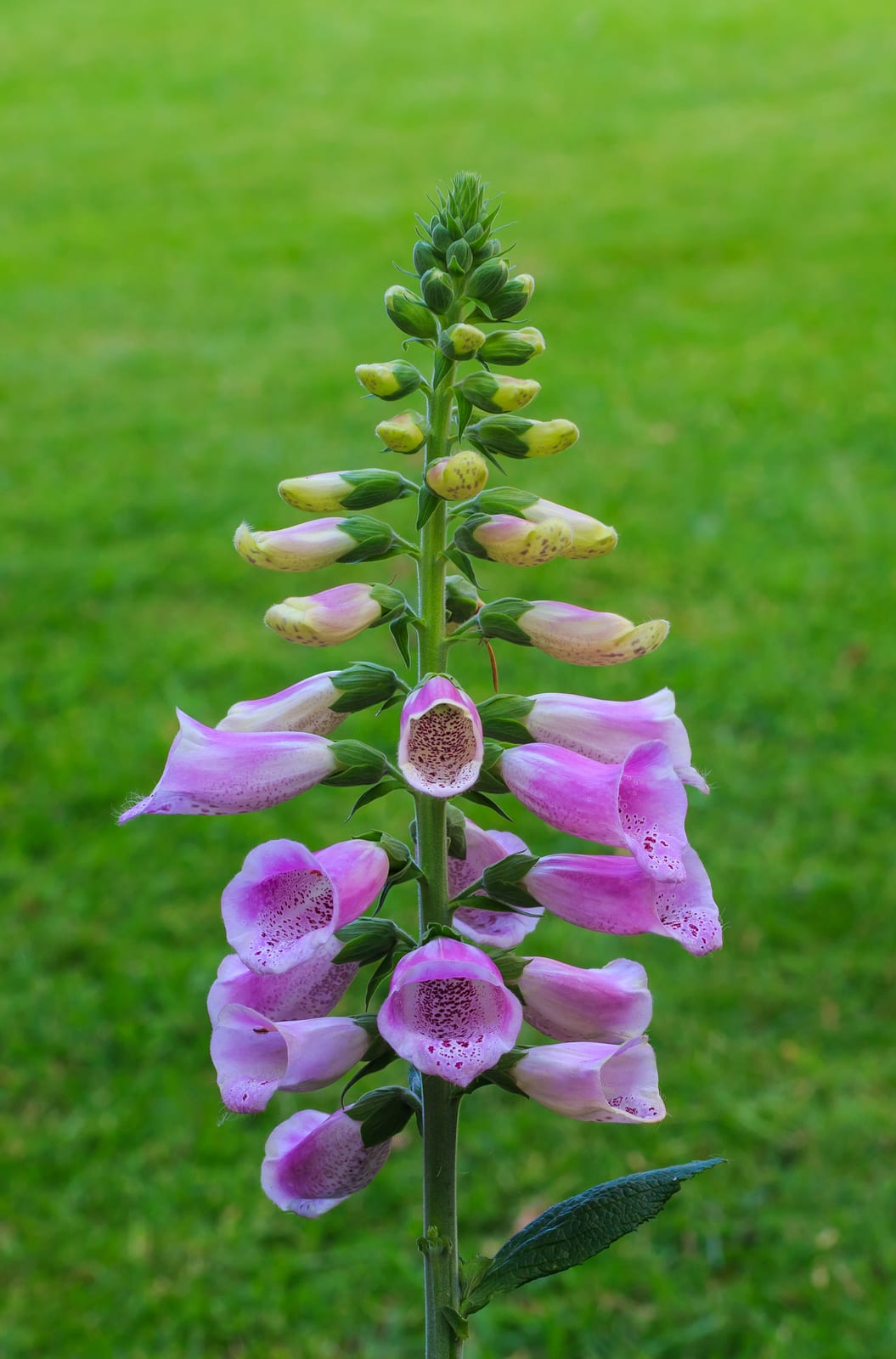
Foxglove
Digitalis purpurea
Towering spires of tubular blooms beloved by bumblebees. Biennial that self-sows freely.
Quick Facts
Sun:⛅ Partial Shade, ☀️ Full Sun
Water:💧💧 Moderate
USDA Zones:Zones 4–9
Space:🌱 Small Bed, 🏡 Large Garden
Soil:Loam, Peaty, Silty
Best Season(s):Spring
Experience Level:🌿 Intermediate
Native Range:Western & Southwestern Europe
Bloom Color:Purple, pink, white, yellow (spotted throat)
Bloom Cycle:Early summer, second year of growth
Care Notes
All parts are toxic — wear gloves. Allow seed heads to mature for self-seeding next year.
Growing Details
Mature Size:3-6 ft tall (bloom spike), 1-1.5 ft wide
Growth Rate:🌿 Moderate
Zone Performance
In cooler zones 4-5, foxglove reliably completes its two-year biennial cycle, forming a foliage rosette the first year and flowering the second before dying. In the warmest zones 8-9, hot summers can shorten the plant's life or cause it to behave more like a short-lived perennial, and self-sown seedlings there often germinate and establish faster due to the longer growing season.
Companions & Wildlife
🦌 Deer Resistance
rarely damaged
Foxglove contains cardiac glycosides that are highly toxic if ingested, making it one of the most reliably deer-proof plants for the garden.
🐝 Pollinator Value
high
The tubular spotted blooms are precisely sized for bumblebees, which crawl deep inside to reach the nectar and pollen.
Good Companions
Hosta — Broad hosta leaves provide textural contrast at the base of foxglove's tall spires while sharing the same part-shade, humus-rich soil preference.
Astilbe — Both thrive in moist, woodland-edge conditions and bloom in overlapping early-summer timing for a layered cottage-garden look.
Ferns — Fine fern texture softens the base of foxglove's dramatic vertical spikes and both tolerate similar dappled shade.
Columbine — A classic cottage-garden pairing that shares similar bloom time, part-shade tolerance, and cheerful self-seeding habit.
Troubleshooting
⚠️ No flowers the first year after planting
This is expected biennial behavior — foxglove forms only a leafy rosette its first year and blooms the following season.
⚠️ Powdery mildew or leaf spot in humid weather
Space plants well for airflow and remove and destroy affected lower leaves promptly.
⚠️ Plant fails to reappear after blooming
Allow some flower spikes to fully mature and drop seed before cutting back, since foxglove relies on self-sowing to persist in the garden.
⚠️ Pet Safety
Highly toxic to cats, dogs, and humans (cardiac glycosides) — every part of the plant is dangerous if ingested; keep well away from pets and children.
Informational only — always check with a veterinarian if you suspect your pet has eaten something it shouldn't have.
🌿 Traditional & Medicinal Use
The historical source of digoxin, a real prescription cardiac medication — the raw plant is dangerously toxic and must never be self-administered; mentioned here for context only.
Informational only, not medical advice — consult a healthcare provider before using any plant medicinally.