Loading…
 🔍 Click to enlarge
grassperennial
Fountain Grass
Pennisetum alopecuroides
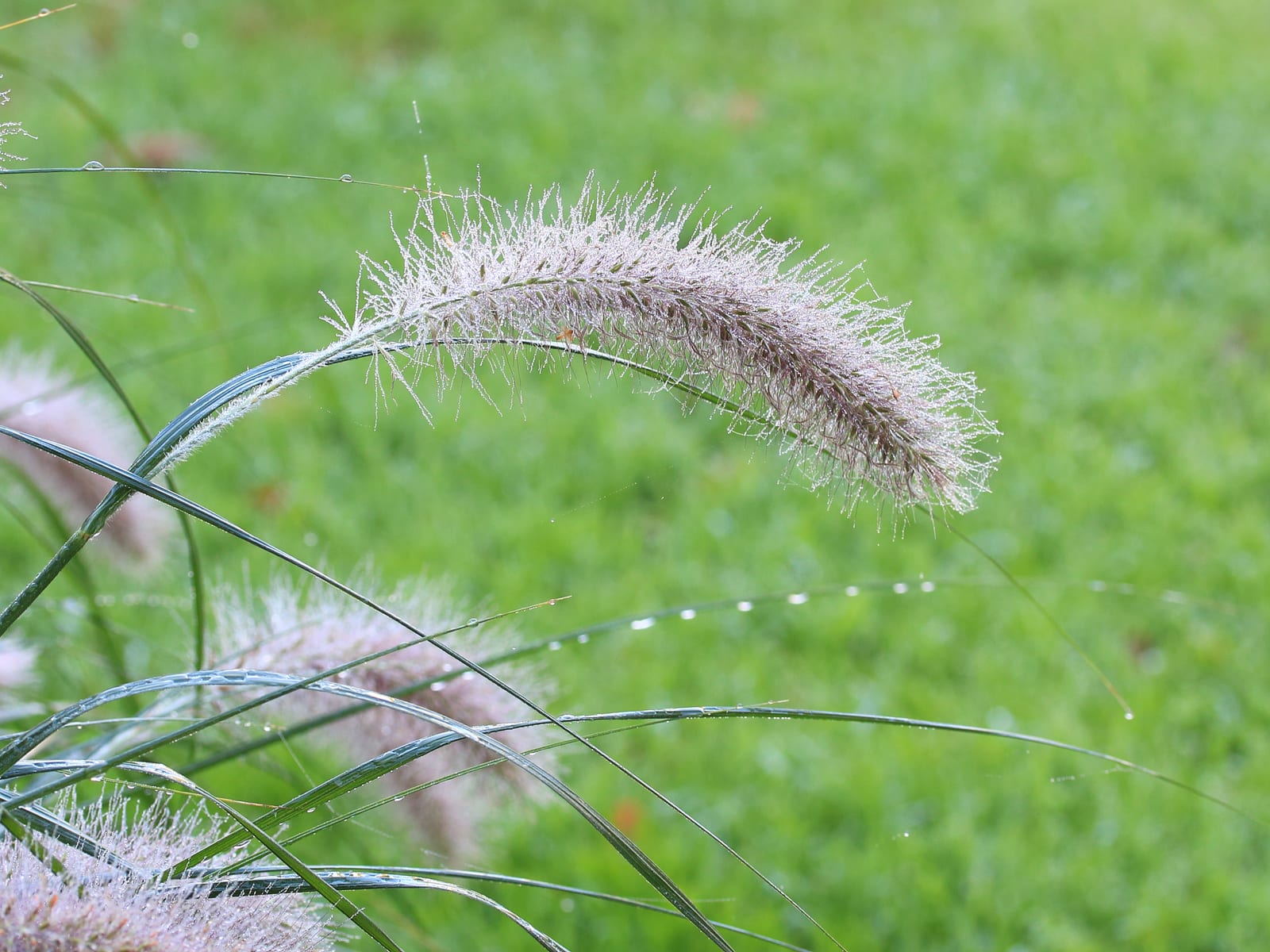
Graceful, arching grass with fuzzy caterpillar-like seed heads. Elegant movement in the breeze.
Quick Facts
Sun:☀️ Full Sun
Water:💧 Low
USDA Zones:Zones 5–10
Space:🪴 Container, 🌱 Small Bed, 🏡 Large Garden
Soil:Loam, Sandy, Silty, Clay
Best Season(s):Spring, Summer
Experience Level:🌱 Beginner
Native Range:East Asia & Australia
Bloom Color:Coppery-pink, bottlebrush-shaped plumes
Bloom Cycle:Late summer through fall
Care Notes
Cut back to 4 inches in early spring. Some varieties are invasive in warm zones — check locally.
Growing Details
Mature Size:2-4 ft tall and wide including arching seed heads
Growth Rate:🐇 Fast
Zone Performance
In zone 5, fountain grass survives reliably with good winter drainage but benefits from leaving the foliage uncut until spring for extra crown insulation. In zones 9-10, common green fountain grass (Pennisetum alopecuroides) can self-seed and naturalize; the purple-leaved 'Rubrum' type is actually tender there and often grown as an annual since it is not reliably hardy below zone 9.
Companions & Wildlife
🦌 Deer Resistance
seldom damaged
The fuzzy seed heads and coarse foliage are generally passed over by deer, though young shoots may occasionally be nibbled.
🐝 Pollinator Value
low
A wind-pollinated ornamental grass with no significant nectar value, though the seed heads attract seed-eating birds in fall and winter.
Good Companions
Rudbeckia (Black-Eyed Susan) — Warm gold flower color complements the buff-pink seed plumes and both bloom together into fall.
Coreopsis — Fine-textured yellow flowers pair well against fountain grass's fuzzy, bottlebrush seed heads for late-season contrast.
Sedum 'Autumn Joy' — Both perform well in lean, well-drained soil and peak visually in late summer through fall.
Salvia 'May Night' — Its deep purple spikes provide vertical, cool-toned contrast to fountain grass's mounded, warm-toned form.
Troubleshooting
⚠️ No regrowth in spring
Confirm winter hardiness for your zone and cultivar — 'Rubrum' and other purple fountain grasses need zone 9+ or must be treated as annuals/overwintered indoors.
⚠️ Excessive self-seeding into lawns and beds
Deadhead spent plumes before seed drop or choose a sterile cultivar such as 'Hameln' in warmer zones where reseeding is a concern.
⚠️ Thinning, weak clumps after several years
Divide the clump in early spring every 3-4 years to rejuvenate vigor.
✅ Pet Safety
Generally considered non-toxic to cats and dogs; the bristly seed heads can be a minor physical irritant if chewed.
Informational only — always check with a veterinarian if you suspect your pet has eaten something it shouldn't have.