Loading…
 🔍 Click to enlarge
shrubperennial
Forsythia
Forsythia × intermedia
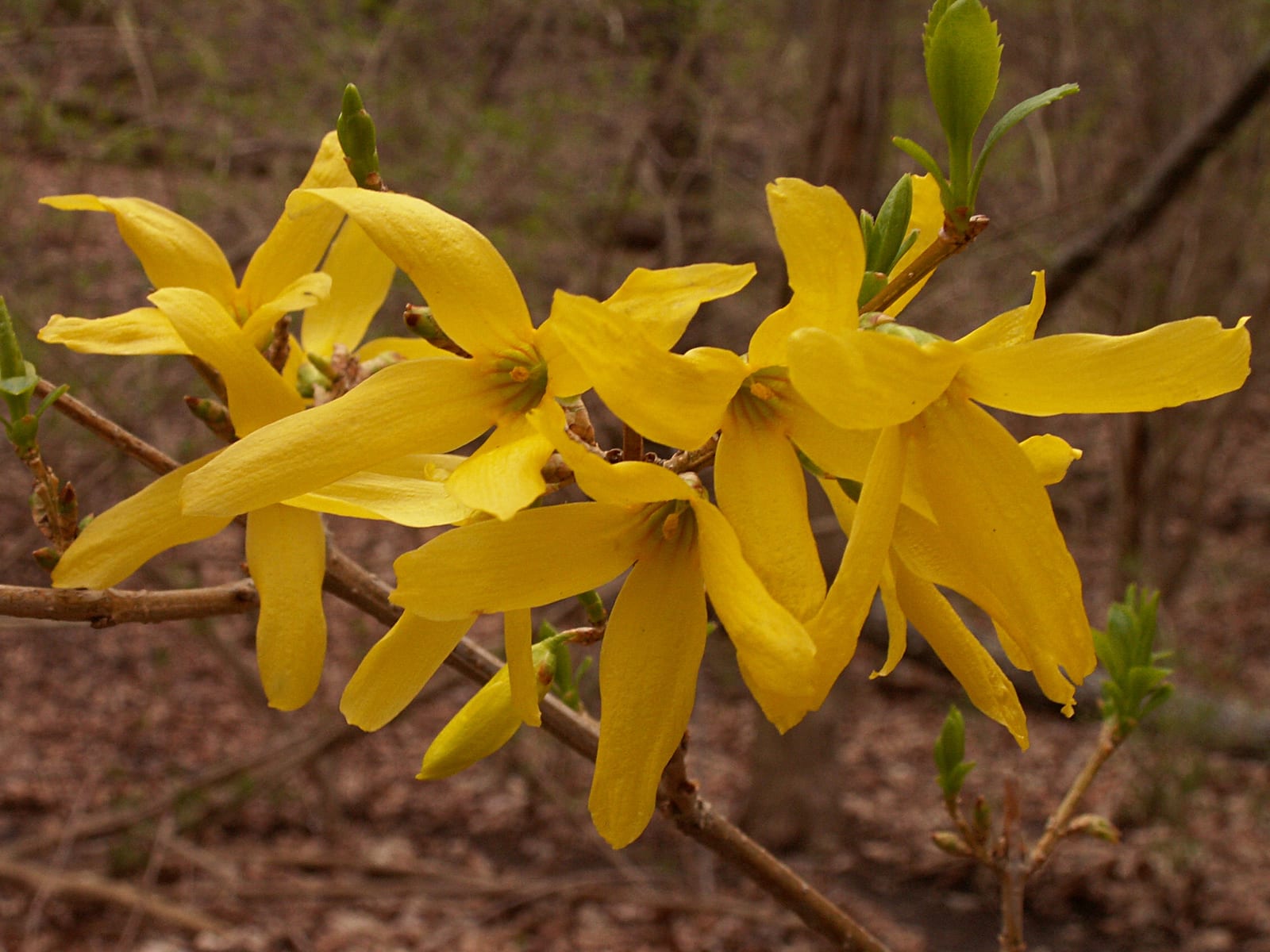
One of the first shrubs to bloom in spring with bright yellow flowers on bare branches.
Quick Facts
Sun:☀️ Full Sun, ⛅ Partial Shade
Water:💧💧 Moderate
USDA Zones:Zones 4–9
Space:🌱 Small Bed, 🏡 Large Garden
Soil:Loam, Clay, Sandy, Silty
Best Season(s):Spring, Fall
Experience Level:🌱 Beginner
Native Range:East Asia
Bloom Color:Bright yellow
Bloom Cycle:Very early spring, before leaf-out — one of the first signs of spring
Care Notes
Prune immediately after flowering. Grows fast — allow plenty of room to spread.
Growing Details
Mature Size:6-10 ft tall, 6-10 ft wide
Growth Rate:🐇 Fast
Zone Performance
At the cold edge of its range (Zone 4), flower buds set the previous fall can be killed by late winter cold snaps even though the plant itself survives, resulting in a bloomless spring with foliage only; in Zone 8-9 forsythia blooms noticeably earlier, sometimes in late January, and benefits from being planted where a late freeze won't damage the open flowers.
Companions & Wildlife
🦌 Deer Resistance
seldom damaged
Deer generally leave established forsythia alone, though young transplants may get occasional browsing before the shrub toughens up.
🐝 Pollinator Value
moderate
An important early nectar and pollen source for the first bumblebee queens and honeybees emerging from winter dormancy.
Good Companions
Daffodil — Blooms at exactly the same early-spring moment, echoing forsythia's yellow with a lower-growing bulb layer.
Crocus — One of the very first bulbs to flower, timed to open alongside forsythia's bare-branch yellow display.
Viburnum — Follows forsythia's early bloom with its own flush of white flowers, extending seasonal interest in the same bed.
Ornamental Grasses — Fills in around forsythia's coarse summer foliage and provides contrast once the spring flower show has passed.
Troubleshooting
⚠️ Sprawling, weedy appearance
Prune immediately after flowering to shape, and remove one-third of the oldest canes at the base each year rather than shearing, which ruins the natural arching form.
⚠️ No flowers despite healthy growth
Check for late-winter cold damage to flower buds, or overly aggressive fall/winter pruning that removed the buds before they could open.
⚠️ Rooting where branch tips touch soil
Trim low, trailing branches that layer themselves into the ground if a tidy footprint is desired, since forsythia roots readily wherever stems contact soil.
✅ Pet Safety
Generally considered non-toxic to cats and dogs.
Informational only — always check with a veterinarian if you suspect your pet has eaten something it shouldn't have.