Loading…
 🔍 Click to enlarge
succulentperennial
Echeveria
Echeveria spp.
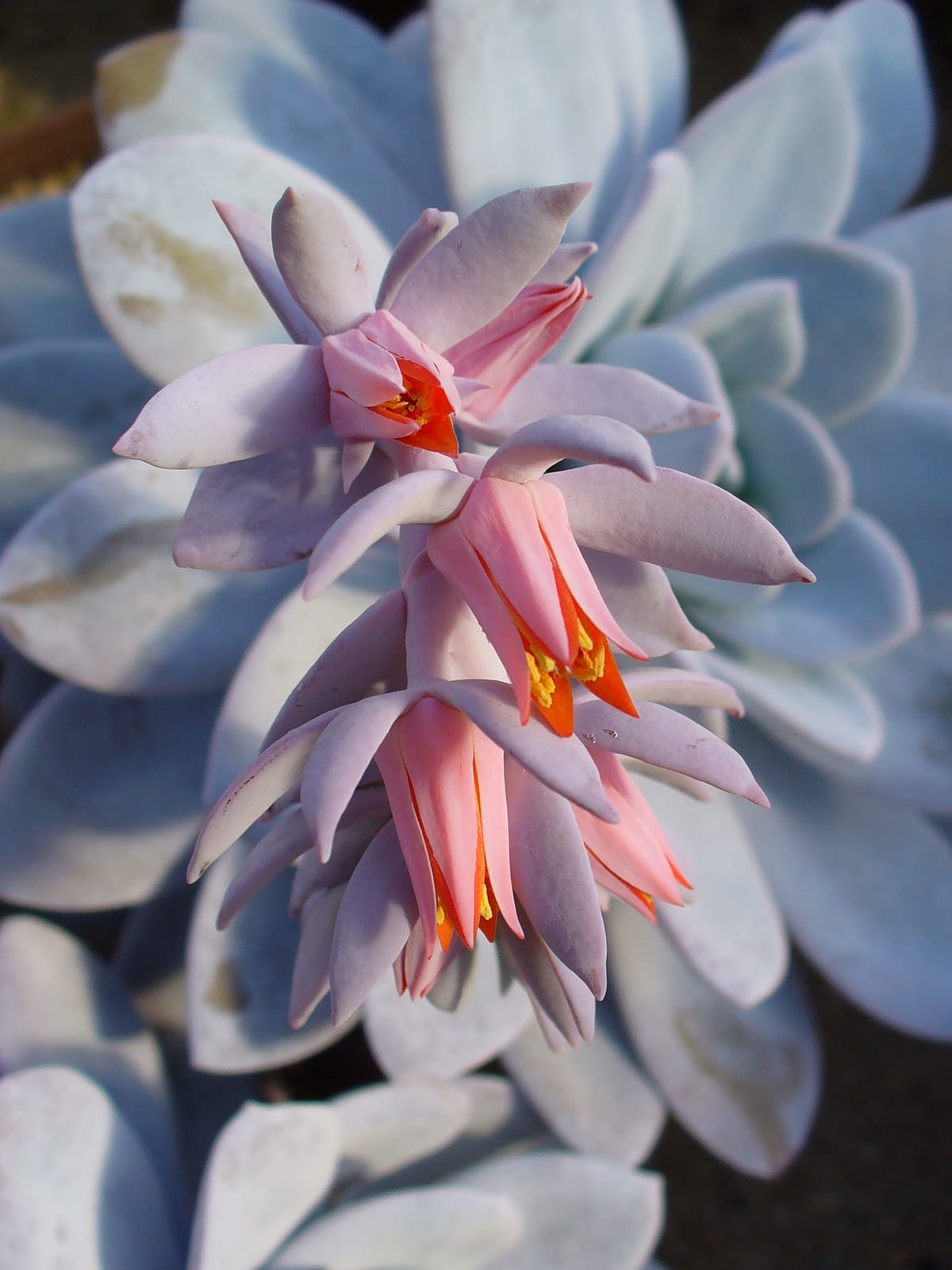
Stunning rosette-forming succulents in an incredible range of colors and textures.
Quick Facts
Sun:☀️ Full Sun, ⛅ Partial Shade
Water:💧 Low
USDA Zones:Zones 9–11
Space:🪴 Container
Soil:Sandy, Loam, Chalky
Best Season(s):Spring, Summer
Experience Level:🌱 Beginner
Native Range:Mexico & Central America
Bloom Color:Orange-pink bell-shaped flowers on tall stalks
Bloom Cycle:Spring to summer
Care Notes
Avoid watering the rosette center — water the soil only. Provide excellent drainage. Perfect for container arrangements.
Growing Details
Mature Size:4-8 in tall and wide per rosette (varies by species)
Growth Rate:🐢 Slow
Zone Performance
In zone 9, echeveria can be grown outdoors year-round in well-drained soil but may need frost cloth protection on the coldest nights, since most species tolerate only brief light frost. In zones 10-11 it thrives outdoors permanently, producing tighter, more colorful rosettes in bright light, while in colder zones it is best grown in containers that can be moved indoors for winter.
Companions & Wildlife
🦌 Deer Resistance
rarely damaged
The thick, water-storing rosette leaves are generally avoided by deer, though this is mainly relevant where grown outdoors in zones 9-11.
🐝 Pollinator Value
moderate
Produces bell-shaped orange, pink, or red flower stalks that attract hummingbirds and bees when grown outdoors and allowed to bloom.
Good Companions
Sedum (Stonecrop) — Shares identical drainage and sun requirements and its trailing habit contrasts nicely with echeveria's tight rosette form in containers.
Hens and Chicks — Both are rosette-forming succulents that combine beautifully for color and size contrast in rock gardens and dish gardens.
Agave — Provides bold architectural scale above echeveria's low, compact rosettes in xeriscape and succulent bed designs.
Haworthia — Compatible light and watering needs make it an easy companion in mixed succulent container arrangements.
Troubleshooting
⚠️ Rosette center rot from water sitting in the crown
Always water at the soil line, never overhead, and ensure the container has drainage holes.
⚠️ Stretched, elongated stem (etiolation)
Increase light exposure — echeveria needs bright, direct light to maintain a tight, compact rosette shape.
⚠️ Mealybugs in leaf crevices
Dab affected areas with a cotton swab dipped in isopropyl alcohol, repeating weekly until the infestation clears.
✅ Pet Safety
Generally considered non-toxic to cats and dogs.
Informational only — always check with a veterinarian if you suspect your pet has eaten something it shouldn't have.