Loading…
 🔍 Click to enlarge
flowerperennial
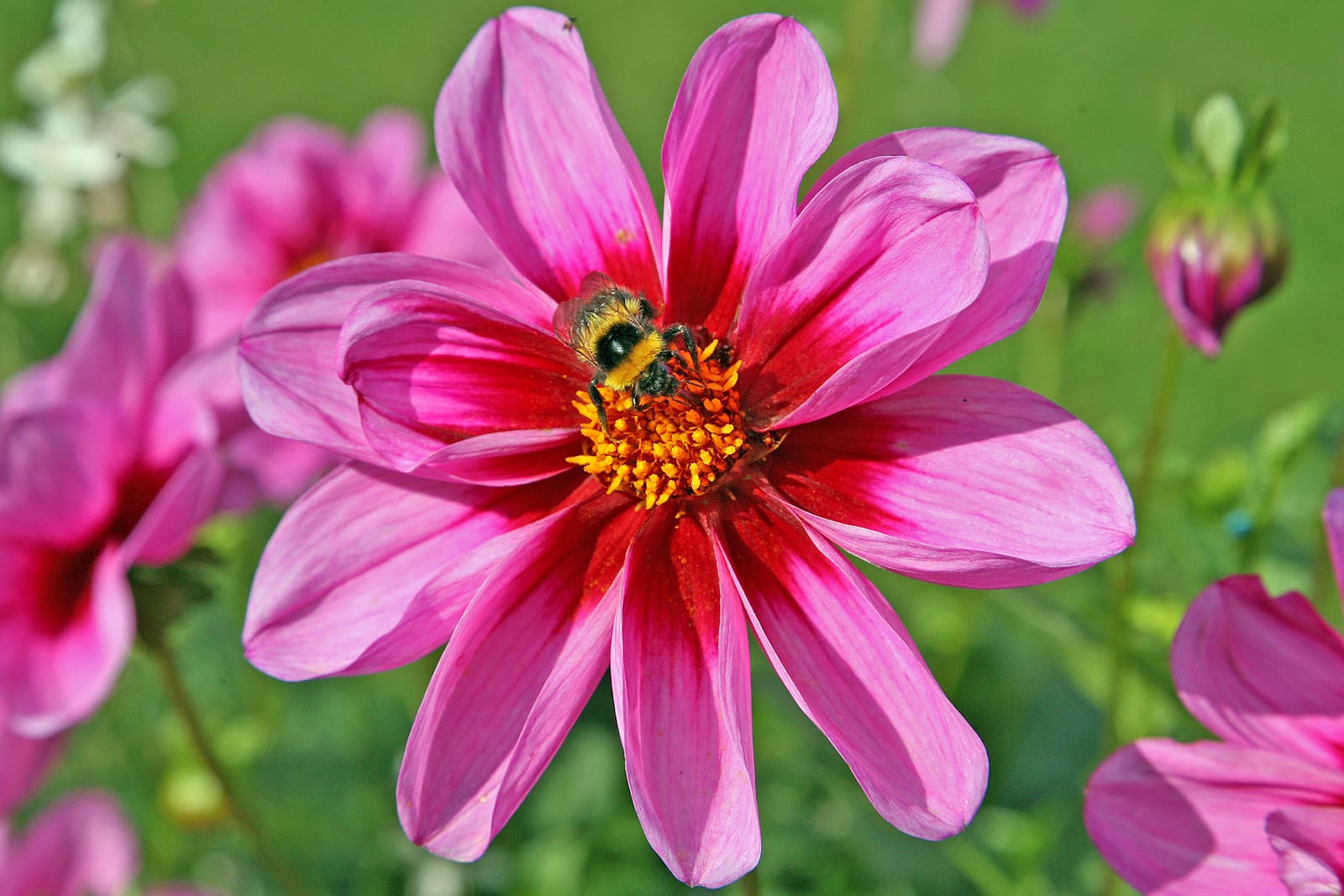
Dahlia
Dahlia pinnata
Spectacular blooms in endless shapes and colors. Dig up tubers in cold zones.
Quick Facts
Sun:☀️ Full Sun
Water:💧💧 Moderate
USDA Zones:Zones 8–11
Space:🪴 Container, 🌱 Small Bed, 🏡 Large Garden
Soil:Loam, Sandy, Silty
Best Season(s):Spring, Summer
Experience Level:🌿 Intermediate
Native Range:Mexico & Central America
Bloom Color:Wide range — red, pink, orange, yellow, purple, white, bicolor
Bloom Cycle:Midsummer through first frost
Care Notes
In zones 3–7, lift tubers after first frost and store over winter. Pinch growing tips for bushier plants.
Growing Details
Mature Size:1-6 ft tall, 1-3 ft wide depending on class (dwarf bedding types stay under 18 in; dinner-plate types reach 4-6 ft)
Growth Rate:🐇 Fast
Zone Performance
Dahlia tubers are only reliably winter-hardy in the ground in zones 8-11; in zones 3-7 tubers must be dug up after the first light frost blackens the foliage and stored indoors over winter in a cool, frost-free space, while in the warmest zones (10-11) tubers can be left in place year-round but benefit from division every couple of years to maintain vigor.
Companions & Wildlife
🦌 Deer Resistance
frequently damaged
Dahlia's succulent stems and lush foliage are highly attractive to deer, and plants often need fencing or repellent in areas with browsing pressure.
🐝 Pollinator Value
moderate
Single and semi-double flowered dahlias attract bees and butterflies well, though fully double, densely petaled forms like dinner-plate types offer pollinators little accessible pollen.
Good Companions
Zinnia — Both are prolific summer cut flowers with similar full-sun and moderate-water needs, extending color through the same bed.
Cosmos — Airy cosmos foliage softens the visual weight of dahlia's large blooms while tolerating the same sunny conditions.
Salvia — Spiky salvia flowers provide vertical contrast to dahlia's rounded blooms and both attract the same pollinators.
Marigold — Marigold's root exudates help deter nematodes that can otherwise damage dahlia tubers in the soil.
Troubleshooting
⚠️ Tubers rotting in storage
Cure tubers for a few days before storing and keep them in dry peat moss or vermiculite at 40-50°F with some air circulation.
⚠️ Earwigs and slugs chewing petals
Set out rolled damp newspaper traps at night and remove trapped pests in the morning.
⚠️ Powdery mildew late in the season
Space plants for good airflow and avoid overhead watering, especially as nights cool in fall.
⚠️ Toppling in wind due to top-heavy blooms
Stake tall varieties at planting time and tie stems loosely as they grow to avoid snapping brittle stalks.
⚠️ Pet Safety
Mildly toxic to cats and dogs — can cause mild GI upset and skin irritation.
Informational only — always check with a veterinarian if you suspect your pet has eaten something it shouldn't have.