Loading…
 🔍 Click to enlarge
groundcoverperennial
Creeping Jenny
Lysimachia nummularia
Golden-green trailing plant with round, coin-like leaves. Beautiful spilling over containers.
Quick Facts
Sun:☀️ Full Sun, ⛅ Partial Shade
Water:💧💧 Moderate
USDA Zones:Zones 3–9
Space:🪴 Container, 🌱 Small Bed
Soil:Loam, Clay, Silty
Best Season(s):Spring, Summer
Experience Level:🌱 Beginner
Native Range:Europe
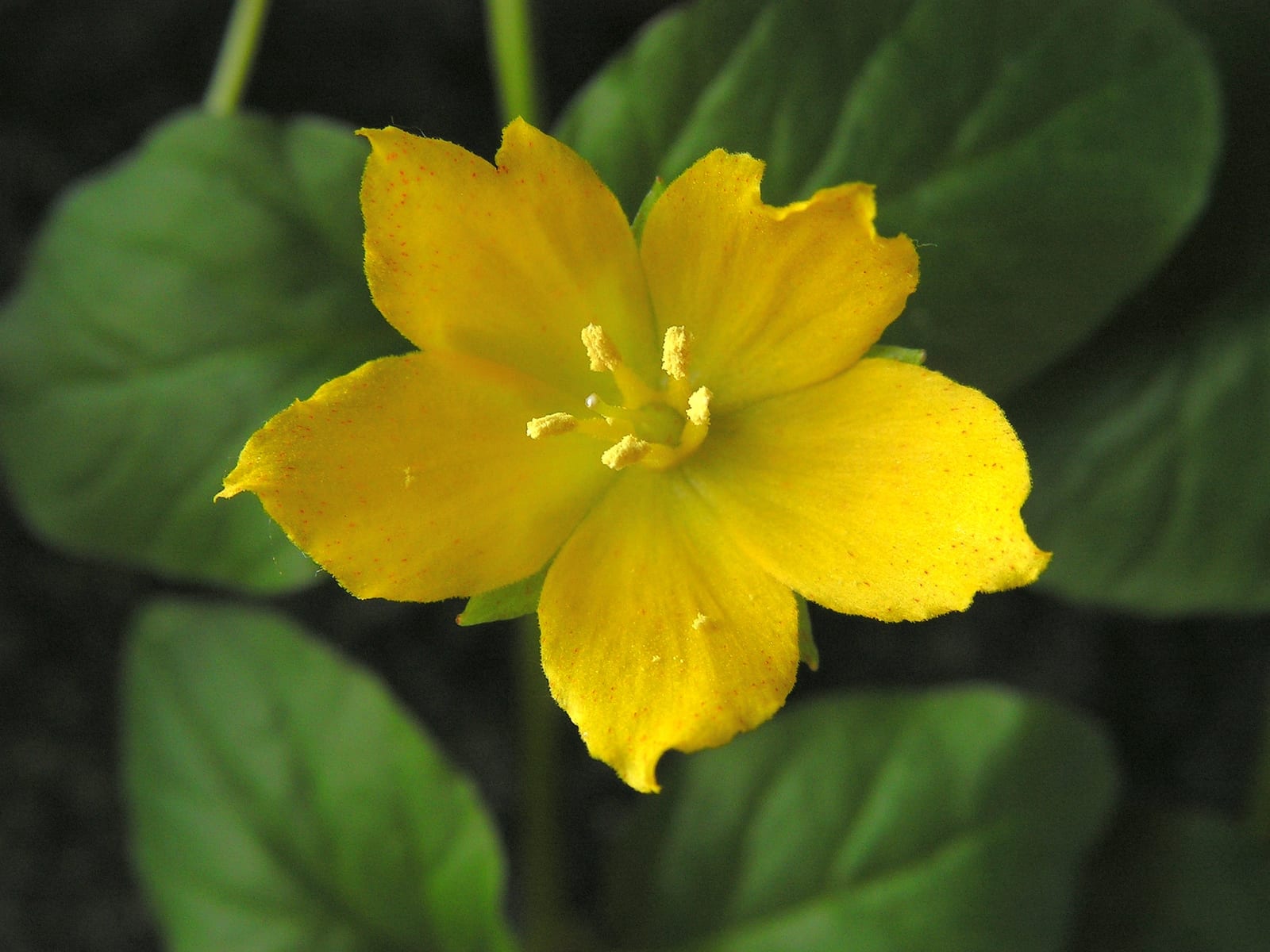
Bloom Color:Small bright yellow (grown mostly for its chartreuse foliage)
Bloom Cycle:Early summer
Care Notes
Spreads rapidly — a plus in bare areas, a pest in garden beds. Trim edges regularly.
Growing Details
Mature Size:2-4 in tall, spreads indefinitely as a trailing mat
Growth Rate:🐇 Fast
Zone Performance
At the cold edge (Zone 3) Creeping Jenny dies back to the ground each winter but reliably resprouts from its roots in spring. At the warm edge (Zone 9) its golden coloring holds best with some afternoon shade, since intense full sun in hot climates can scorch the foliage, while too much shade fades the leaf color to plain green.
Companions & Wildlife
🦌 Deer Resistance
occasionally damaged
Creeping Jenny is not a preferred deer food but may be nibbled occasionally, especially in gardens with few other browse options nearby.
🐝 Pollinator Value
low
Its small yellow cup-shaped flowers provide minor nectar for small bees in summer, but it is grown chiefly for its trailing golden foliage rather than pollinator support.
Good Companions
Hosta — Creeping Jenny's chartreuse trailing foliage spills around Hosta's base and contrasts with its broader leaves in part-shade, moist beds.
Japanese Painted Fern — Both thrive in moist, part-shade soil, with Creeping Jenny's golden color echoing the fern's silvery highlights for a layered textural planting.
Astilbe — Shares consistently moist soil requirements and complements Astilbe's upright flower plumes with a low, spreading golden groundcover at its base.
Japanese Iris (Iris ensata) — Both tolerate consistently moist to boggy soil, making them natural pairings at pond edges or rain garden margins.
Troubleshooting
⚠️ Invasive spread into lawns or nearby beds
Contain with edging or grow in a pot sunk into the ground, since Creeping Jenny roots at every leaf node and spreads rapidly and can become a nuisance in garden beds.
⚠️ Foliage reverting to green instead of golden
Move to a spot with more direct morning sun, since the golden 'Aurea' form needs adequate light to hold its bright color and fades to green in deep shade.
⚠️ Scorched or bleached leaves in summer
Provide afternoon shade in hot climates or increase watering, since intense sun combined with dry soil can scorch the shallow-rooted foliage.
⚠️ Rot in the center of dense mats
Thin overly thick growth periodically and avoid waterlogged soil to prevent fungal rot in the densest parts of the mat.
✅ Pet Safety
Generally considered non-toxic to cats and dogs.
Informational only — always check with a veterinarian if you suspect your pet has eaten something it shouldn't have.