Loading…
 🔍 Click to enlarge
treeperennial
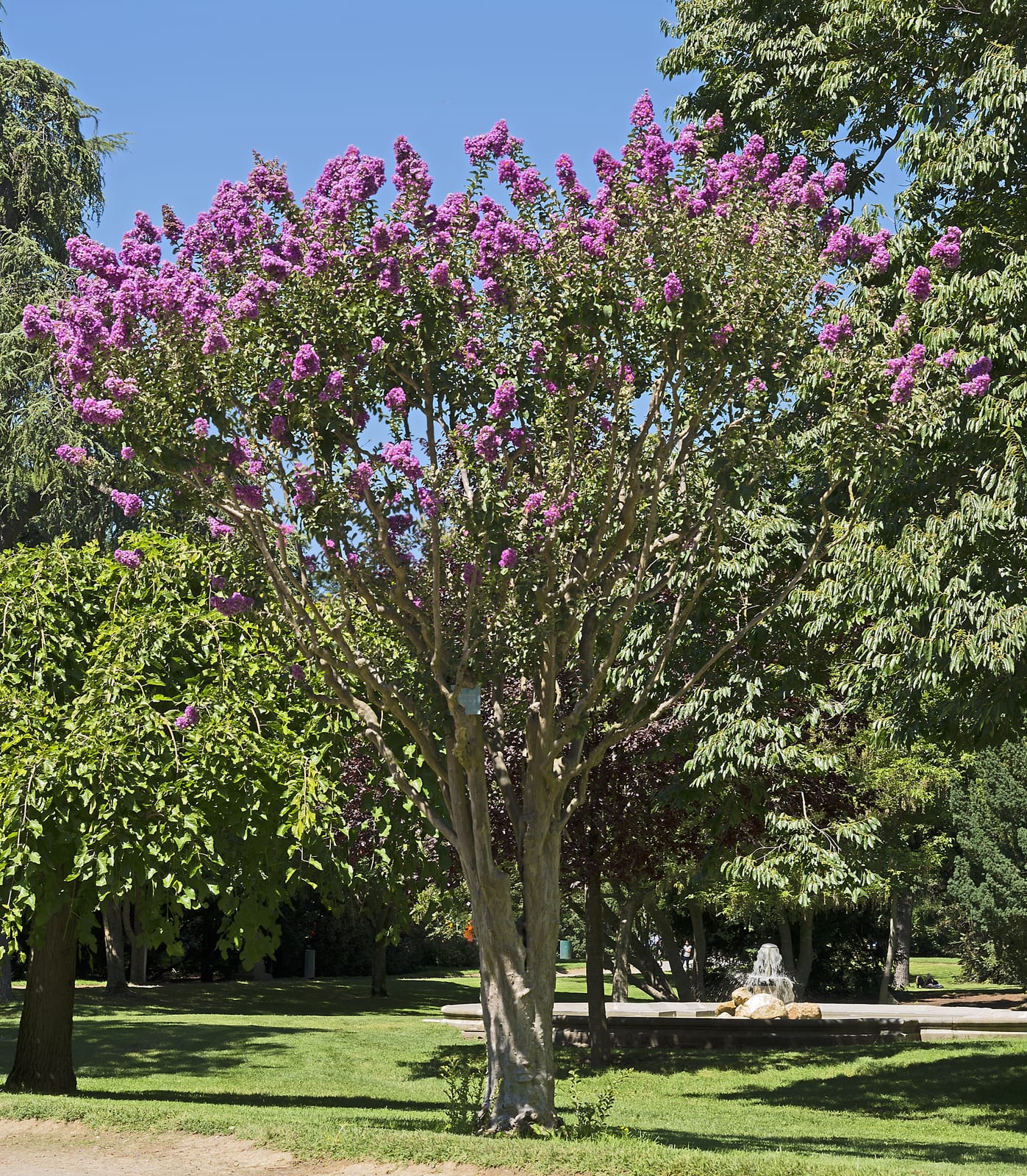
Crape Myrtle
Lagerstroemia indica
Long-blooming summer tree with colorful, crinkled flowers and attractive bark.
Quick Facts
Sun:☀️ Full Sun
Water:💧 Low
USDA Zones:Zones 6–10
Space:🌱 Small Bed, 🏡 Large Garden
Soil:Loam, Clay, Sandy
Best Season(s):Spring
Experience Level:🌱 Beginner
Native Range:China & Korea
Bloom Color:Pink, red, purple, white
Bloom Cycle:Midsummer through fall, one of the longest bloom windows of any flowering tree
Care Notes
Do not over-prune ("crape murder"). Thin crossing branches in late winter.
Growing Details
Mature Size:15-25 ft tall, 15-20 ft wide (tree forms; dwarf cultivars stay under 5 ft)
Growth Rate:🐇 Fast
Zone Performance
In Zone 6, crape myrtle often dies back to the ground in cold winters and should be treated more like a large shrub, regrowing and blooming on new wood by midsummer; in Zones 9-10 it grows as a true small tree with a permanent woody framework and exfoliating bark that becomes a year-round ornamental feature. Cultivar selection matters enormously at the cold edge — 'Natchez' and 'Muskogee' are among the hardier tree-form selections.
Companions & Wildlife
🦌 Deer Resistance
seldom damaged
Deer generally leave mature crape myrtle alone, though they may nibble tender new shoots on young plants.
🐝 Pollinator Value
high
Long summer bloom period is a major nectar source for bees and butterflies when few other trees are flowering.
Good Companions
Liriope — Low, grassy edging that tolerates the dry, sunny conditions crape myrtle prefers and hides bare lower trunks.
Loropetalum — Shares full sun and heat tolerance while offering contrasting purple foliage against crape myrtle's summer blooms.
Black-Eyed Susan — Blooms concurrently in midsummer heat and shares the same low-water, full-sun requirements.
Dwarf Yaupon Holly — Evergreen structure at the base compensates for crape myrtle's bare winter silhouette in the same soil and light conditions.
Troubleshooting
⚠️ Powdery mildew on leaves and buds
Plant mildew-resistant cultivars (most modern Lagerstroemia indica x fauriei hybrids) and ensure full sun with good air circulation.
⚠️ Crape myrtle bark scale (white waxy coating on stems)
Scrub trunks with a soft brush and soapy water, then treat with a systemic insecticide drench in spring if infestation persists.
⚠️ "Crape murder" — topping cuts leading to weak, whippy regrowth
Prune only to remove crossing branches and spent seed heads in late winter; never cut back main stems to stubs.
✅ Pet Safety
Generally considered non-toxic to cats and dogs.
Informational only — always check with a veterinarian if you suspect your pet has eaten something it shouldn't have.