Loading…
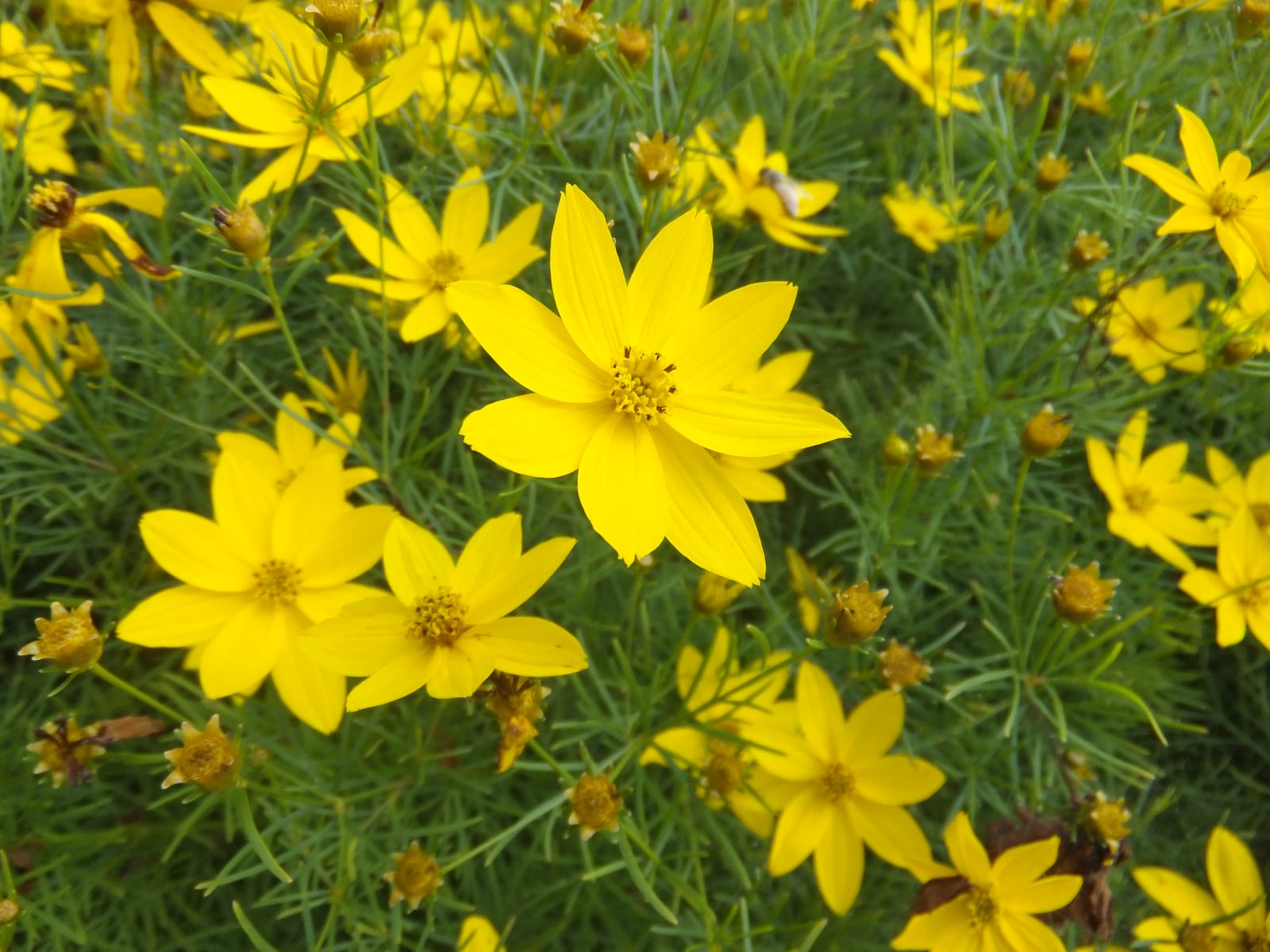 🔍 Click to enlarge
flowerperennial
Coreopsis
Coreopsis verticillata
Cheerful golden daisy-like blooms from early summer through fall. A true low-maintenance perennial.
Quick Facts
Sun:☀️ Full Sun
Water:💧 Low
USDA Zones:Zones 4–10
Space:🪴 Container, 🌱 Small Bed, 🏡 Large Garden
Soil:Loam, Sandy, Chalky
Best Season(s):Spring, Summer
Experience Level:🌱 Beginner
Native Range:Eastern North America
Bloom Color:Yellow, gold, pink (variety-dependent)
Bloom Cycle:Early summer through fall, continuous
Care Notes
Deadhead regularly for non-stop blooms. Very drought tolerant. Shear back in late summer to refresh.
Growing Details
Mature Size:1.5-2 ft tall, 1.5-2 ft wide
Growth Rate:🐇 Fast
Zone Performance
In the cooler zones 4-5, threadleaf coreopsis forms tighter, more compact clumps and blooms slightly later into midsummer. In the warmest zones 9-10, plants bloom earlier and for a longer overall season but tend to be shorter-lived, often needing division or replacement every 2-3 years as clumps decline in the heat.
Companions & Wildlife
🦌 Deer Resistance
seldom damaged
Deer generally leave the fine, thread-like foliage alone, though occasional browsing can occur when other forage is scarce.
🐝 Pollinator Value
high
The bright yellow daisy flowers are highly attractive to small native bees, butterflies, and beneficial hoverflies.
Good Companions
Salvia — Blue-purple spikes provide striking color contrast against coreopsis's golden daisy blooms while sharing the same drought-tolerant needs.
Russian Sage — Both tolerate lean, sandy soil and full sun without fertilizer, making a reliable low-maintenance pairing.
Black-Eyed Susan — Overlaps in bloom color family and season, and both are equally tough, long-blooming, low-water perennials.
Ornamental Grasses — Fine grass texture and airy movement complement coreopsis's ferny, thread-leaf foliage in a naturalistic planting.
Troubleshooting
⚠️ Bloom slows noticeably by midsummer
Shear the entire plant back by about one-third after the first flush to stimulate a fresh round of buds.
⚠️ Open, floppy center of the clump
Divide congested clumps every 2-3 years in spring to maintain a tight, upright habit.
⚠️ Root or crown rot in heavy, poorly drained soil
Plant in raised beds or amend clay soil with grit to ensure sharp drainage, since coreopsis will not tolerate wet feet.
✅ Pet Safety
Non-toxic to cats and dogs.
Informational only — always check with a veterinarian if you suspect your pet has eaten something it shouldn't have.