Loading…
 🔍 Click to enlarge
bulbperennial
Caladium
Caladium bicolor
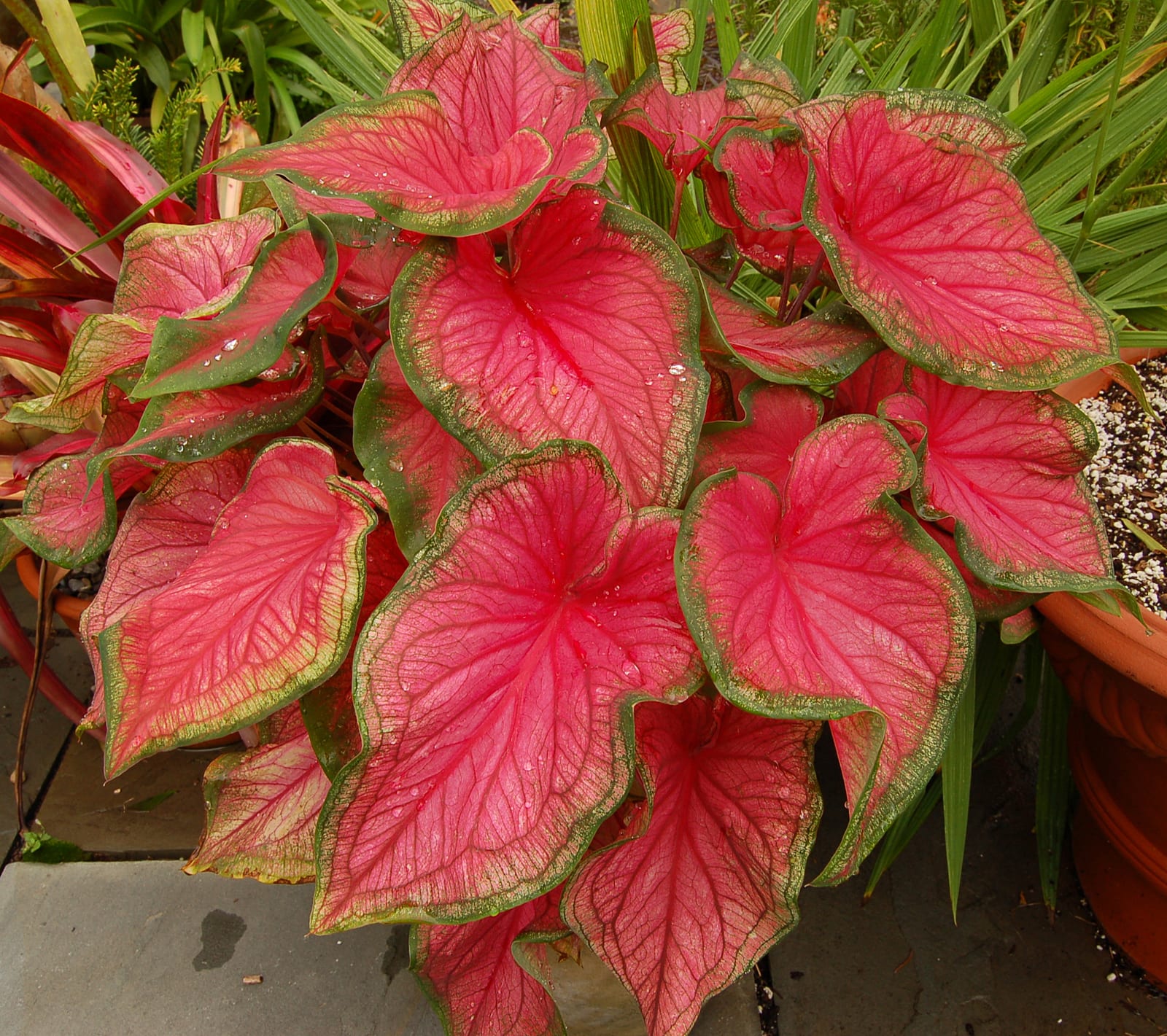
Spectacular tropical foliage in bold patterns of red, pink, white, and green. Grown for leaves, not flowers.
Quick Facts
Sun:⛅ Partial Shade, 🌑 Full Shade
Water:💧💧 Moderate
USDA Zones:Zones 9–11
Space:🪴 Container, 🌱 Small Bed
Soil:Loam, Peaty, Silty
Best Season(s):Spring, Summer
Experience Level:🌱 Beginner
Native Range:South America (Amazon Basin)
Bloom Color:Grown for dramatic multicolor foliage, not for its inconspicuous flower
Bloom Cycle:Summer foliage display; flowers rarely form and aren't the point
Care Notes
Bring tubers indoors before frost. Keep soil consistently moist. Avoid direct midday sun.
Growing Details
Mature Size:12-24 in tall, 12-18 in spread
Growth Rate:🌿 Moderate
Zone Performance
In zone 9 at the cool edge of its hardiness, caladium tubers must be lifted and stored indoors over winter, since even a light frost will kill the foliage and cold, wet soil will rot the tubers. In zones 10-11, tubers can remain in the ground year-round, going dormant during any cool spells and resprouting as temperatures warm.
Companions & Wildlife
🦌 Deer Resistance
rarely damaged
Caladium contains calcium oxalate crystals that make it unpalatable and mildly toxic, so deer generally avoid it.
🐝 Pollinator Value
none
Grown strictly for ornamental foliage; the inconspicuous flowers are typically removed and offer negligible pollinator value.
Good Companions
Impatiens — Shares caladium's preference for shade and consistent moisture, and impatiens' fine flowers contrast with caladium's bold leaf patterns.
Fern — Ferns provide a fine-textured green backdrop that makes caladium's bold, colorful foliage stand out even more.
Begonia — Shade-loving begonias share caladium's moisture and light needs and bloom continuously to complement the foliage display.
Troubleshooting
⚠️ Tubers rotting after planting
Wait until soil temperatures are reliably above 65°F before planting, since cold, wet soil is the most common cause of tuber rot.
⚠️ Slow or uneven sprouting
Pre-sprout tubers indoors in moist peat moss at 70-75°F for a few weeks before transplanting outdoors.
⚠️ Leaf scorch or fading color in direct sun
Move to a location with dappled or full shade, especially for the more colorful, less sun-tolerant varieties.
⚠️ Pet Safety
Toxic to cats and dogs (insoluble calcium oxalates, like other aroids) — causes oral pain and swelling; grown for foliage, not bloom.
Informational only — always check with a veterinarian if you suspect your pet has eaten something it shouldn't have.