Loading…
 🔍 Click to enlarge
treeperennial
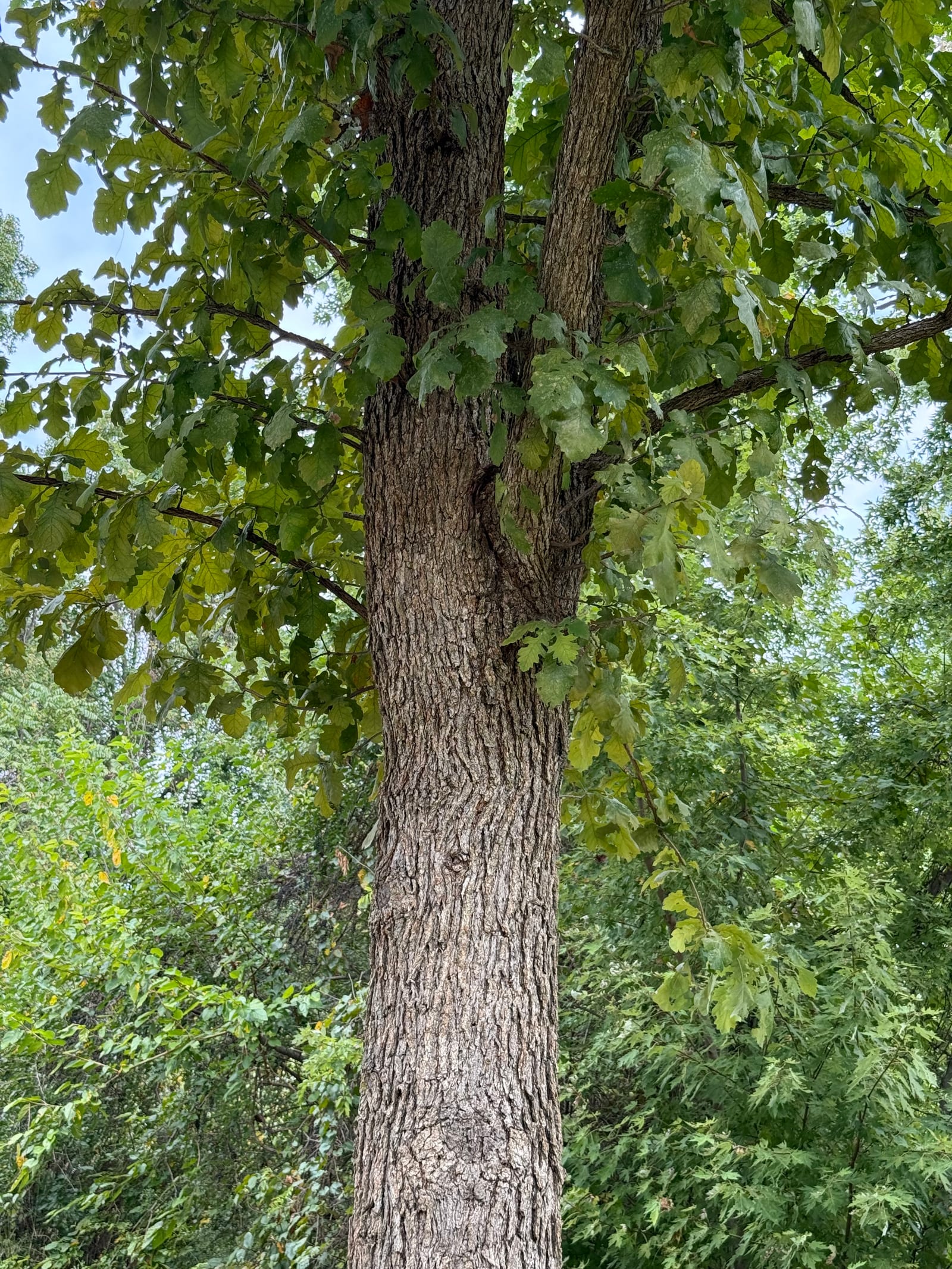
Bur Oak
Quercus macrocarpa
One of the toughest native oaks — deeply furrowed bark, huge fringed acorns, and outstanding drought and pollution tolerance.
Quick Facts
Sun:☀️ Full Sun
Water:💧 Low
USDA Zones:Zones 3–8
Space:🏡 Large Garden
Soil:Loam, Clay, Silty
Best Season(s):Spring, Fall
Experience Level:🌿 Intermediate
Native Range:Central & Eastern North America
Bloom Color:Catkins, inconspicuous (grown for shade and its large fringed acorns)
Bloom Cycle:Spring, alongside leaf-out
Care Notes
Extremely low maintenance once established. Deep taproot makes it drought tolerant but harder to transplant when large.
Growing Details
Mature Size:70-80 ft tall, 70-80 ft wide
Growth Rate:🐢 Slow
Zone Performance
At the cold edge (zone 3), bur oak is among the most cold-hardy oaks in North America and shows no dieback even in prairie winters. Toward zone 8, it tolerates heat and drought exceptionally well due to its deep taproot, but growth slows further in compacted or frequently irrigated soils it isn't adapted to.
Companions & Wildlife
🦌 Deer Resistance
seldom damaged
Thick, corky bark and coarse leaves make mature bur oak unattractive to deer browsing.
🐝 Pollinator Value
moderate
Its enormous fringed acorns are prized by squirrels, blue jays, and wild turkey, and the tree hosts numerous native moth and butterfly caterpillars.
Good Companions
Big Bluestem — A native tallgrass prairie companion that shares bur oak's deep-rooted drought tolerance in savanna plantings.
Wild Bergamot — Sun-tolerant prairie perennial that thrives in the open, dappled shade typical of a bur oak savanna.
Purple Coneflower — Classic prairie-restoration pairing that tolerates the same heavy clay soils bur oak favors.
Serviceberry — Small understory tree with a similar tough, low-maintenance profile for a layered native planting.
Troubleshooting
⚠️ Difficult transplanting due to deep taproot
Purchase younger, smaller nursery stock or containerized trees rather than large field-dug specimens.
⚠️ Slow early growth discouraging homeowners
Expect modest height gains the first several years; growth accelerates once the taproot is established.
⚠️ Occasional gall-forming wasps distorting twigs
Prune out and destroy affected twigs in winter; galls are cosmetic and rarely threaten tree health.
⚠️ Pet Safety
Acorns and young leaves are toxic to cats and dogs in quantity (tannins) — usually low-risk from occasional acorn snacking.
Informational only — always check with a veterinarian if you suspect your pet has eaten something it shouldn't have.