Loading…
 🔍 Click to enlarge
fernperennial
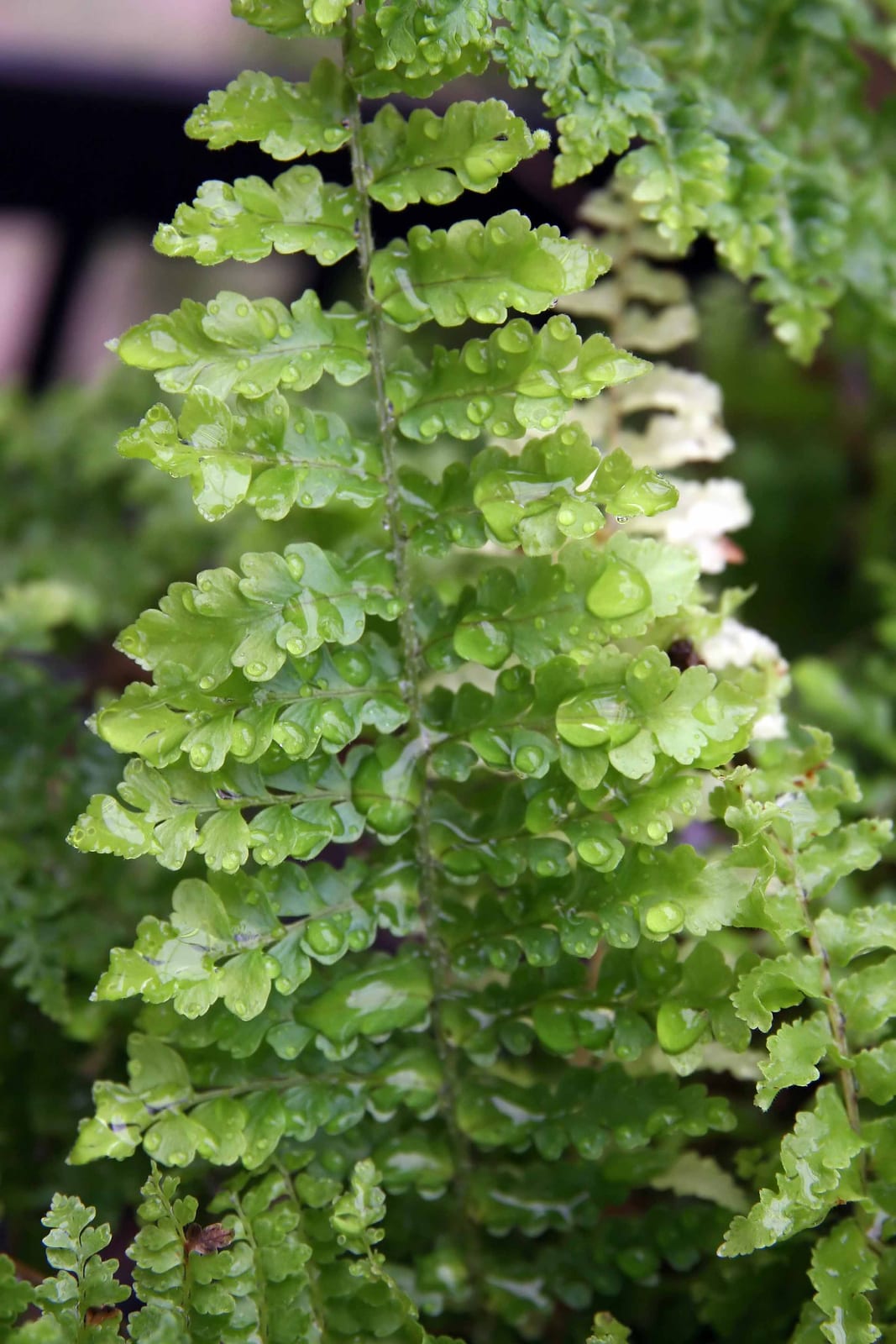
Boston Fern
Nephrolepis exaltata
Classic hanging basket fern with lush, arching fronds. A porch and sunroom staple.
Quick Facts
Sun:⛅ Partial Shade, 🌑 Full Shade
Water:💧💧💧 High
USDA Zones:Zones 9–11
Space:🪴 Container, 🌱 Small Bed
Soil:Loam, Peaty, Silty
Best Season(s):Spring, Summer
Experience Level:🌱 Beginner
Native Range:Tropical Americas & Africa
Bloom Cycle:Ferns don't flower — grown entirely for foliage
Care Notes
Mist frequently or use a humidity tray. Keep soil consistently moist. Bring indoors before frost.
Growing Details
Mature Size:2-3 ft tall, 3-4 ft wide (spread of fronds)
Growth Rate:🐇 Fast
Zone Performance
Boston Fern is only reliably winter-hardy outdoors in Zones 9-11; at the cold edge (Zone 9) it can be damaged by a hard freeze and benefits from a heavy mulch or being grown in a protected microclimate. Outside Zones 9-11 it is treated as a seasonal hanging-basket or houseplant that must be brought indoors before the first frost, since it has no frost tolerance at all.
Companions & Wildlife
🦌 Deer Resistance
rarely damaged
Deer generally avoid ferns due to their fibrous, low-palatability foliage, making Boston Fern a reliable choice near browse-heavy areas.
🐝 Pollinator Value
none
Ferns reproduce by spores, not flowers, and offer no nectar or pollen; Boston Fern is grown purely for foliage effect.
Good Companions
Impatiens — Shares the same shade, moisture, and humidity needs, filling in around the fern's base with season-long color.
Caladium — Both thrive in warm, humid shade and bring contrasting leaf texture (bold vs. feathery) to porch container plantings.
Begonia (wax or rex) — Tolerates the same consistently moist, humid conditions Boston Fern demands, common porch and hanging-basket pairing.
Peace Lily — Indoors, it shares Boston Fern's humidity and bright-indirect-light requirements, useful for grouping to raise ambient humidity.
Troubleshooting
⚠️ Fronds turning brown and crispy
Increase humidity with a pebble tray or misting and check that soil isn't drying out between waterings; low humidity is the most common cause indoors.
⚠️ Yellowing lower fronds
Reduce watering frequency slightly and ensure the pot has drainage; this is often a sign of overwatering or waterlogged roots.
⚠️ Leaf drop and shedding
Check for spider mites or scale on frond undersides, especially when overwintered indoors in dry, heated air; rinse foliage and raise humidity.
⚠️ Sparse, weak new growth
Feed monthly with a diluted balanced liquid fertilizer during the active growing season, since Boston Fern is a heavy feeder in bright, humid conditions.
✅ Pet Safety
Non-toxic to cats and dogs — one of the few common houseplants that's genuinely pet-safe.
Informational only — always check with a veterinarian if you suspect your pet has eaten something it shouldn't have.