Loading…
 🔍 Click to enlarge
flowerperennial
Bleeding Heart
Lamprocapnos spectabilis
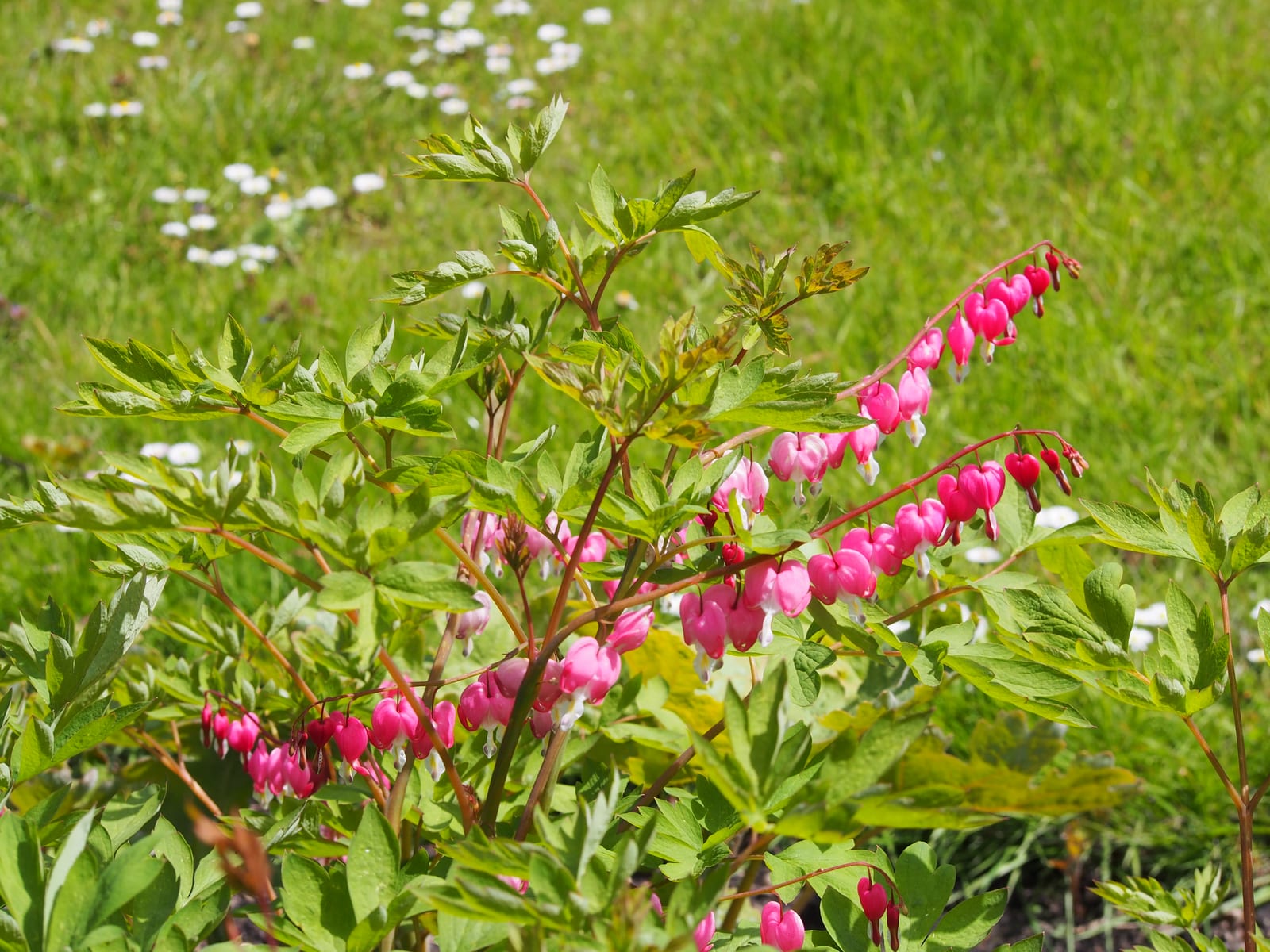
Elegant, arching stems with heart-shaped pink flowers. A spring woodland garden classic.
Quick Facts
Sun:⛅ Partial Shade, 🌑 Full Shade
Water:💧💧 Moderate
USDA Zones:Zones 3–9
Space:🌱 Small Bed, 🏡 Large Garden
Soil:Loam, Peaty, Silty
Best Season(s):Spring
Experience Level:🌱 Beginner
Native Range:East Asia (Siberia, Northern China, Korea, Japan)
Bloom Color:Pink and white, heart-shaped blooms
Bloom Cycle:Spring, going dormant by midsummer
Care Notes
Goes dormant in summer heat — plant companions nearby to fill the gap. Divide in early spring.
Growing Details
Mature Size:2-3 ft tall, 2-3 ft wide
Growth Rate:🌿 Moderate
Zone Performance
In the cooler zones 3-5, bleeding heart stays in leaf and bloom well into early summer since heat arrives late. In the warmer zones 8-9, summer heat triggers earlier dormancy, often by late spring, so gardeners there should plant companions specifically to hide the gap left by its disappearing foliage.
Companions & Wildlife
🦌 Deer Resistance
seldom damaged
The foliage contains isoquinoline alkaloids that make it mildly toxic and generally unappealing to browsing deer.
🐝 Pollinator Value
moderate
The distinctively shaped pink flowers are pollinated primarily by bumblebees strong enough to force open the heart-shaped petals.
Good Companions
Hosta — Hosta's expanding summer foliage fills the visual gap left when bleeding heart goes dormant after flowering.
Astilbe — Later-blooming astilbe extends color in the same moist, part-shade woodland setting after bleeding heart's spring show ends.
Ferns — Ferns share the humus-rich, consistently moist soil bleeding heart prefers and their fine texture contrasts with its arching stems.
Hellebore — Blooms earlier in late winter and its evergreen foliage provides year-round structure once bleeding heart dies back to the ground.
Troubleshooting
⚠️ Foliage yellows and collapses in early summer
This is normal summer dormancy, not a disease — simply cut back the dying foliage and let interplanted companions take over visually.
⚠️ Slugs and snails chewing new spring growth
Apply iron phosphate slug bait around emerging shoots in early spring when damage is most likely.
⚠️ Poor flowering in deep shade
Move to a site with morning sun and afternoon shade, since bleeding heart needs some direct light to flower well despite being shade-tolerant for foliage.
⚠️ Pet Safety
Toxic to cats and dogs (isoquinoline alkaloids) — can cause vomiting and, in large amounts, more serious effects.
Informational only — always check with a veterinarian if you suspect your pet has eaten something it shouldn't have.