Loading…
 🔍 Click to enlarge
groundcoverperennial
Ajuga (Bugleweed)
Ajuga reptans
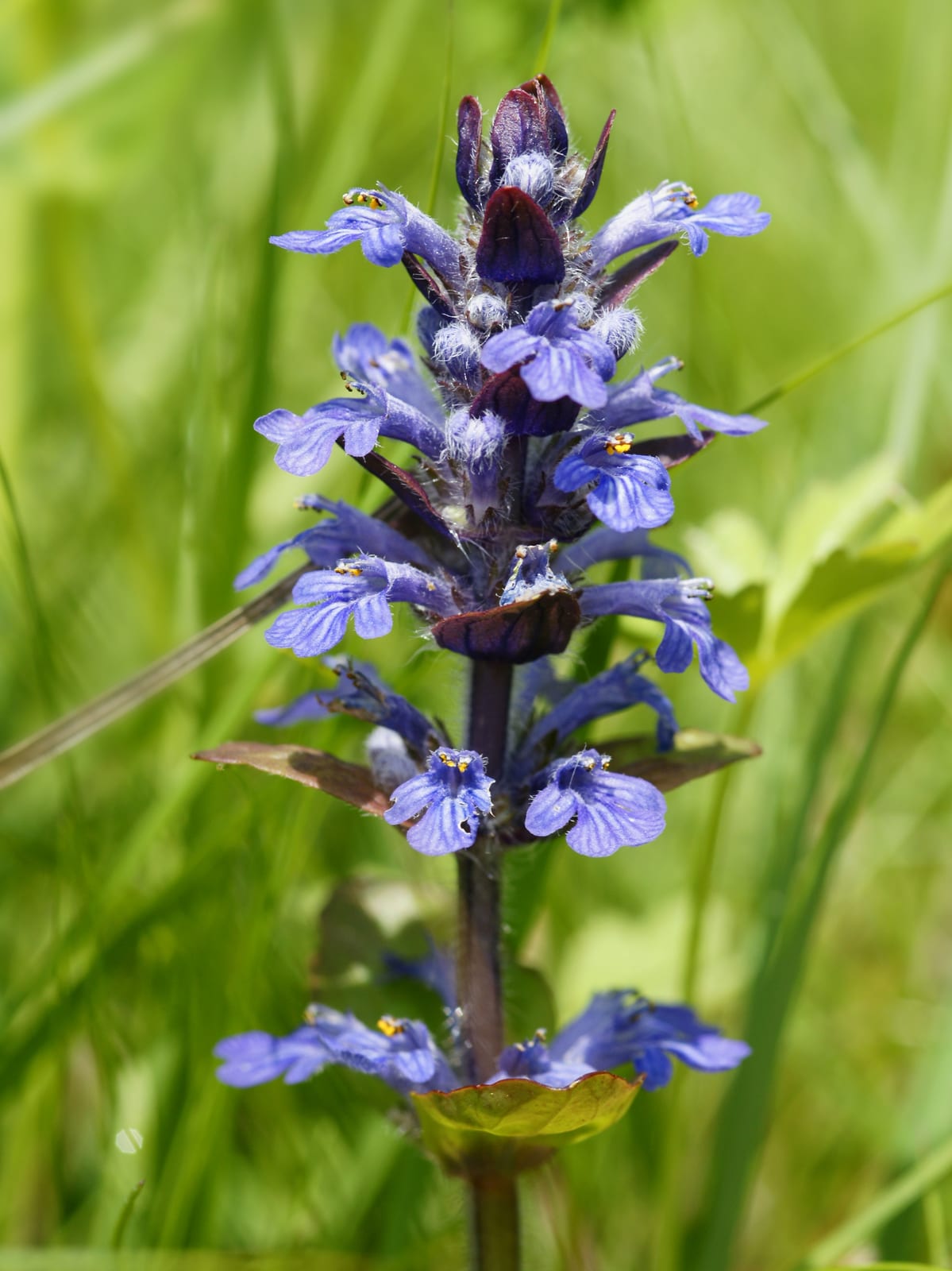
Fast-spreading ground cover with bronze or purple foliage and blue flower spikes in spring.
Quick Facts
Sun:⛅ Partial Shade, 🌑 Full Shade, ☀️ Full Sun
Water:💧💧 Moderate
USDA Zones:Zones 3–9
Space:🌱 Small Bed, 🏡 Large Garden
Soil:Loam, Clay, Silty
Best Season(s):Spring, Fall
Experience Level:🌱 Beginner
Native Range:Europe
Bloom Color:Purple-blue spikes
Bloom Cycle:Mid-spring
Care Notes
Spreads aggressively — install edging to control. Tolerates foot traffic. Divides easily.
Growing Details
Mature Size:4-6 in tall, spreads indefinitely via stolons unless contained
Growth Rate:🐇 Fast
Zone Performance
At the cold edge (Zone 3) Ajuga's foliage may die back in exposed sites without snow cover but the roots survive and it resprouts vigorously in spring. At the warm edge (Zone 9) it performs best with afternoon shade and good air circulation, since hot, humid summer conditions increase the risk of crown rot and fungal disease in this otherwise tough plant.
Companions & Wildlife
🦌 Deer Resistance
seldom damaged
Ajuga's bitter, slightly fuzzy leaves are generally avoided by deer, though it is occasionally sampled when other forage is scarce.
🐝 Pollinator Value
moderate
The blue flower spikes in spring attract bees, particularly bumblebees and mason bees, during a period when few other groundcovers are blooming.
Good Companions
Hosta — Ajuga's low, colorful foliage carpet fills the space around and beneath taller Hosta clumps in the same part-shade, moist soil conditions.
Daffodil — Its evergreen bronze-purple foliage stays attractive as daffodil foliage fades after bloom, and both tolerate similar sun-to-part-shade conditions.
Heuchera (Coral Bells) — Complements Ajuga's foliage color palette and shares the same tolerance for part shade and average garden soil.
Japanese Forest Grass (Hakonechloa) — Its arching golden blades rise above Ajuga's flat mat, providing height contrast in shaded borders with similar moisture needs.
Troubleshooting
⚠️ Aggressive spreading into lawn or beds
Install physical edging or mow/hand-pull runners at the border regularly, since Ajuga spreads quickly by above-ground stolons and can become weedy.
⚠️ Crown rot in humid, poorly drained conditions
Improve drainage and avoid overhead watering in the evening; dense Ajuga mats are prone to fungal crown rot in hot, wet, humid climates.
⚠️ Bare patches or dieback in a section of the bed
Check for crown rot fungus and remove affected plants promptly, then improve air circulation and reduce watering in that area.
⚠️ Reduced flowering in deep shade
Move to a site with at least a few hours of morning sun for the best spring bloom display, since flowering diminishes in very deep shade.
✅ Pet Safety
Generally considered non-toxic to cats and dogs.
Informational only — always check with a veterinarian if you suspect your pet has eaten something it shouldn't have.