Loading…
 🔍 Click to enlarge
succulentperennial
Agave
Agave americana
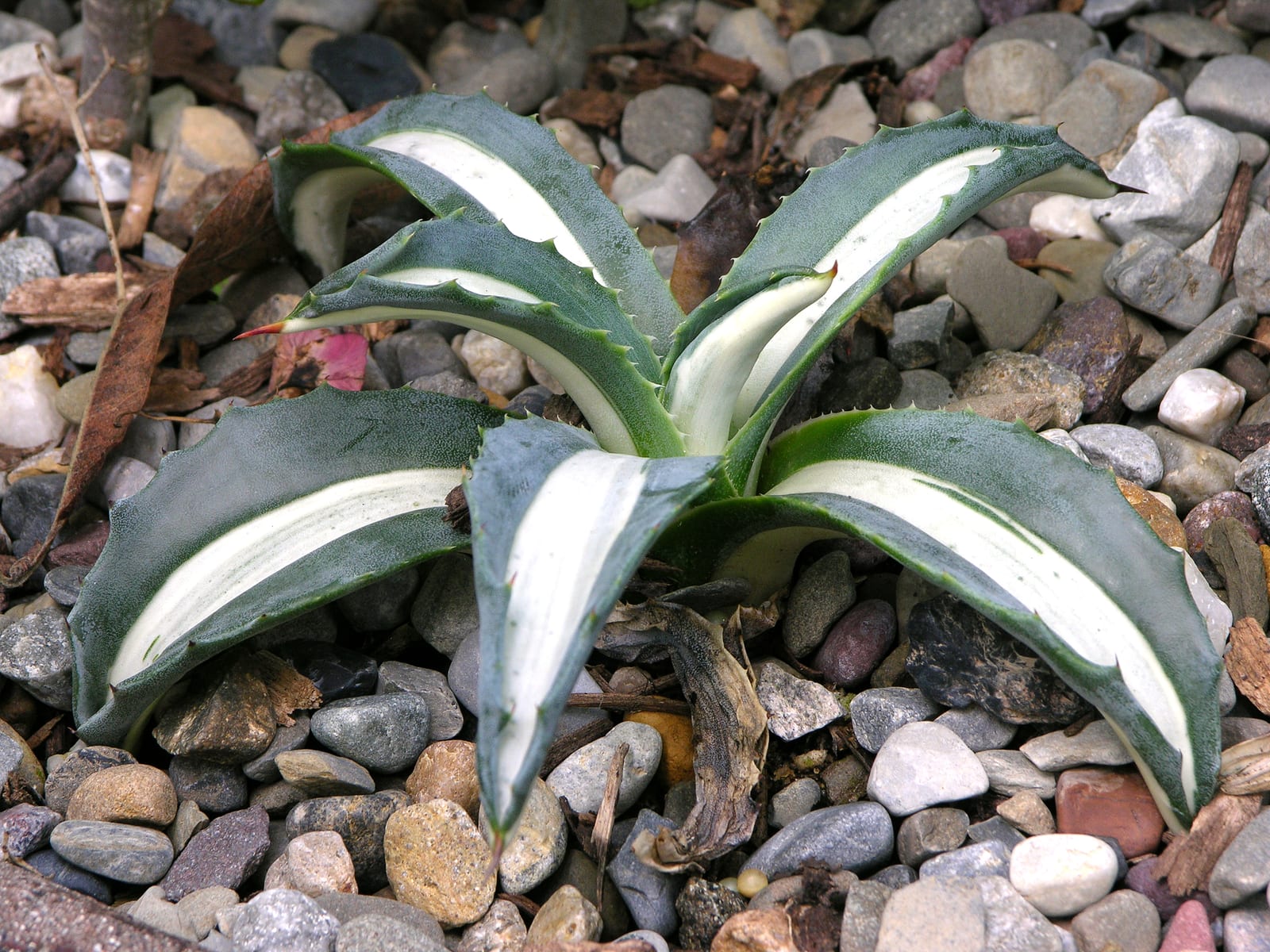
Dramatic architectural succulent with bold rosettes. Blooms once spectacularly, then dies.
Quick Facts
Sun:☀️ Full Sun
Water:💧 Low
USDA Zones:Zones 8–11
Space:🌱 Small Bed, 🏡 Large Garden
Soil:Sandy, Loam, Chalky
Best Season(s):Spring, Summer
Experience Level:🌱 Beginner
Native Range:Mexico & Southwestern United States
Bloom Color:Tall yellow-green flower spike (many species bloom only once, at the end of life, after 10+ years)
Bloom Cycle:Once in the plant's lifetime for most species (monocarpic)
Care Notes
Plant where you will not brush against it — tips are sharp. Remove offsets (pups) before they crowd.
Growing Details
Mature Size:3-6 ft tall, 6-10 ft wide (mature rosette)
Growth Rate:🐢 Slow
Zone Performance
At the cold edge of its range (zone 8), Agave americana needs a south-facing, well-drained site and may suffer leaf damage or death in a hard freeze below the low 20s°F, so gardeners there often choose more cold-hardy species like Agave parryi instead. In zones 10-11 it thrives with minimal care and reaches its largest, most dramatic mature size, eventually sending up its signature flowering stalk before the rosette naturally dies.
Companions & Wildlife
🦌 Deer Resistance
rarely damaged
The rigid, spine-tipped leaves are a strong physical deterrent, making agave one of the most reliably deer-proof landscape plants.
🐝 Pollinator Value
high
When it blooms (once in its lifetime, typically after 10-25 years), the towering flower stalk produces abundant nectar that is a major draw for bats, hummingbirds, and bees, particularly in its native Southwest range.
Good Companions
Prickly Pear Cactus — Shares identical desert soil and water requirements and pairs well for a classic Southwest architectural planting.
Muhly Grass — Its soft pink plumes offer textural and color contrast against agave's stiff, bold rosette form.
Aloe Vera — Compatible sun and drainage needs make it a natural rosette-form companion in succulent and xeriscape beds.
Red Yucca (Hesperaloe) — A classic Southwest pairing where red yucca's slender bloom spikes contrast agave's broad, sculptural leaves.
Troubleshooting
⚠️ Rot at the base after wet winters
Plant on a slight mound or slope with gritty, fast-draining soil to keep the crown from sitting in water.
⚠️ Agave snout weevil infestation causing sudden collapse
Treat proactively with a systemic insecticide drench in late spring in areas where this pest is known, since infested plants usually cannot be saved once collapse begins.
⚠️ Overcrowding from offset pups
Remove pups with a sharp spade once they are a few inches tall, before they compete with the mother plant for space and water.
⚠️ Pet Safety
Toxic to cats and dogs (calcium oxalates and saponins) — causes oral irritation; the rigid spine tips are a serious physical hazard too.
Informational only — always check with a veterinarian if you suspect your pet has eaten something it shouldn't have.